Delhi CM Rekha Gupta hails Constitution as nation's pathfinder
Synopsis
Delhi Chief Minister Rekha Gupta marked Constitution Day by calling the charter India's pathfinder, saying birth no longer limits a citizen's future. She placed social and economic justice at the Constitution's core and asked the public to read Prime Minister Narendra Modi's article on its power, ideals and national duties.
Key Takeaways
Delhi Chief Minister Rekha Gupta on 26 November 2026 called the Constitution India's pathfinder on Constitution Day.
She said a person's circumstances of birth no longer set the limits of their future.
She said the spirit of social and economic justice is embedded at the core of the Constitution.
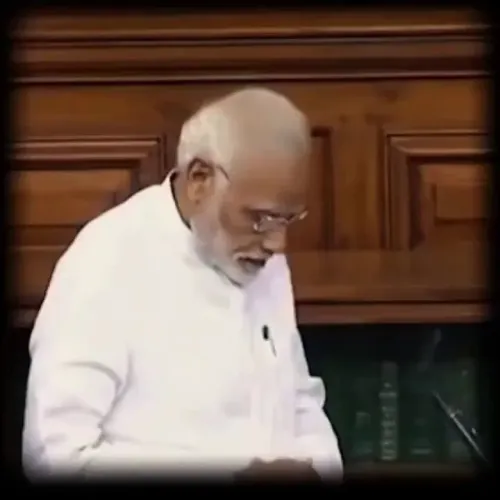
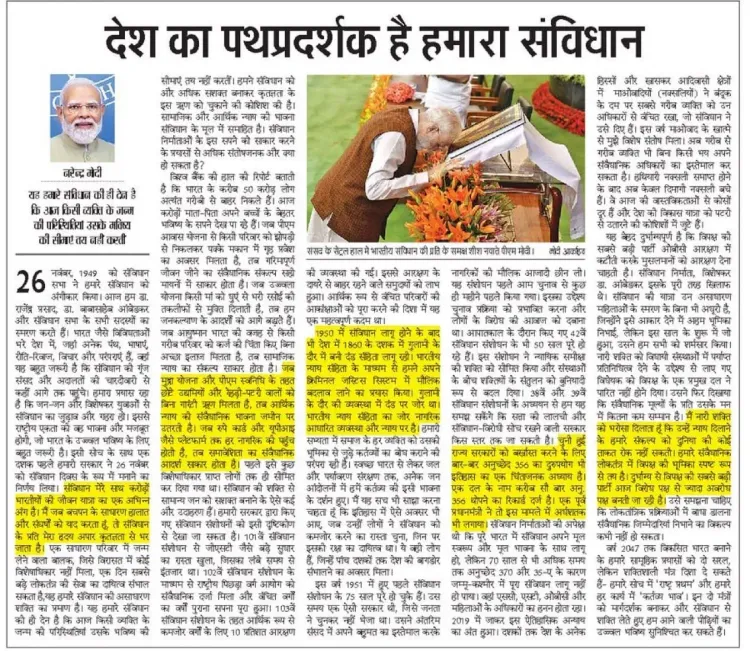
She urged citizens to read an article by Prime Minister Narendra Modi on constitutional power, ideals and duties.
The Constitution was adopted on 26 November 1949 and came into force on 26 January 1950 ; Constitution Day was formally designated in 2015 .
On Constitution Day, Delhi Chief Minister Rekha Gupta called India's founding charter the nation's pathfinder, arguing that the circumstances of a person's birth no longer set the limits of their future. Posting on Thursday, 26 November 2026, she placed social and economic justice at the core of the document and pointed readers to an article by Prime Minister Narendra Modi on constitutional power, ideals and duties to the nation.
Quoting the line देश का पथप्रदर्शक है हमारा संविधान ('Our Constitution is the nation's pathfinder'), Gupta said it is because of the Constitution that birth no longer decides a citizen's ceiling. The spirit of social and economic justice, she wrote, sits at the charter's root. Marking Samvidhan Gaurav Diwas, she asked the public to read Modi's essay underscoring the Constitution's strength, its ideals and the duties citizens owe the Republic.
Birth no longer sets the future's limits
The Delhi CM's message turned on a single, sharp claim: circumstance of birth is not destiny. That idea tracks the Preamble's promise of justice, social, economic and political, and the equality provisions that have, over decades, opened public office, education and welfare to groups once locked out by caste, class and gender.
Gupta, a Bharatiya Janata Party leader heading the Delhi government, framed the day less as ritual and more as a reminder of unfinished work. Socially disadvantaged citizens remain the audience this annual messaging is meant to reach.
From 26 November 1949 to Samvidhan Gaurav Diwas
The Constituent Assembly adopted the Constitution of India on 26 November 1949. It came into force on 26 January 1950, now Republic Day. In 2015, the Union government formally designated 26 November as Constitution Day to spotlight constitutional values and social justice, the same themes Gupta and Modi returned to this year.
Senior leaders have made a pattern of amplifying those themes through essays and social media, linking current governance priorities to the founding text. State-level programmes typically follow the national observance; later debate on social justice measures may yet pick up the Prime Minister's arguments.
The charter that closed the door on birth-as-destiny is, on this anniversary, being read again as a living brief for justice, and for the duties that come with it.
Frequently Asked Questions
What did Delhi CM Rekha Gupta say on Constitution Day 2026?
She called the Constitution India's pathfinder and said a person's circumstances of birth no longer set the limits of their future. She also said social and economic justice sits at the Constitution's core and asked people to read Prime Minister Narendra Modi's article on its power, ideals and duties.
When is Constitution Day observed in India?
Constitution Day is observed every year on 26 November. It marks the Constituent Assembly's adoption of the Constitution of India on 26 November 1949.
What is Samvidhan Gaurav Diwas?
Samvidhan Gaurav Diwas is another name used for Constitution Day on 26 November. The Union government formally designated the date as Constitution Day in 2015 to highlight constitutional values and social justice.
When did the Constitution of India come into force?
The Constitution came into force on 26 January 1950, which is observed as Republic Day. It had been adopted by the Constituent Assembly two months earlier, on 26 November 1949.