Madhya Pradesh Chief Minister Celebrates India's Space Triumphs at Ujjain Conference
Synopsis
During the Ujjain conference, CM Mohan Yadav celebrated India's achievements in space exploration, focusing on the Chandrayaan-3 mission and future initiatives. This event highlights the country's ambitious goals in space research and the importance of innovation for the youth.
Key Takeaways
India's Chandrayaan-3 mission marks a significant milestone in space exploration.
The conference emphasizes the importance of youth engagement in science and innovation.
Future missions aim to enhance India's presence in space.
Private sector involvement is crucial for achieving space goals .
Integration of science and spirituality is highlighted for societal balance.
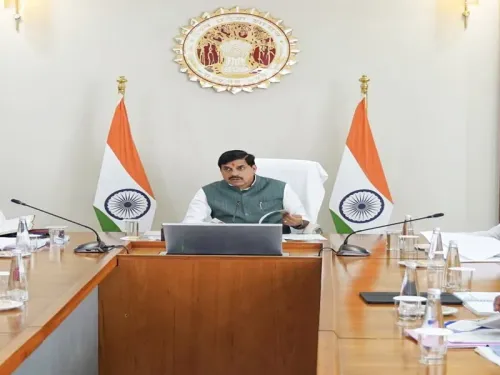
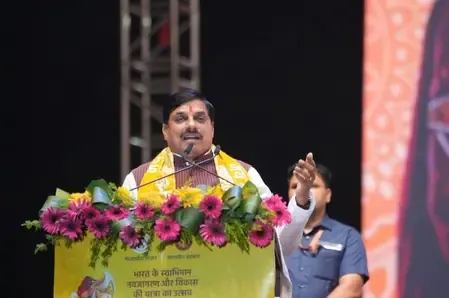
Ujjain, April 4 (NationPress) On Saturday, Chief Minister Mohan Yadav lauded India's impressive advancements in space exploration during a dedicated session on the second day of the international conference titled “Mahakal: The Master of Time” held at the Varahamihira Astronomical Observatory in Dongla, within Ujjain district.
The session, which focused on “The Current and Future Landscape of Astronomy and Space Exploration in India,” featured scientists providing insights to the Chief Minister about the nation's significant space achievements and ambitious future missions.
Yadav characterized the presentations as “incredibly captivating” and expressed his enthusiasm over India’s accomplishments in this vital sector.
He notably praised the success of the Chandrayaan-3 mission, stating that such remarkable achievements motivate the younger generation to explore careers in science, research, and innovation.
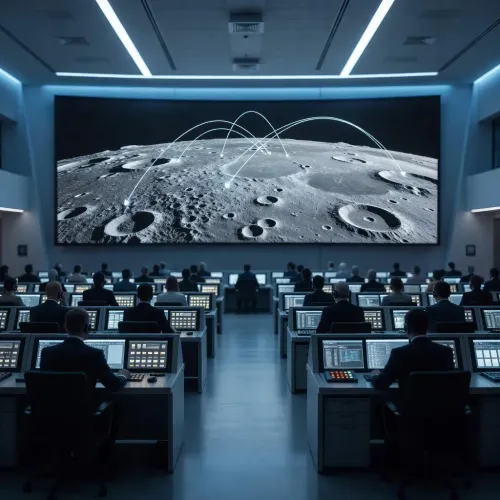
Prof. Anil Bhardwaj, Director of the Physical Research Laboratory (PRL) in Ahmedabad, elaborated on the landmark successes of Chandrayaan-3. He emphasized the successful soft landing of the Vikram Lander, which positioned India as the fourth nation to achieve a soft landing on the Moon and the first to reach the Moon's South Pole.
He acknowledged the crucial contributions of Artificial Intelligence and Machine Learning in ensuring the mission's success. The Pragyan Rover conducted vital scientific investigations on the lunar surface, with the landing site designated as “Shiv Shakti Point.”
Prof. Bhardwaj also presented India's vision for the future, which includes the Chandrayaan-4 (Lunar Sample Return Mission), Chandrayaan-5 (LUPEX, a collaborative India-Japan initiative), a Venus Orbiter Mission, a Mars Lander Mission, and the ambitious target of landing Indian astronauts on the Moon by 2040.
Tarun Pant, Director of the Space Physics Laboratory at Vikram Sarabhai Space Centre in Thiruvananthapuram, discussed the significance of researching the ionosphere and upper atmosphere, highlighting how space endeavors impact Earth's climate and atmospheric conditions.
Other discussions on the second day included topics such as “Advancements in Astronomy and Astrophysics,” “The Space Economy: Leveraging Space Technology for National Benefit,” and the scientific dimensions of India’s Knowledge Tradition.
V.K. Saraswat, Member (Science) at NITI Aayog, underscored that space technology has become integral to both national security and development.
He reflected on how the announcement of a satellite launch in his youth inspired his career in this field.
He highlighted the swift advancements in defense technologies, including drones and AI-driven systems, and commended the increasing involvement of the private sector and startups in realizing the vision of “Atmanirbhar Bharat.”
Shankar Nakhe, former Director of the Raja Ramanna Centre for Advanced Technology (RRCAT), emphasized the synergy between science and spirituality.
He remarked that Ujjain’s historical ties to timekeeping and astronomy, illustrated by the Mahakaleshwar Temple and its location on the Tropic of Cancer, render the conference particularly meaningful.
Nakhe advocated for a balanced society through the harmonious integration of science and spirituality.
The conference featured vibrant discussions regarding the space economy, private-sector engagement, and the expanding opportunities available for youth within the space industry.
Experts pointed out that space technology is emerging as a potent catalyst for scientific advancement, economic development, and job creation.
Point of View
The insights shared at the Ujjain conference reflect a significant national commitment to scientific innovation. The emphasis on youth engagement and the role of private sectors in achieving space goals underline a forward-thinking approach in India's quest for leadership in space science.
NationPress
13 Oct 2026
Frequently Asked Questions
What was the main focus of the Ujjain conference?
The conference primarily focused on India's achievements in space research and future missions, including discussions on the Chandrayaan-3 success and upcoming initiatives.
Who commended India's space achievements at the conference?
Chief Minister Mohan Yadav praised India's advancements in space exploration during the conference.
What significant mission was highlighted during the event?
The Chandrayaan-3 mission was notably highlighted as a landmark achievement for India in space exploration.
How does space technology contribute to national development?
Space technology plays a crucial role in national security, economic growth, and job creation, as emphasized by speakers at the conference.
What future missions were discussed?
Future missions discussed included Chandrayaan-4, Chandrayaan-5, a Venus Orbiter Mission, and a Mars Lander Mission.