CM Mohan Yadav hails Cabinet move for faster justice for women, children
Synopsis
Madhya Pradesh CM Dr. Mohan Yadav welcomed the Union Cabinet's November 4, 2026 decision as a historic step toward expediting justice for women and children, echoing a decade-long legislative push through POCSO, the 2013 Criminal Law Amendment, and Fast Track Special Courts.
Key Takeaways
MP Chief Minister Dr.
Mohan Yadav publicly praised the November 4, 2026 Union Cabinet decision on speedy justice for women and children.
The cabinet decision was chaired by Prime Minister Narendra Modi and described as 'historic' by Dr.
India's legal framework for protecting women and children includes the POCSO Act (2012) , the Criminal Law (Amendment) Act (2013) , and Fast Track Special Courts (2019) funded through the Nirbhaya Fund .
The specific measures announced in the November 2026 cabinet decision — new courts, funding, or amendments — have not yet been detailed publicly.
BJP-governed states routinely align publicly with central cabinet decisions on women's safety, reinforcing a pattern of centre-state political coordination.
A cabinet decision described as 'historic' landed on Wednesday, November 4, 2026 — and Madhya Pradesh Chief Minister Dr. Mohan Yadav was among the first state leaders to amplify it, calling the Union Cabinet's move under Prime Minister Narendra Modi a landmark step toward swift justice for women and children across India.
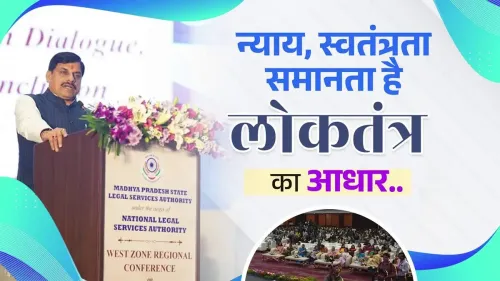
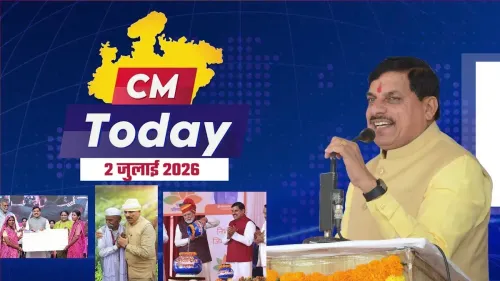
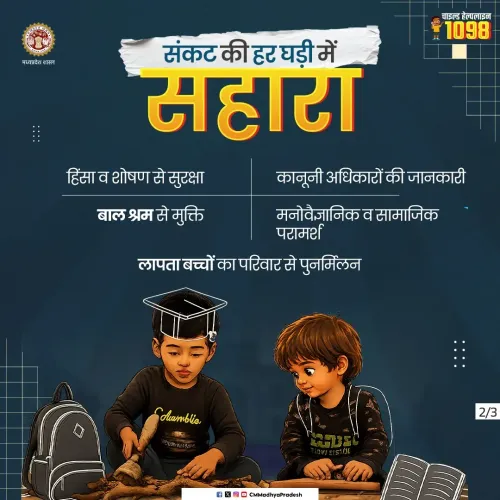
Posting on X, Dr. Yadav wrote: 'aadarneey Pradhan Mantri Shri @narendramodi ji ki adhyakshata mein Kendreey Mantrimandal dwara mahilaon evam bachchon ko tvarit nyay dilaane ki disha mein aitihasik nirnay' — 'A historic decision by the Union Cabinet under the chairmanship of respected Prime Minister Shri Narendra Modi towards delivering speedy justice to women and children.' The post carried two images, though the specific text of the cabinet resolution was not detailed in the message.
Decades of reform behind this moment
The push for faster judicial relief for women and children has been building for over a decade. The Protection of Children from Sexual Offences (POCSO) Act, 2012 established a dedicated legal framework for crimes against minors. The Criminal Law (Amendment) Act, 2013 — born from the national outrage following the Nirbhaya case — tightened penalties and mandated faster trials for sexual offences against women.
The most concrete institutional response came in 2019, when the government approved Fast Track Special Courts (FTSCs) funded through the Nirbhaya Fund, specifically to clear the backlog of POCSO and rape cases clogging the regular court system. These courts became a template for how the state and centre could act in concert on the most sensitive category of criminal cases.
Why state leaders echo central cabinet moves
Dr. Yadav's swift endorsement follows a well-established pattern: when the Union Cabinet announces measures on women's safety or child protection, BJP chief ministers publicly align their states with the direction, reinforcing both political solidarity and policy intent. For Madhya Pradesh — a state that has seen its own legislative efforts on women's safety — the signal carries particular weight.
The specific details of the November 4, 2026 cabinet decision — whether it involves new fast-track courts, additional funding, legislative amendments, or procedural reforms — are yet to be formally elaborated in the public domain. What states choose to implement, and how quickly, will determine whether this 'historic' label holds up in practice.
For millions of women and children still waiting for case resolution across India's overburdened courts, the measure of this decision will not be in the announcement — it will be in the dockets cleared.
Point of View
However its specifics unfold, arrives at a moment when India's judicial backlog in POCSO and sexual offence cases remains a persistent pressure point. Dr. Yadav's prompt amplification is textbook centre-state political alignment — it signals Madhya Pradesh's readiness to implement without waiting for details. The deeper question is institutional: whether the government builds on the FTSC framework with fresh funding and timelines, or announces intent without matching infrastructure. For the BJP, women's safety policy has become a core governance identity marker; each cabinet-level move reinforces that narrative for state electorates.
NationPress
4 Nov 2026
Frequently Asked Questions
What did the Union Cabinet decide on November 4, 2026 for women and children?
The Union Cabinet, chaired by Prime Minister Narendra Modi, announced a decision described as a historic step toward delivering speedy justice to women and children. The specific details of the measures — new courts, funding, or legislative changes — had not been fully elaborated in the public domain at the time of CM Mohan Yadav's post.
What are Fast Track Special Courts for women and children in India?
Fast Track Special Courts (FTSCs) were approved in 2019 under the Nirbhaya Fund to expedite trials in rape and POCSO cases. They operate separately from regular courts to reduce delays in the most sensitive criminal cases involving women and children.
What is the POCSO Act and when was it enacted?
The Protection of Children from Sexual Offences (POCSO) Act was enacted in 2012. It provides a comprehensive legal framework to protect children from sexual abuse and exploitation, with stringent penalties and child-friendly trial procedures.
Why did Madhya Pradesh CM Mohan Yadav comment on a central cabinet decision?
BJP-governed state chief ministers routinely endorse Union Cabinet decisions on key social issues such as women's safety to signal policy alignment with the central government and underscore their state's commitment to implementation.
What was the Criminal Law Amendment Act 2013 and what triggered it?
The Criminal Law (Amendment) Act 2013 was enacted after the Nirbhaya gang rape case of December 2012, introducing stricter punishments for sexual offences against women and mandating faster completion of trials in such cases.