CM Mohan Yadav marks Ganga Dussehra, hails Modi's water mission
Synopsis
On Ganga Dussehra 2026, Madhya Pradesh CM Dr. Mohan Yadav praised PM Modi for transforming water conservation into a national movement, citing the Jal Jeevan Mission's 'Har Ghar Jal' pledge and the principle that water is the foundation of India's future.
Key Takeaways
Mohan Yadav posted on 25 May 2026 marking Ganga Dussehra as a festival of gratitude for water.
He credited PM Narendra Modi with making water conservation a national mass movement.
The post referenced the Jal Jeevan Mission slogan 'Har Ghar Jal' and the principle 'Jal hai toh kal hai' .
Jal Jeevan Mission was launched in August 2019 to provide piped tap water to all rural households in India.
Namami Gange , approved in May 2015 , remains the flagship programme for Ganga river conservation and pollution abatement.
Madhya Pradesh is among the states mandated to report progress on central water missions ahead of each monsoon season.
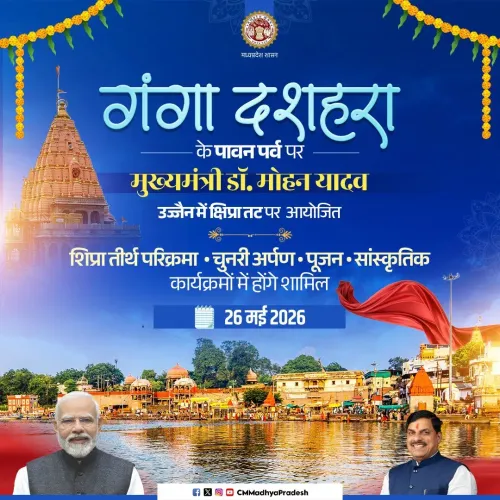
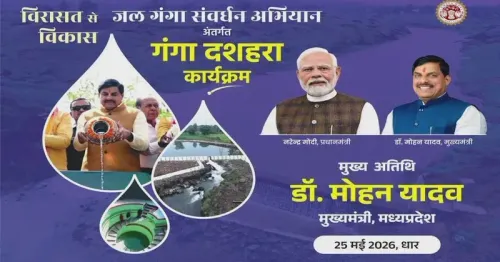
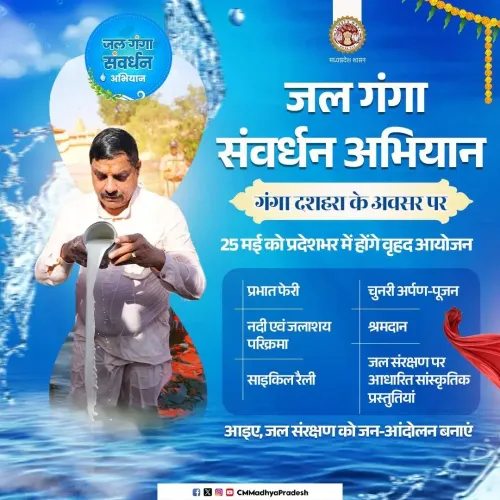
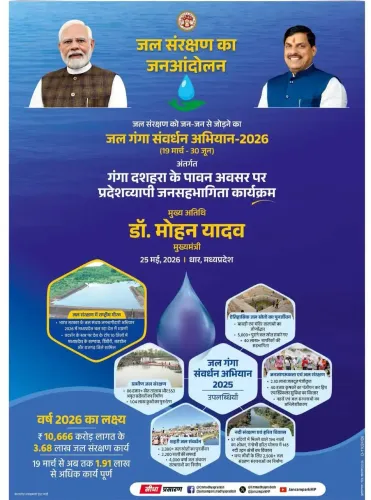
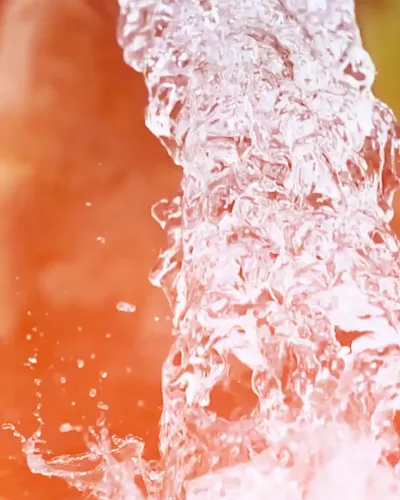
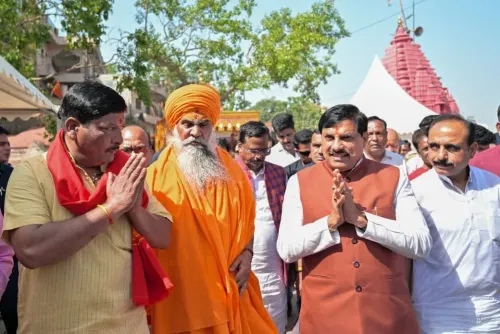
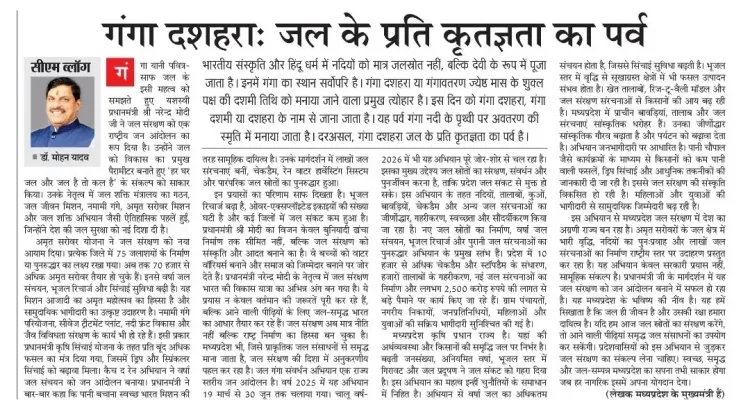
Madhya Pradesh Chief Minister Dr. Mohan Yadav on Monday, 25 May 2026, invoked the occasion of Ganga Dussehra to celebrate water as a sacred resource and praised Prime Minister Narendra Modi for elevating water conservation into a national mass movement. Posting on X, the Chief Minister linked the cultural festival's spirit of gratitude for water with the Union government's flagship water-security agenda.
Context
Ganga Dussehra is an annual Hindu festival observed in the May–June period, commemorating the mythological descent of the river Ganga to earth. It is widely observed as an occasion to express reverence for water bodies and has in recent years become a platform for state and central governments to reinforce environmental messaging around river conservation and water stewardship.
In his post, Dr. Yadav described the festival as 'jal ke prati kritagyata ka parv' (a festival of gratitude towards water), framing it as more than a religious observance — a civic reminder of water's centrality to development.
Policy Backdrop
Prime Minister Modi launched the Jal Jeevan Mission in August 2019 with the goal of delivering functional household tap connections to every rural home in India, operating under the tagline 'Har Ghar Jal' (water in every home). Dr. Yadav directly cited this slogan alongside the phrase 'Jal hai toh kal hai' (if there is water, there is a future), describing both as commitments the Prime Minister has turned into reality.
Separately, the Namami Gange programme, approved in May 2015 as an integrated umbrella scheme, has driven pollution abatement and conservation efforts across the Ganga river basin. The Swachh Bharat Mission, initiated in 2014, further linked sanitation outcomes with measurable improvements in water quality, establishing a policy lineage in which cultural, environmental, and developmental goals are deliberately aligned.
Since 2014, the Union government has consistently used cultural and religious events to build public support for water-related schemes, positioning water security as a measurable development indicator across ministries. States including Madhya Pradesh are required to report progress against central mission benchmarks, giving Chief Ministers a direct stake in amplifying the water-conservation narrative.
Stakeholders and Impact
The primary beneficiaries of the Jal Jeevan Mission are rural households, particularly in states like Madhya Pradesh where groundwater stress and seasonal water scarcity affect large farming communities. State water departments serve as implementing agencies, and the mission's coverage data is closely watched as an indicator of governance delivery ahead of each monsoon season.
Farmers and rural women — who traditionally bear the burden of water collection — stand to gain most directly from expanded piped-water coverage. Dr. Yadav's post, timed to a festival that resonates deeply in the Ganga-belt and beyond, reinforces the government's effort to keep water conservation in public consciousness between policy announcements.
What's Next
With the 2026 monsoon season approaching, attention will turn to state-level Jal Jeevan Mission coverage data releases and any new water-conservation guidelines Madhya Pradesh may announce in the coming weeks. The festival period traditionally precedes intensive pre-monsoon water-management planning, making Dr. Yadav's statement an early signal of the state's intent to align its messaging and policy calendar with the Union government's water-security framework.
Point of View
The Chief Minister keeps Madhya Pradesh visibly aligned with New Delhi's flagship agenda at a time when pre-monsoon water management is in focus. The timing is also politically deliberate: Ganga Dussehra commands wide resonance across north and central India, giving the message a reach well beyond the party faithful. As Jal Jeevan Mission coverage data comes under scrutiny, such high-profile endorsements from state leaders serve as both political communication and a soft accountability signal to implementing departments.
NationPress
9 Oct 2026
Frequently Asked Questions
What is Ganga Dussehra and why is it celebrated?
Ganga Dussehra is an annual Hindu festival observed in May or June that commemorates the mythological descent of the river Ganga to earth. It is celebrated as an occasion to express gratitude for water and to seek blessings from the sacred river.
What is the Jal Jeevan Mission?
The Jal Jeevan Mission is a central government scheme launched in August 2019 by PM Narendra Modi. Its goal is to provide a functional household tap connection supplying safe drinking water to every rural home in India, operating under the tagline 'Har Ghar Jal'.
What did MP CM Mohan Yadav say on Ganga Dussehra 2026?
CM Dr. Mohan Yadav described Ganga Dussehra as a festival of gratitude for water and praised PM Modi for elevating water conservation into a national mass movement, specifically citing the 'Har Ghar Jal' mission and the slogan 'Jal hai toh kal hai'.
What is the Namami Gange programme?
Namami Gange is a flagship integrated programme approved by the Union government in May 2015 for the pollution abatement, conservation, and rejuvenation of the Ganga river basin.
How is Madhya Pradesh involved in India's water conservation schemes?
Madhya Pradesh is a participating state in the Jal Jeevan Mission and is required to report progress on rural tap-water coverage against central benchmarks. The state's water departments serve as implementing agencies for both the mission and related conservation initiatives.