CM Mohan Yadav leads Jal Ganga Sanvardhan Abhiyan in Dhar
Synopsis
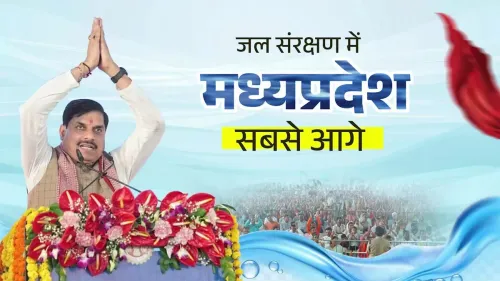
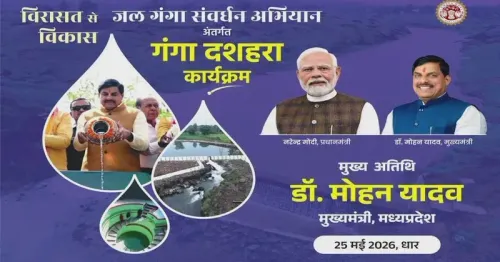
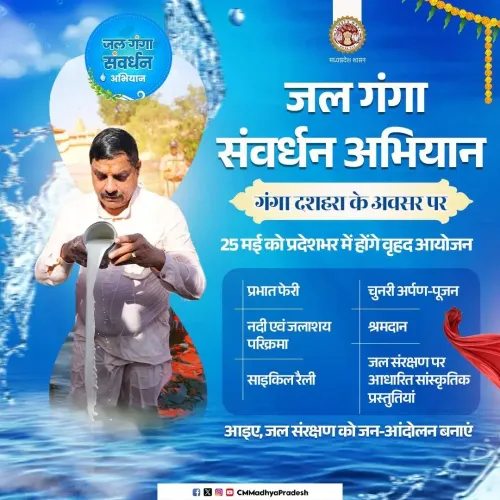
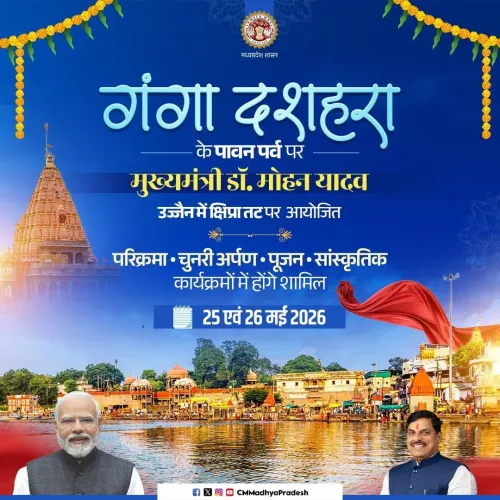
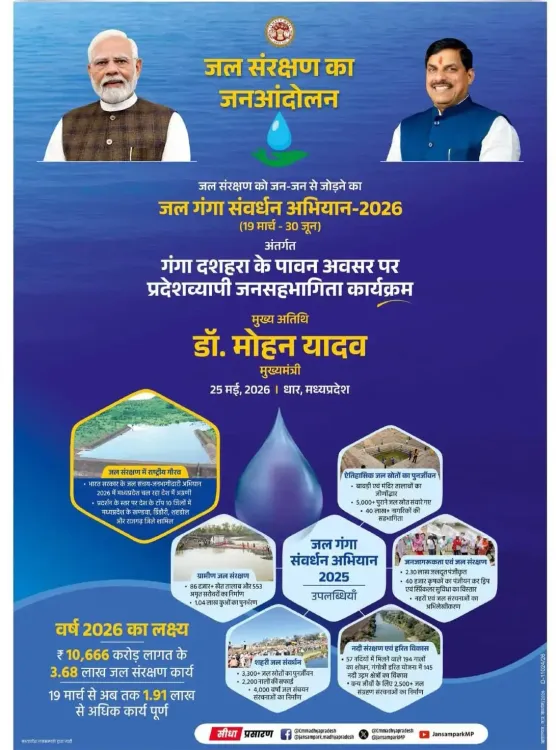
Chief Minister Dr. Mohan Yadav is set to lead the Jal Ganga Sanvardhan Abhiyan's state-wide public participation event in Dhar on Ganga Dussehra, 25 May 2026, as Madhya Pradesh intensifies community-driven water conservation across its rivers and local water bodies.
Key Takeaways
The Chief Minister's Office of Madhya Pradesh announced the Jal Ganga Sanvardhan Abhiyan state-wide event for 25 May 2026 .
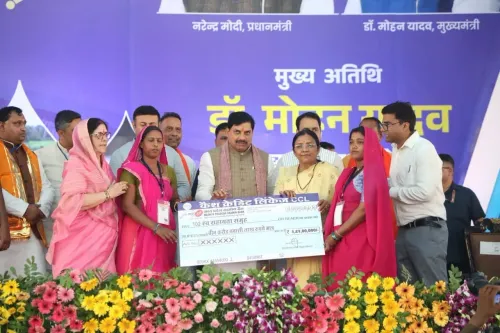
Mohan Yadav will serve as chief guest at the flagship programme held in Dhar , western Madhya Pradesh.
The event is timed to Ganga Dussehra , leveraging the festival's cultural significance to drive public participation in water conservation.
The abhiyan is rooted in the Namami Gange central programme (launched 2014 ) and the 2018 Madhya Pradesh state water policy update.
Rural communities, water user groups, and self-help groups in Dhar and across the state are the primary participants.
District-level activities and measurable outcomes — desilting, plantation coverage — will be the key indicators to track post-event.
The Chief Minister's Office of Madhya Pradesh announced on Monday, 25 May 2026 that Chief Minister Dr. Mohan Yadav will serve as the chief guest at a state-wide public participation event under the Jal Ganga Sanvardhan Abhiyan, held in Dhar on the auspicious occasion of Ganga Dussehra.
Context
The post, shared by the official handle of the Chief Minister's Office, announces a pradesha-vyapi janasahbhagita karyakram (state-wide public participation programme) centred on water conservation and river rejuvenation. The event is timed to coincide with Ganga Dussehra, the Hindu festival that marks the mythological descent of the river Ganga to earth, a date widely used across Indian states to anchor water conservation drives in cultural significance.
Dhar, a district in western Madhya Pradesh known for its historical forts and rural water bodies, has been chosen as the flagship venue for the 2026 edition of the campaign.
Policy Backdrop
The Jal Ganga Sanvardhan Abhiyan is a Madhya Pradesh government initiative that promotes water conservation and river protection through community participation. It draws its policy lineage from the Namami Gange programme, the central government's flagship river-cleaning and pollution-abatement scheme launched in 2014, which encouraged state governments to integrate river conservation with public campaigns.
Madhya Pradesh updated its state water policy in 2018, placing renewed emphasis on community-led rejuvenation of rivers, tanks, and local water bodies. The Jal Ganga Sanvardhan Abhiyan extends this logic beyond the Ganga main stem to its tributaries and smaller water bodies across the state, reflecting the government's intent to embed conservation work within everyday civic life.
Chief Minister Dr. Mohan Yadav, who has led the state since December 2023, has positioned such campaigns as a bridge between cultural tradition and administrative water-management goals.
Stakeholders and Impact
The primary beneficiaries of the abhiyan are rural communities in Dhar and across Madhya Pradesh, including water user groups and local self-help groups who are expected to participate in desilting, plantation, and awareness activities. By anchoring the event to Ganga Dussehra, the government aims to draw voluntary public engagement that administrative outreach alone may not achieve.
Indian states have increasingly adopted this model — blending festival calendars with environmental programmes — to address water scarcity, declining groundwater tables, and river pollution. Madhya Pradesh's approach mirrors a broader national pattern of using mass participation to supplement state capacity in environmental management.
What's Next
Following the flagship event in Dhar, attention will turn to the rollout of district-level activities under the abhiyan across Madhya Pradesh. Key indicators to watch will include the coverage of water-body desilting, plantation drives, and community mobilisation metrics reported by state agencies in the weeks after 25 May 2026. The scale and follow-through of post-event activity will determine whether this edition of the campaign translates into measurable improvements in local water availability and river health.
Point of View
The government signals that water security is a political priority ahead of the summer season. The choice of Dhar, a district with historically stressed rural water bodies, is also a subtle acknowledgement of localised water stress in western Madhya Pradesh. Whether the campaign delivers lasting infrastructure outcomes — rather than a single high-visibility event — will be the true test of its policy ambition.
NationPress
22 Sept 2026
Frequently Asked Questions
What is the Jal Ganga Sanvardhan Abhiyan in Madhya Pradesh?
The Jal Ganga Sanvardhan Abhiyan is a Madhya Pradesh government initiative focused on water conservation and river protection through community participation, aligned with both the state's water policy and the central Namami Gange programme.
Why is the Jal Ganga Sanvardhan Abhiyan event held on Ganga Dussehra?
Ganga Dussehra marks the mythological descent of the river Ganga and is traditionally associated with the sanctity of water; the government uses this cultural occasion to maximise voluntary public participation in conservation activities.
Where is the 2026 Jal Ganga Sanvardhan Abhiyan flagship event being held?
The flagship event for 2026 is being held in Dhar, a district in western Madhya Pradesh, on 25 May 2026.
Who is Chief Minister of Madhya Pradesh in 2026?
Dr. Mohan Yadav has been the Chief Minister of Madhya Pradesh since December 2023 and is the chief guest at the Jal Ganga Sanvardhan Abhiyan event in Dhar.
What is the Namami Gange programme and how does it relate to MP's water campaigns?
Namami Gange is the central government's flagship river-cleaning and pollution-abatement programme launched in 2014; Madhya Pradesh's Jal Ganga Sanvardhan Abhiyan extends its community-participation model to state rivers, tributaries, and local water bodies.