MP CMO Launches Jal Ganga Sanvardhan Abhiyan on Ganga Dussehra
Synopsis
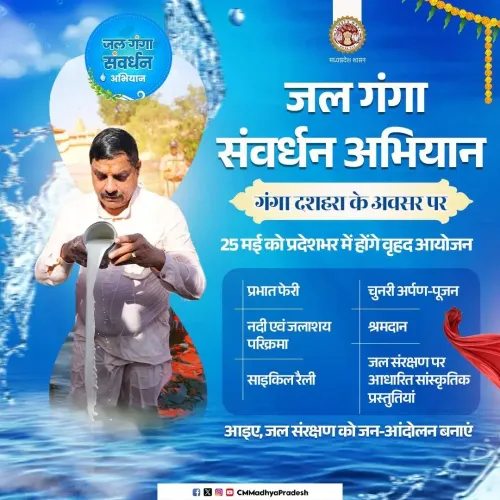
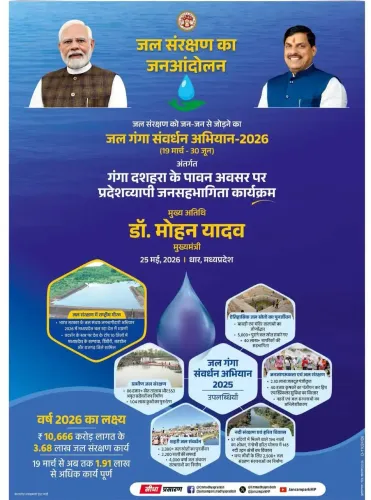
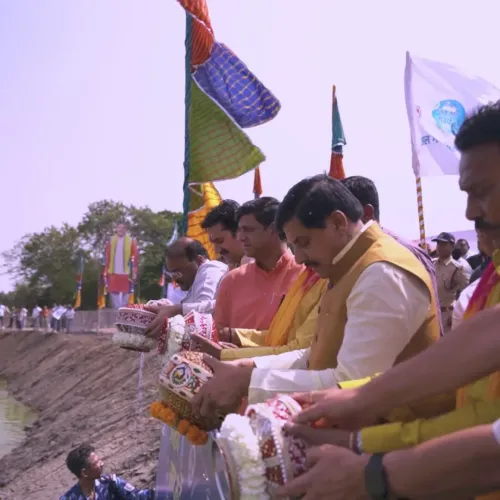
The Chief Minister's Office of Madhya Pradesh launched the Jal Ganga Sanvardhan Abhiyan on Ganga Dussehra, organising statewide public awareness programmes on water conservation and calling citizens to join the campaign to secure the future.
Key Takeaways
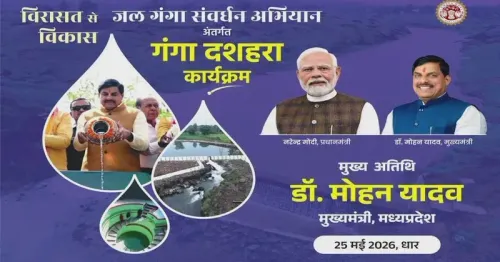
The Chief Minister's Office of Madhya Pradesh announced the Jal Ganga Sanvardhan Abhiyan on Ganga Dussehra, 25 May 2026 .
Special public awareness programmes were organised across Madhya Pradesh on the occasion of the festival.
Mohan Yadav and the Water Resources Department of Madhya Pradesh are associated with the campaign.
The campaign aligns with the national Namami Gange Programme (launched 2014) and the National Water Mission under the 2008 climate action plan.
Madhya Pradesh is using the cultural occasion of Ganga Dussehra to drive grassroots participation in water conservation ahead of the 2026 monsoon season .
The Chief Minister's Office of Madhya Pradesh announced the Jal Ganga Sanvardhan Abhiyan on Sunday, 25 May 2026, calling on citizens across the state to join special public awareness programmes organised on the occasion of Ganga Dussehra. The campaign, promoted under the hashtag #जल_गंगा_संवर्धन_अभियान_MP, urges residents to participate and 'secure the future' through collective water conservation action.
Context
Ganga Dussehra, observed annually on the tenth day of the bright fortnight of the Hindu month of Jyeshtha, commemorates the mythological descent of the Ganga river to earth. Across India, the festival is marked by ritual bathing and prayers at riverbanks. The Madhya Pradesh government has used the occasion to anchor the Jal Ganga Sanvardhan Abhiyan, blending cultural reverence for rivers with a structured public outreach drive on water conservation.
The CMO's post tagged Chief Minister Dr. Mohan Yadav and the Water Resources Department of Madhya Pradesh (@minmpwrd), signalling that the campaign carries both political and administrative weight at the highest level of the state government.
Policy Backdrop
The Jal Ganga Sanvardhan Abhiyan sits within a broader national framework of river rejuvenation policy. The Centre's Namami Gange Programme, launched in 2014, set the template for combining pollution abatement with public participation, and states across India have since aligned their own drives to that mission's calendar and messaging.
Madhya Pradesh, while not a primary riparian state on the Ganga, has consistently framed local water conservation within the cultural vocabulary of the Ganga. The state also operates under the National Water Mission, part of the National Action Plan on Climate Change (2008), which mandates state-level conservation and awareness efforts. Issues of groundwater depletion and seasonal water scarcity in the state's river basins give the campaign practical urgency beyond its ceremonial timing.
The broader pattern — festival-linked environmental awareness drives — has become a recognisable instrument of environmental governance in several states, mobilising community participation without requiring large administrative outlays.
Stakeholders and Impact
The primary audience for the Jal Ganga Sanvardhan Abhiyan is Madhya Pradesh's general public, particularly communities living along river basins who depend on surface water and groundwater for agriculture and daily use. Special programmes held statewide on Ganga Dussehra are intended to reach both urban and rural populations simultaneously.
The Water Resources Department is the nodal implementing agency, coordinating on-ground events. Civil society groups, local bodies, and schools are typically drawn into such state-wide awareness campaigns, amplifying reach beyond government machinery alone.
What's Next
With the monsoon season of 2026 approaching, the campaign's momentum will be tested by whether awareness translates into measurable conservation behaviour — such as increased water harvesting or reduced groundwater extraction — at the community level. Observers will watch for any follow-up policy announcements from the Dr. Mohan Yadav administration, including possible linkages with the central government's Jal Jeevan Mission reviews expected later in the year.
The success of statewide awareness programmes on a single festival day often depends on sustained administrative follow-through in the weeks that follow, making the post-Ganga Dussehra period a key indicator of the campaign's longer-term intent.
Point of View
Lending cultural legitimacy to policy campaigns while maximising public reach at minimal cost. For Madhya Pradesh, a non-riparian Ganga state, invoking the Ganga carries symbolic weight that local river names might not — connecting a state-level drive to a pan-Indian cultural narrative. The tagging of both the Chief Minister and the Water Resources Department signals this is more than ceremonial; it is a coordinated administrative push with political visibility built in. Whether the campaign produces measurable conservation outcomes will depend on the institutional follow-through that awareness drives alone rarely guarantee.
NationPress
7 Oct 2026
Frequently Asked Questions
What is the Jal Ganga Sanvardhan Abhiyan in Madhya Pradesh?
The Jal Ganga Sanvardhan Abhiyan is a Madhya Pradesh government campaign focused on water conservation and river awareness, launched statewide on Ganga Dussehra 2026 through special public programmes.
What is Ganga Dussehra and why is it significant for water campaigns?
Ganga Dussehra is an annual Hindu festival marking the mythological descent of the Ganga river, observed on the tenth day of the bright fortnight of Jyeshtha. Its cultural significance makes it an effective occasion for water conservation awareness drives.
Is Madhya Pradesh part of the Ganga river basin?
Madhya Pradesh is not a primary riparian state on the Ganga, but it participates in Ganga-linked conservation campaigns and aligns its water policy with national missions such as Namami Gange.
What is the Namami Gange Programme and how does it relate to state campaigns?
The Namami Gange Programme is the central government's flagship scheme for Ganga rejuvenation and pollution abatement, launched in 2014. States including Madhya Pradesh have aligned their own water awareness campaigns with its framework and messaging.
Who is overseeing the Jal Ganga Sanvardhan Abhiyan in Madhya Pradesh?
Chief Minister Dr. Mohan Yadav and the Water Resources Department of Madhya Pradesh are the key figures associated with the campaign, as indicated by the CMO's official post on the initiative.