MP CM's Office Launches Jal Ganga Sanvardhan Abhiyan on Ganga Dashami
Synopsis
The Chief Minister's Office of Madhya Pradesh has launched the Jal Ganga Sanvardhan Abhiyan, urging citizens to perform voluntary shramdaan on Ganga Dashami to conserve water bodies and structures across the state through public participation.
Key Takeaways
The Chief Minister's Office of Madhya Pradesh announced the Jal Ganga Sanvardhan Abhiyan on 24 May 2026 .
The campaign calls for shramdaan (voluntary community labour) to protect and conserve water structures on Ganga Dashami .
Mohan Yadav and the Madhya Pradesh Water Resources Department are directly associated with the drive.
The initiative builds on national programmes including Namami Gange (2014) and Jal Shakti Abhiyan (2019).
Primary beneficiaries include farmers and rural communities dependent on local water bodies for irrigation.
Post-campaign follow-up by the Water Resources Department on structure maintenance is anticipated.
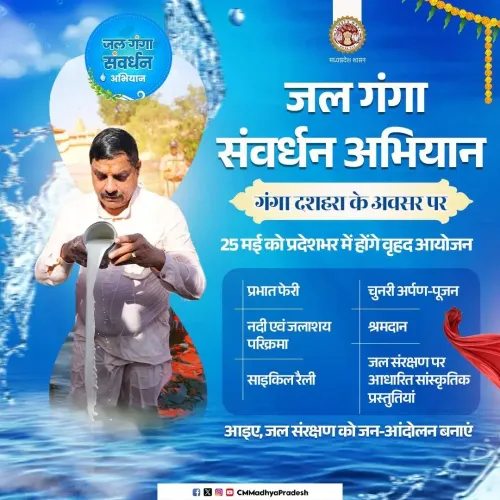
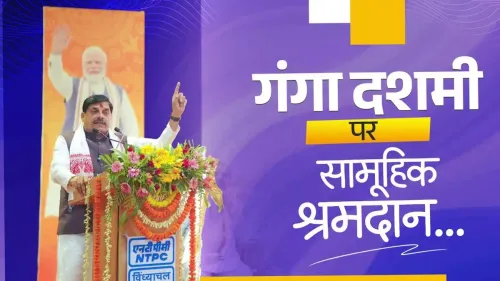
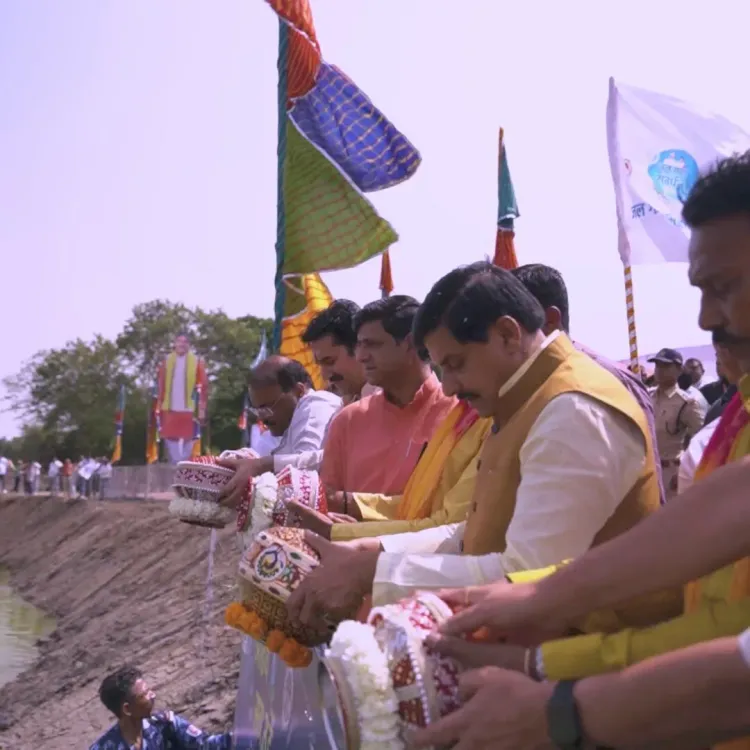
The Chief Minister's Office of Madhya Pradesh on Sunday, 24 May 2026 called on citizens to participate in the Jal Ganga Sanvardhan Abhiyan, a state-wide campaign to conserve water bodies and structures through community labour, coinciding with the auspicious occasion of Ganga Dashami.
Context
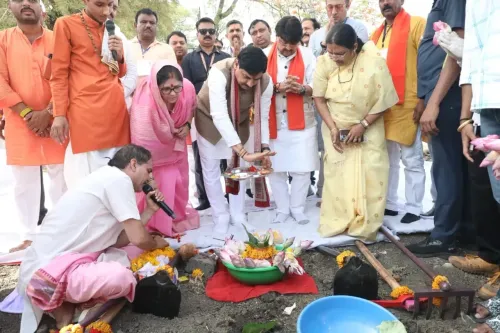
The post, shared from the official handle of the Chief Minister's Office of Madhya Pradesh, invites residents to perform shramdaan (voluntary community labour) on Ganga Dashami as an act of duty toward nature. The message reads: 'Let us fulfil our duty towards nature by contributing voluntary labour on the auspicious occasion of Ganga Dashami.' The campaign is anchored in the idea of janabhagidari — public participation — as the primary vehicle for protecting water infrastructure.Policy Backdrop
The Jal Ganga Sanvardhan Abhiyan is a Madhya Pradesh government initiative that channels public energy into the upkeep and restoration of traditional water structures such as ponds, stepwells, and small reservoirs. The campaign draws from the lineage of national programmes: the Namami Gange scheme, launched in 2014, sought to rejuvenate the Ganga and its tributaries through both infrastructure investment and community action, while the Jal Shakti Abhiyan, introduced in 2019, accelerated rainwater harvesting and water conservation efforts across India. Madhya Pradesh, an agriculture-heavy state crisscrossed by major river systems, faces persistent pressure from groundwater depletion and erratic monsoon patterns, making community-level conservation efforts especially consequential. The state's Water Resources Department, tagged in the post via @minmpwrd, plays a central institutional role in maintaining dams, irrigation canals, and water conservation projects. Tying the campaign to a cultural festival reflects a broader national pattern in which state governments leverage religious observances to mobilise voluntary participation in civic and environmental work.Stakeholders and Impact
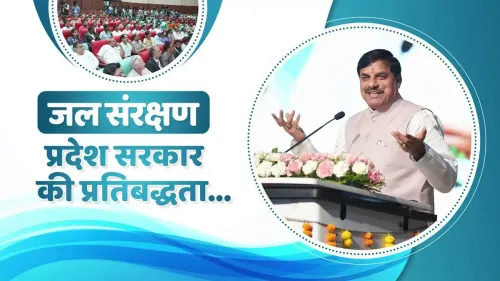
Chief Minister Dr. Mohan Yadav, who has helmed the state since December 2023, was directly tagged in the post, signalling his personal association with the drive. The campaign's primary beneficiaries are farmers and rural communities who depend on functional water structures for irrigation and daily use. Volunteers who participate in shramdaan activities contribute to the physical maintenance of ponds, check dams, and other local water bodies that formal departmental resources may not reach in time. For an agrarian state like Madhya Pradesh, even incremental improvements in water retention at the village level can translate into measurable gains during lean pre-monsoon months.What's Next
The scale of citizen turnout on Ganga Dashami and the volume of water structures covered will be a key indicator of the campaign's on-ground reach. The Madhya Pradesh Water Resources Department is expected to issue follow-up directives on the maintenance of structures identified or restored during the drive. Sustained engagement beyond the festival day — through monitoring, repair, and community ownership — will determine whether the Jal Ganga Sanvardhan Abhiyan produces durable conservation outcomes or remains a symbolic one-day mobilisation.Point of View
The post signals institutional ownership rather than a purely ceremonial call. For a state where agriculture remains the backbone of the economy, water conservation is a politically salient issue that can yield visible, vote-relevant results at the village level. The durability of such campaigns, however, hinges on whether the momentum of a single festival day is converted into structured, year-round maintenance protocols.
NationPress
22 Sept 2026
Frequently Asked Questions
What is the Jal Ganga Sanvardhan Abhiyan in Madhya Pradesh?
The Jal Ganga Sanvardhan Abhiyan is a Madhya Pradesh government campaign that promotes conservation of water bodies and traditional water structures through public participation and voluntary community labour known as shramdaan.
What is Ganga Dashami and why is it significant for this campaign?
Ganga Dashami is an annual Hindu festival marking the descent of the river Ganga, observed with rituals and community service. The Madhya Pradesh government chose this occasion to mobilise citizens for voluntary water conservation work, linking civic duty with cultural observance.
Who is leading the Jal Ganga Sanvardhan Abhiyan in MP?
The campaign is associated with Chief Minister Dr. Mohan Yadav, who has led Madhya Pradesh since December 2023, and is supported institutionally by the Madhya Pradesh Water Resources Department.
How does the MP water campaign connect to national schemes like Namami Gange?
The Jal Ganga Sanvardhan Abhiyan builds on the framework of national initiatives such as Namami Gange, launched in 2014, and the Jal Shakti Abhiyan of 2019, both of which combined government infrastructure work with community participation to address water conservation.
Who benefits from water conservation drives in Madhya Pradesh?
Farmers and rural communities are the primary beneficiaries, as functional ponds, check dams, and local water structures support irrigation and daily water needs, particularly during pre-monsoon periods in this agriculture-dependent state.