CM Mohan Yadav Urges Public to Join Jal Ganga Sanvardhan Abhiyan
Synopsis
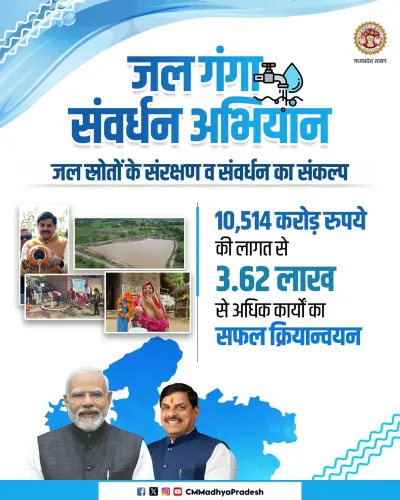
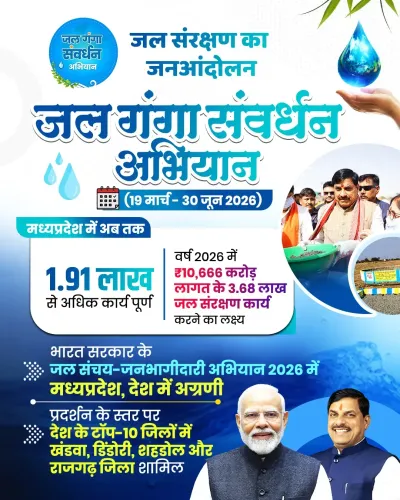
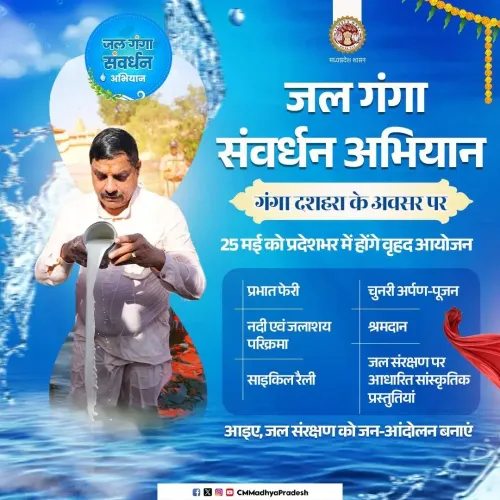
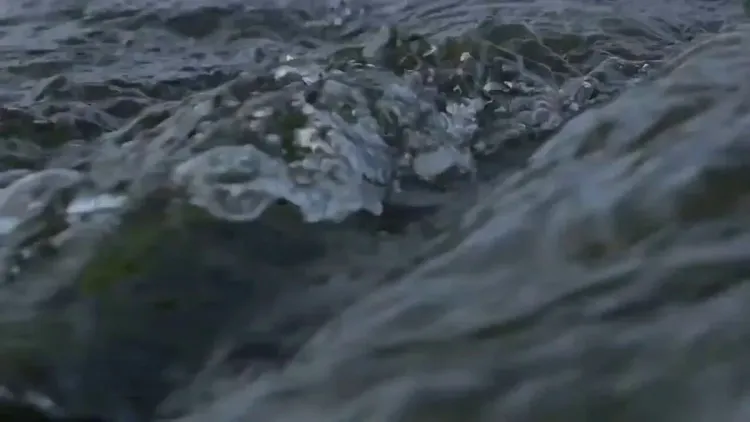
Madhya Pradesh Chief Minister Dr. Mohan Yadav on 22 May 2026 called on citizens to join the Jal Ganga Sanvardhan Abhiyan, a public-participation water conservation campaign running until 30 June 2026, under the Viksit Madhya Pradesh vision.
Key Takeaways
Madhya Pradesh CM Dr.
Mohan Yadav promoted the Jal Ganga Sanvardhan Abhiyan on 22 May 2026 via an X post with a video.
The campaign runs until 30 June 2026 and focuses on river rejuvenation, watershed management, and groundwater replenishment.
The CM described the abhiyan as having become synonymous with public participation ( janabhagidari ).
The initiative is aligned with Viksit Madhya Pradesh goals, which mirror the national Viksit Bharat 2047 sustainability framework.
The campaign draws on the policy lineage of central schemes including Namami Gange (2014) and Jal Jeevan Mission (2019).
Primary beneficiaries are farmers and rural communities dependent on surface water and groundwater across the state.
Madhya Pradesh Chief Minister Dr. Mohan Yadav on Friday, 22 May 2026 called on citizens across the state to join the Jal Ganga Sanvardhan Abhiyan, describing the water conservation campaign as a symbol of mass public participation. The campaign is scheduled to run until 30 June 2026, with the Chief Minister framing it as a flagship effort under the broader Viksit Madhya Pradesh vision.
Context
In his post on X, Dr. Mohan Yadav wrote: 'Jal Ganga Sanvardhan Abhiyan, ab janabhagidari ka paryay ban gaya hai' — meaning 'The Jal Ganga Sanvardhan Abhiyan has now become synonymous with public participation.' He urged residents to connect with the campaign before its deadline of 30 June 2026, using the hashtags #जल_गंगा_संवर्धन_अभियान_MP and #ViksitMadhyaPradesh. The post was accompanied by a video, underlining the government's effort to amplify the campaign's reach through social media outreach.
Policy Backdrop
The Jal Ganga Sanvardhan Abhiyan is a Madhya Pradesh state-level water conservation drive focused on river rejuvenation, watershed management, and groundwater replenishment through community involvement. It draws conceptual lineage from central government programmes including the Namami Gange Mission, launched in 2014 as an integrated conservation initiative for the Ganga basin and its tributaries, and the Jal Jeevan Mission, announced in 2019 to expand rural tap water connectivity and promote source sustainability.
Indian states have increasingly adopted time-bound, public-participation-driven water campaigns to counter accelerating groundwater depletion and climate variability. Madhya Pradesh has historically combined central scheme frameworks with state-specific river-rejuvenation efforts, targeting measurable outcomes in water-body revival and community mobilisation.
Stakeholders and Impact
The campaign's primary beneficiaries are farmers and rural communities across Madhya Pradesh, who depend on groundwater and surface water sources for irrigation and daily use. Sustained water-body rejuvenation can directly reduce agricultural stress during dry seasons, improve drinking water availability, and support livelihoods in rain-dependent districts.
By positioning the abhiyan as a 'janabhagidari' (public participation) movement, the state government is signalling an intent to move beyond top-down implementation and embed conservation responsibility at the community level — a model increasingly favoured in national sustainability frameworks aligned with Viksit Bharat 2047 goals.
What's Next
With the campaign deadline of 30 June 2026 approaching, attention will turn to official progress reports on participation numbers, water-body rejuvenation metrics, and groundwater level changes across the state. Observers will also watch for possible integration of the campaign's outcomes into upcoming state budget allocations or central scheme reviews, which could determine the programme's continuity and scale beyond its current phase.
Point of View
Citizen-driven movements — lending grassroots legitimacy to what are often top-down policy directives. Framing the campaign as 'janabhagidari ka paryay' is a deliberate political signal, positioning the BJP-led state government as a responsive steward of natural resources ahead of any future electoral cycle. The June 2026 deadline creates a measurable accountability window, which the government will likely leverage to showcase water-body revival data as a development credential. Broader integration with Namami Gange and Jal Jeevan Mission funding could amplify both the programme's reach and its visibility as part of the Viksit Bharat 2047 narrative.
NationPress
21 Sept 2026
Frequently Asked Questions
What is the Jal Ganga Sanvardhan Abhiyan in Madhya Pradesh?
The Jal Ganga Sanvardhan Abhiyan is a Madhya Pradesh state government campaign focused on river rejuvenation, watershed management, and groundwater conservation through public participation. It is scheduled to run until 30 June 2026.
When does the Jal Ganga Sanvardhan Abhiyan end?
The campaign is scheduled to conclude on 30 June 2026, as stated by Chief Minister Dr. Mohan Yadav in his post on 22 May 2026.
How can citizens join the Jal Ganga Sanvardhan Abhiyan MP?
Chief Minister Dr. Mohan Yadav has urged all citizens to connect with the campaign, which emphasises community-level participation in water conservation and river rejuvenation activities across Madhya Pradesh.
What is Viksit Madhya Pradesh and how is it related to this campaign?
Viksit Madhya Pradesh is a state-level development vision aligned with the national Viksit Bharat 2047 goals. The Jal Ganga Sanvardhan Abhiyan is one of the flagship environmental initiatives under this broader sustainable development framework.
How does the Jal Ganga Sanvardhan Abhiyan relate to Namami Gange?
The Madhya Pradesh campaign draws conceptual and policy lineage from the central government's Namami Gange Mission, launched in 2014 for integrated conservation of the Ganga basin and its tributaries, combining it with state-specific watershed and river-rejuvenation efforts.