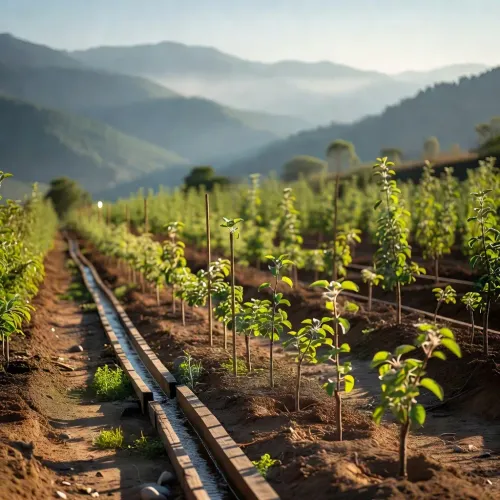
CM Office: Tech Transforms Apple Farming in Bageshwar

Synopsis
The Chief Minister's Office of Uttarakhand shared a video on 8 July 2026 showing how modern technology in apple horticulture is changing the lives of farmers in Bageshwar district, spotlighting a state push to raise yields and reduce rural out-migration in the Kumaon hills.
Key Takeaways
The Chief Minister's Office of Uttarakhand on 8 July 2026 highlighted technology-driven apple horticulture in Bageshwar district via an official video post.
Bageshwar , in the Kumaon division, has a largely rural population dependent on fruit and vegetable cultivation across hilly terrain.
Uttarakhand's horticulture programmes build on the National Horticulture Mission (2005) , which provided central assistance for technology induction and post-harvest infrastructure.
State interventions have included subsidies for high-density planting material , trellis systems, and weather-based advisory tools in apple orchards.
Reducing rural out-migration from districts like Bageshwar is a stated secondary goal of technology-backed horticulture promotion.
Next steps to watch include state horticulture department data on high-density apple area and budgetary allocations for cold-chain and irrigation infrastructure in Kumaon.
The Chief Minister's Office of Uttarakhand on Wednesday, 8 July 2026 highlighted how the adoption of modern technology in apple horticulture is transforming the lives of farmers in Bageshwar district, sharing a video documenting the shift on its official X account.
Context
The post, shared in Hindi, states: 'Seb ki bagwani mein latest technology ke istemal se badal rahi hai janpad Bageshwar ke kisanon ki tasveer' — ('The picture of farmers in Bageshwar district is changing through the use of the latest technology in apple horticulture'). The announcement was accompanied by a video, underscoring the state government's intent to document and amplify ground-level change in one of Uttarakhand's less-developed hill districts.
Bageshwar is a district in the Kumaon division of Uttarakhand, where a significant share of the rural population depends on fruit and vegetable cultivation across hilly terrain. Apple farming, while historically practised at higher altitudes in the state, has seen renewed government attention as a vehicle for rural income generation.
Policy Backdrop
Uttarakhand's push toward technology-driven horticulture follows a broader national trajectory. The National Horticulture Mission, launched in 2005, extended central assistance to states including Uttarakhand for area expansion, technology induction, and post-harvest infrastructure in apple and other fruit crops. The state has since run its own horticulture missions that subsidise imported planting material, trellis systems, and weather-based advisory tools.
Across the Himalayan belt, several states have promoted high-density planting, micro-irrigation, and protected cultivation in apple orchards since the mid-2000s. This has been driven by declining productivity linked to climate shifts and ageing orchards. Uttarakhand's district-level focus on lower-productivity pockets such as Bageshwar mirrors this pattern, with the aim of raising per-hectare yields and curbing rural out-migration.
Stakeholders and Impact
The primary beneficiaries are apple growers and hill farmers in Bageshwar, many of whom have historically faced low yields and limited market access. Technology adoption in horticulture — ranging from better planting systems to irrigation and advisory tools — has the potential to raise farm incomes and reduce dependence on subsistence agriculture.
Reduced out-migration is a key secondary goal. Bageshwar, like several Kumaon districts, has seen working-age populations move to plains cities in search of livelihood. A viable, technology-backed apple economy could offer a credible alternative, anchoring rural households to the land.
What's Next
Attention will now turn to whether the Uttarakhand state horticulture department releases updated data on the area under high-density apple cultivation and any new budgetary allocations for sensor-based irrigation or cold-chain facilities in Kumaon districts. The Chief Minister's Office's decision to spotlight Bageshwar suggests the district may see continued prioritisation in upcoming horticulture policy announcements. Sustained investment in post-harvest infrastructure will be critical to translating orchard-level gains into durable income improvements for farmers.
Point of View
Suggesting a communications strategy aimed at both local farmer audiences and broader digital constituencies. Whether this spotlight translates into sustained budgetary commitment or remains a one-off highlight will determine its real policy weight.
NationPress
9 Jul 2026
Frequently Asked Questions
How is technology changing apple farming in Bageshwar Uttarakhand?
The Uttarakhand government has been promoting modern techniques such as high-density planting, micro-irrigation, and weather-based advisory tools in apple orchards in Bageshwar district. The Chief Minister's Office highlighted this transformation in a video post on 8 July 2026, noting that the latest technology is changing the lives of farmers in the district.
What is the National Horticulture Mission and how does it help Uttarakhand?
The National Horticulture Mission, launched in 2005, provides central government assistance to states including Uttarakhand for expanding fruit cultivation, introducing technology, and building post-harvest infrastructure. It has supported apple and other fruit crop development across Himalayan states.
Why is apple horticulture important for Bageshwar district farmers?
Apple horticulture offers hill farmers in Bageshwar a viable cash crop alternative to subsistence farming. With government support for modern techniques, it has the potential to raise per-hectare yields, improve incomes, and reduce the out-migration of working-age people from the district.
What technology is used in apple orchards in Uttarakhand hills?
Uttarakhand's horticulture missions have subsidised high-density planting material, trellis support systems, micro-irrigation, and weather-based advisory tools for apple growers. These interventions aim to counter declining productivity linked to climate change and ageing orchards.
Which district in Uttarakhand is being developed for apple farming?
Bageshwar district in the Kumaon division of Uttarakhand is among the districts being targeted for technology-driven apple horticulture development, as highlighted by the Chief Minister's Office in July 2026.