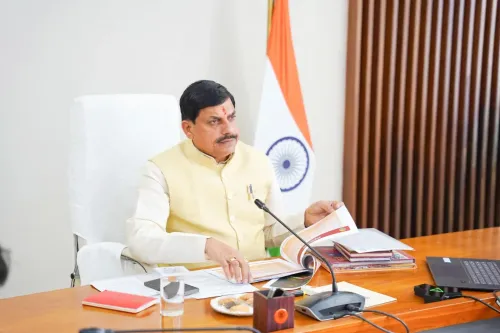
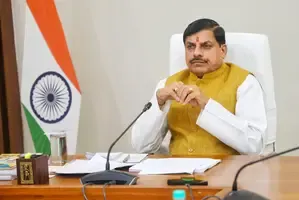
CM Mohan Yadav inaugurates Samakota Barrage, 19 projects in Ujjain
Synopsis
Chief Minister Dr. Mohan Yadav on 17 June 2026 inaugurated the Samakota Barrage and 18 other development works worth over ₹207 crore in Mahidpur, Ujjain, promising improved irrigation, water conservation, and groundwater recharge for farmers in the Malwa region.
Key Takeaways
19 development works worth more than ₹207 crore were inaugurated or launched in Mahidpur, Ujjain on 17 June 2026 .
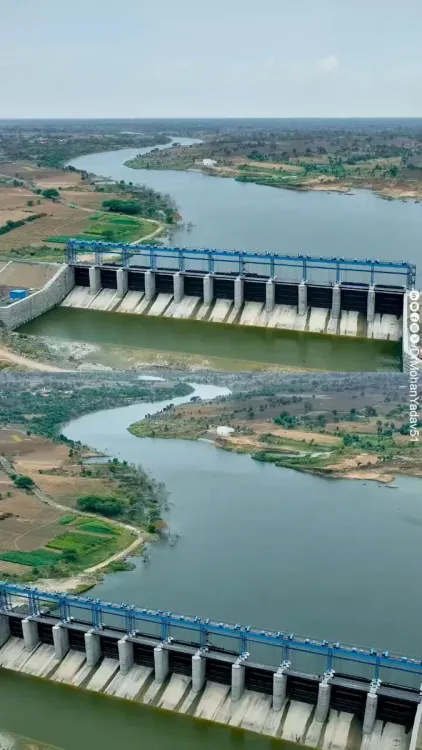
The Samakota Barrage is the flagship project, designed to provide reliable irrigation water to farmers in the Ujjain district .
The barrage is also expected to strengthen water conservation and improve groundwater levels in the region.
The projects align with the objectives of the Pradhan Mantri Krishi Sinchayee Yojana (PMKSY, 2015) , which targets irrigation completion and water-use efficiency.
The event follows a pattern in Madhya Pradesh of bundling multiple rural infrastructure works for simultaneous dedication to maximise delivery visibility.
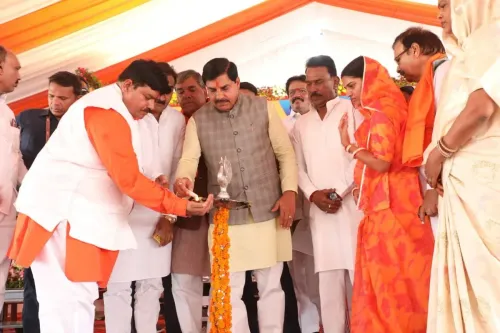
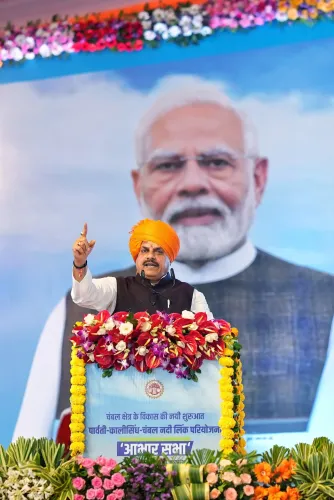
Madhya Pradesh Chief Minister Dr. Mohan Yadav on Wednesday, 17 June 2026, inaugurated and performed the ground-breaking of 19 development works worth more than ₹207 crore in Mahidpur, Ujjain, with the Samakota Barrage as the centrepiece of the event.
Context
Addressing the gathering, Chief Minister Yadav said the Samakota Barrage would ensure adequate irrigation water for farmers — 'hamare annadata kisanon ko sinchai ke liye paryapt jal' (sufficient water for our farmer food-providers) — while simultaneously strengthening water conservation and improving groundwater levels in the region. The 19 projects spanned multiple departments and were dedicated or launched in a single ceremony, a practice the state government has adopted to maximise the visibility of rural infrastructure delivery.
Policy Backdrop
Madhya Pradesh has been expanding its network of minor and medium irrigation structures since the early 2010s through the state's Water Resources Department. The Samakota Barrage fits squarely within the objectives of the Pradhan Mantri Krishi Sinchayee Yojana (PMKSY), launched in 2015, which emphasises completing stalled irrigation works and improving water-use efficiency across India. The Malwa plateau, where Ujjain district lies, is heavily dependent on rain-fed agriculture, making barrage-based storage critical for both kharif and rabi cropping cycles.
Successive state governments have prioritised such structures in Malwa and Bundelkhand to counter groundwater depletion — a concern that has grown sharper with erratic monsoon patterns over the past decade. The ₹207-crore package bundles works across sectors, reflecting the administration's strategy of clustering multiple local projects for simultaneous dedication.
Stakeholders and Impact
The most direct beneficiaries are local farming communities in and around Mahidpur and the broader Ujjain district, who depend on timely and sufficient irrigation to protect standing crops. The barrage is expected to regulate water storage and release, reducing dependence on erratic groundwater extraction and helping stabilise agricultural output across seasons.
Rural households beyond the farming community also stand to gain, as improved groundwater recharge linked to surface water storage can benefit drinking-water availability in nearby villages. The Ujjain district, home to significant religious and agricultural activity on the Malwa plateau, has long sought dependable irrigation infrastructure to complement its rain-fed cropping.
What's Next
The practical measure of success for the Samakota Barrage will be the net irrigated area added and observable changes in local groundwater tables over the next two rabi seasons. Analysts and farmer groups will watch whether the water released reaches tail-end fields and whether the project's water-conservation outcomes match official projections. Similar barrage projects in the pipeline could find a place in the state's next annual irrigation budget, signalling whether Madhya Pradesh intends to scale this model across other water-stressed talukas.
Point of View
Multi-project inaugurations in agrarian constituencies — a pattern that combines genuine infrastructure delivery with political signalling ahead of local electoral cycles. The Samakota Barrage, framed around farmer welfare and groundwater recharge, taps into two of the most electorally sensitive issues in rural Madhya Pradesh: irrigation access and water scarcity. Bundling ₹207 crore across 19 works in a single ceremony amplifies the optics of governance momentum without necessarily indicating accelerated spending. The real test will be whether irrigated acreage and groundwater data in Ujjain district show measurable improvement over the next two agricultural seasons.
NationPress
16 Sept 2026
Frequently Asked Questions
What is the Samakota Barrage in Ujjain?
The Samakota Barrage is a medium-scale water storage and regulation structure inaugurated in Mahidpur, Ujjain district, Madhya Pradesh, designed to supply irrigation water to local farmers and improve groundwater recharge in the Malwa plateau region.
How much money was spent on the 19 development projects in Mahidpur?
Chief Minister Dr. Mohan Yadav inaugurated and launched 19 development works worth more than ₹207 crore in Mahidpur, Ujjain on 17 June 2026.
Who inaugurated the Samakota Barrage?
Madhya Pradesh Chief Minister Dr. Mohan Yadav inaugurated the Samakota Barrage on 17 June 2026 during a ceremony in Mahidpur, Ujjain.
How will the Samakota Barrage help farmers in Madhya Pradesh?
The barrage is intended to provide adequate and reliable irrigation water to farmers in the Ujjain district, reduce dependence on erratic groundwater extraction, and help stabilise both kharif and rabi crop yields in the Malwa region.
What is Pradhan Mantri Krishi Sinchayee Yojana and how does it relate to this project?
Pradhan Mantri Krishi Sinchayee Yojana (PMKSY) is a central government scheme launched in 2015 to improve irrigation coverage and water-use efficiency across India; the Samakota Barrage aligns with its objective of completing medium irrigation works to expand cultivable area.