CM Himanta Hails GSLV-F18 Launch, NaVIC Back Online
Synopsis
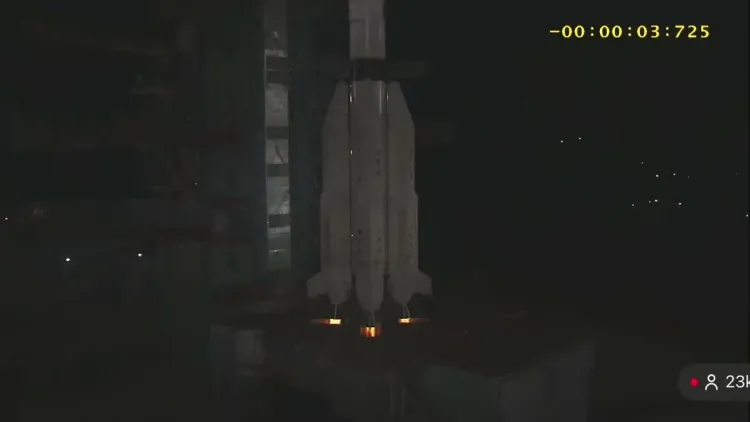
ISRO's GSLV-F18 launch has restored India's NaVIC satellite navigation system, eliminating dependence on foreign positioning services and strengthening armed forces capabilities. Assam CM Himanta Biswa Sarma hailed the mission and congratulated the scientists involved.
Key Takeaways
GSLV-F18 successfully launched, restoring full operational status to India's NaVIC navigation constellation.
NaVIC provides positioning and timing services independent of foreign systems such as GPS , directly benefiting India's armed forces.
The IRNSS/NaVIC project was approved in 2006 with the first satellite launched in 2013 , reflecting a long-term strategic autonomy drive.
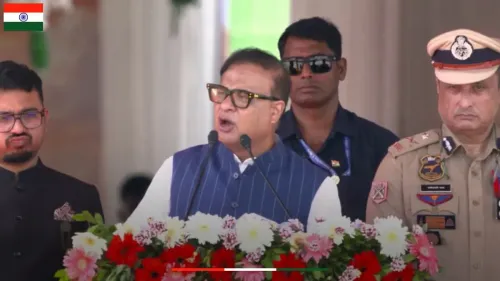
Assam CM Himanta Biswa Sarma credited ISRO scientists and called the launch 'a milestone in India's navigational capabilities.' The restored constellation supports both military operations and civilian applications including logistics, fisheries, and disaster response.
Full integration of NaVIC receivers into armed forces platforms and civil infrastructure remains the next critical step.
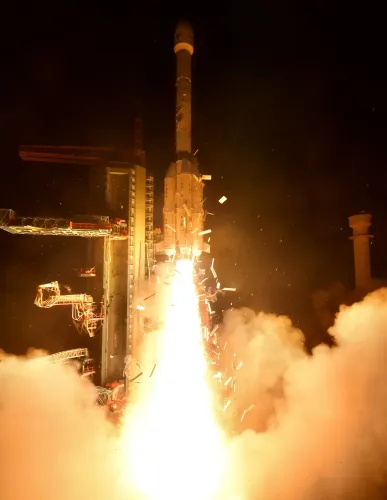
India just reclaimed its eyes in the sky. The successful launch of ISRO's GSLV-F18 has restored full operational status to NaVIC — India's homegrown satellite navigation constellation — ending a period of reduced capability and cutting the nation's reliance on foreign positioning systems. Assam Chief Minister Himanta Biswa Sarma took to X on Saturday, 31 October 2026, to mark the milestone and salute the scientists who made it happen.
NaVIC restored: what the GSLV-F18 mission delivers
The GSLV-F18 mission replenishes the Navigation with Indian Constellation (NaVIC) system, which provides positioning and timing services across the Indian subcontinent and surrounding waters. As CM Sarma put it, the launch has ensured that India's own navigation system is 'up and running again, eliminating dependence on foreign entities for mapping.' That is not a small line — it speaks directly to years of strategic planning to wean Indian infrastructure off the American GPS and other foreign equivalents.
NaVIC's origins trace back to 2006, when the government approved the Indian Regional Navigation Satellite System project. The first satellite lifted off in 2013, and successive administrations have funded ISRO to maintain and upgrade the constellation as part of a broader push for strategic autonomy in space-based services.
The armed forces angle: why this launch is more than a mapping upgrade
CM Sarma specifically flagged the defence dimension — the restored constellation 'shores up the capabilities of our armed forces.' For the military, indigenous navigation means precision-guided operations, troop coordination, and situational awareness that cannot be switched off or degraded by a foreign power. That vulnerability is not theoretical: GPS denial or spoofing is a documented tactic in modern conflict, and a fully operational NaVIC removes that lever entirely from any adversary's hand.
The civilian upside runs in parallel — from logistics and transport to fisheries and disaster response, NaVIC's regional coverage serves sectors that GPS sometimes underserves at the accuracy levels India's planners want.
ISRO's scientists in the spotlight
Sarma's post closed with a direct tribute: 'Heartiest congratulations to all the scientists who are part of this mission; the nation is proud of you, as always!' It is a sentiment that reflects a broader national regard for ISRO, an organisation that has consistently delivered complex space missions under tight budgets. Each successful GSLV flight also de-risks future heavy-payload missions, compounding the returns on this launch well beyond NaVIC itself.
With the constellation back at strength, the next chapter is integration — embedding NaVIC receivers across armed forces platforms, civil aviation, and mass-market devices, so that the orbital achievement translates into ground-level operational reality.
Point of View
Leaders across party lines have used ISRO milestones to signal technological nationalism, and Sarma's post fits that pattern while also burnishing the Northeast's connection to a national achievement story. The real test will be how quickly NaVIC's restored capability translates into embedded hardware on military and civilian platforms rather than remaining a satellite-level success.
NationPress
31 Oct 2026
Frequently Asked Questions
What is NaVIC and why does India need it?
NaVIC (Navigation with Indian Constellation) is India's own regional satellite navigation system, designed to provide positioning and timing services without relying on foreign systems like GPS. It supports the armed forces, civil aviation, disaster management, and civilian mapping.
What did the GSLV-F18 launch achieve?
The GSLV-F18 mission successfully placed a NaVIC satellite into orbit, restoring the constellation to full operational status after a period of reduced capability.
How does NaVIC help India's defence forces?
A fully operational NaVIC allows Indian armed forces to navigate, coordinate operations, and guide precision systems without dependence on a foreign-controlled network that could theoretically be degraded or denied in a conflict scenario.
When did India start building NaVIC?
The Indian Regional Navigation Satellite System project, which became NaVIC, was approved in 2006 . The first satellite in the constellation was launched in 2013 .
Why did Assam CM Himanta Biswa Sarma comment on the ISRO launch?
CM Sarma, a prominent BJP leader and convenor of the North-East Democratic Alliance, regularly engages with major national events. He congratulated ISRO scientists and highlighted the launch's significance for India's strategic autonomy and defence readiness.