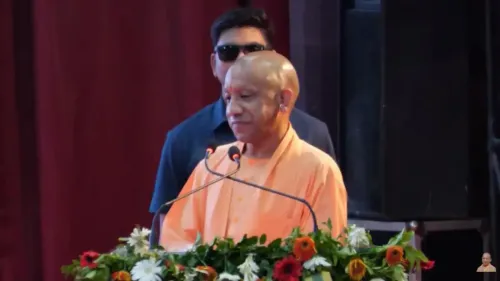
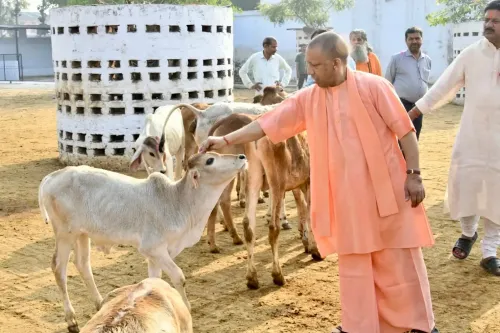
CM Yogi: 14 Lakh Govansh Cared For in 7,700+ UP Gaushalas
Synopsis
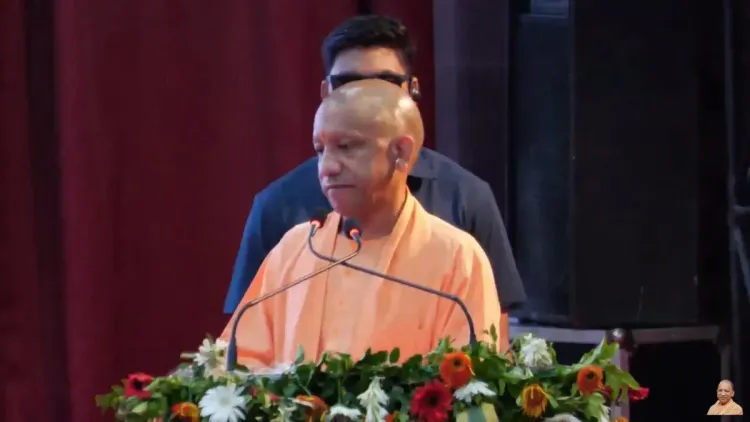
Uttar Pradesh Chief Minister Yogi Adityanath announced on 18 June 2026 that 14 lakh govansh are currently sheltered in over 7,700 state-run gaushalas, underscoring the BJP government's sustained push on cow welfare as a core policy commitment since 2017.
Key Takeaways
14 lakh govansh are currently housed in state-supported shelters across Uttar Pradesh , according to CM Yogi Adityanath's post on 18 June 2026 .
The state government operates and funds more than 7,700 gaushalas , one of the largest such networks in India.
The gaushala expansion began in earnest after the 2017 UP assembly elections under the BJP-led administration .
The programme aims to reduce crop damage caused by stray cattle while fulfilling the government's cultural commitment against cow slaughter.
Comparable state-funded cow shelter programmes operate in Madhya Pradesh , Rajasthan , and Gujarat .
Future animal husbandry budget allocations will determine whether the network expands further in scale or depth.
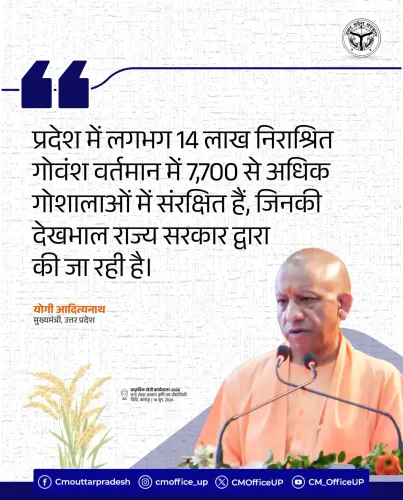
Uttar Pradesh Chief Minister Yogi Adityanath on Thursday, 18 June 2026, highlighted the scale of the state government's cow shelter programme, stating that 14 lakh govansh are currently housed and cared for across more than 7,700 gaushalas funded and managed by the state administration.
Context
In his post, CM Yogi wrote: 'Vartaman mein 14 lakh govansh 7,700 se adhik gaushalon mein rah rahe hain, unki dekhbhal rajya sarkar karti hai' — ('Currently, 14 lakh govansh are living in more than 7,700 gaushalas; the state government takes care of them'). The statement underscores the Uttar Pradesh government's continued emphasis on institutionalised cow welfare as a pillar of state policy.
Yogi Adityanath, who also heads the Gorakhnath Math in Gorakhpur, has consistently positioned cow protection as both a cultural and administrative priority since assuming office. The post comes amid the state's ongoing efforts to manage stray cattle populations across urban and rural districts alike.
Policy Backdrop
Following the 2017 Uttar Pradesh assembly elections, the BJP-led state government significantly expanded both cow protection enforcement and gaushala construction. The programme was designed to address the dual challenge of stray cattle causing agricultural damage and the state's broader commitment against cow slaughter.
The gaushala model — government-supported shelters providing fodder, veterinary care, and upkeep — has been scaled up considerably over the past several years. Uttar Pradesh now operates one of the largest such networks among Indian states, with comparable programmes running in Madhya Pradesh, Rajasthan, and Gujarat under similar state-funding frameworks.
Funding for these shelters flows through the state's animal husbandry budget, with district administrations responsible for day-to-day operations. Gaushala operators and livestock farmers are among the primary stakeholders who interact directly with this infrastructure.
Stakeholders and Impact
The programme has direct implications for farmers across Uttar Pradesh, particularly in regions where unpenned stray cattle have historically damaged standing crops. By housing 14 lakh govansh within the shelter network, the government aims to reduce human-animal conflict in agricultural zones.
Gaushala operators — including trusts, local bodies, and NGOs partnering with the state — manage the day-to-day feeding, medical care, and upkeep of animals. The scale of the network also generates ancillary rural employment in fodder procurement, veterinary services, and shelter maintenance.
For the broader BJP political constituency, the programme represents a tangible delivery on a long-standing cultural and religious commitment, reinforcing the party's identity in the country's most populous state ahead of future electoral cycles.
What's Next
Attention will now turn to the next Uttar Pradesh state budget presentation, where animal husbandry allocations will indicate whether the government plans to further expand the gaushala network or deepen per-shelter funding. Any new district-level gaushala inauguration announcements by CM Yogi will signal the programme's next phase of growth.
As stray cattle numbers continue to be a live issue in several districts, the government's ability to sustain and scale this infrastructure will be a key metric by which both administrators and farmers judge the programme's long-term effectiveness.
Point of View
Rural governance, and electoral identity for the UP BJP. By citing specific scale figures — 14 lakh animals across 7,700-plus shelters — the Chief Minister frames cow protection not merely as ideology but as measurable administrative delivery, a rhetorical move that strengthens the government's credibility with its core constituency. The announcement fits a broader pattern in BJP-ruled states of converting cultural commitments into institutionalised, budget-backed schemes that can be showcased as governance outcomes. As the next state budget approaches, this post likely sets the stage for a fresh round of gaushala expansion announcements.
NationPress
19 Sept 2026
Frequently Asked Questions
How many gaushalas are there in Uttar Pradesh in 2026?
According to a post by CM Yogi Adityanath on 18 June 2026 , there are more than 7,700 gaushalas operating in Uttar Pradesh under state government care.
How many cows are in UP government shelters?
CM Yogi Adityanath stated that 14 lakh govansh are currently living in state-run gaushalas across Uttar Pradesh .
Who funds gaushalas in Uttar Pradesh?
The Uttar Pradesh state government , led by the BJP , funds and manages the gaushala network, with district administrations overseeing day-to-day operations.
Why did Yogi Adityanath expand gaushalas in UP?
The gaushala expansion, which accelerated after the 2017 assembly elections , was aimed at managing stray cattle, reducing crop damage to farmers, and fulfilling the BJP government's commitment against cow slaughter.
Which other states have government-run cow shelters like UP?
Similar state-funded gaushala programmes operate in Madhya Pradesh , Rajasthan , and Gujarat , all under BJP-led administrations with comparable funding models.