MP CM Office Backs Cow Conservation Push
Synopsis
The Chief Minister's Office of Madhya Pradesh has signalled a fresh push for cow rearing and protection, reinforcing the state's gaushala network and livestock-welfare policies as a core governance priority.
Key Takeaways
The Chief Minister's Office of Madhya Pradesh publicly promoted gausanvardhan and gausanrakshan on 31 October 2026 .
The initiative targets both stray-cattle management and structured dairy-sector support.
Organised gaushalas and livestock farmers are the primary beneficiaries of such state-backed programmes.
Madhya Pradesh has maintained one of India's more structured gaushala support networks under its current administration.
The announcement may precede new budget allocations or administrative guidelines in the upcoming fiscal cycle.
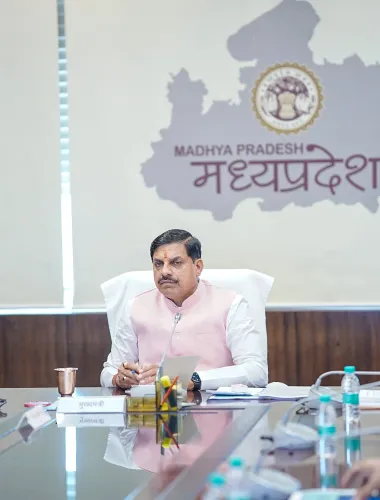
Madhya Pradesh is doubling down on its cattle conservation agenda. The Chief Minister's Office of Madhya Pradesh signalled a renewed push for gausanvardhan (cow rearing and enrichment) and gausanrakshan (cow protection) across the state on Saturday, 31 October 2026, framing bovine welfare as a development priority — not just a cultural one.
The post, carrying the caption 'प्रदेश में गौसंवर्धन एवं संरक्षण को प्रोत्साहन' — 'Encouraging cow rearing and protection in the state' — may be brief, but the signal it sends into the policy pipeline is clear.Why Madhya Pradesh keeps returning to the gaushala question
Cattle management sits at a peculiar crossroads in Madhya Pradesh: it is simultaneously an animal-husbandry challenge, a livelihood issue for thousands of livestock farmers, and a deep cultural priority for the state's ruling dispensation. Stray cattle — often unproductive or abandoned cows — have long created friction on agricultural land, damaging crops and threatening farmer incomes. Organised gaushalas (cow shelters) have been the state's primary policy tool to absorb that pressure while aligning with the BJP-led government's ideological commitments.
Madhya Pradesh has, over successive administrations, built one of the more structured gaushala networks among Indian states. Operators of registered shelters have historically received grants, subsidised fodder support, and integration into dairy-sector value chains. The state's livestock census data has guided budget allocations toward districts with the highest stray-cattle density.
Farmers and shelter operators at the centre
The practical beneficiaries are two distinct groups. Livestock farmers gain when stray-cattle menaces are reduced and when incentives make breeding and rearing economically viable again. Gaushala operators — many of them trust-run, community-funded institutions — depend on state support to remain functional at scale. Any new scheme or enhanced allocation in this domain would directly translate to operational sustainability for those shelters and, downstream, to reduced crop-damage complaints from farming communities.
With the state's next fiscal cycle approaching, this public signal from the CM's office is worth watching: it may precede a formal budget line or administrative order fleshing out the programme's scope.
Point of View
And Madhya Pradesh is among its most active practitioners. By publicly foregrounding gausanvardhan, the CM's office is reinforcing a policy identity that appeals simultaneously to agrarian voters facing stray-cattle losses and to ideologically motivated supporters of cow protection. The timing — just ahead of a new budget cycle — suggests this is as much a pre-allocation signal to the bureaucracy as it is a public communication. The broader pattern: as Indian states compete on livestock-economy metrics, formal gaushala networks are increasingly treated as infrastructure, not charity.
NationPress
31 Oct 2026
Frequently Asked Questions
What is gausanvardhan in Madhya Pradesh?
Gausanvardhan refers to the enrichment and promotion of cow rearing in Madhya Pradesh, encompassing state support for gaushala infrastructure, breeding programmes, and incentives for livestock farmers.
What is the MP government doing for cow shelters?
The Madhya Pradesh government supports registered gaushalas through grants, subsidised fodder, and integration with the dairy sector, aiming to reduce stray-cattle problems and sustain cow shelters financially.
How does cow protection policy help farmers in MP?
By managing stray cattle through gaushalas, the state reduces crop-damage incidents on agricultural land, directly protecting the incomes of livestock farmers and cultivators in Madhya Pradesh.
Which government runs Madhya Pradesh?
Madhya Pradesh is governed by the Bharatiya Janata Party (BJP) , which has made cow conservation a recurring policy and cultural priority across its administrations in the state.
Will there be a new gaushala scheme in MP in 2026?
No specific new scheme has been confirmed yet, but the CM Office's public signal on 31 October 2026 may precede formal budget allocations or administrative orders in the upcoming fiscal cycle.