CM Yogi Highlights Community Role in Operation Kayakalp School Drive
Synopsis
Uttar Pradesh Chief Minister Yogi Adityanath has spotlighted Operation Kayakalp, the state's community-driven school infrastructure programme, crediting public participation for achieving saturation of basic facilities in government schools across the state.
Key Takeaways
CM Yogi Adityanath posted on 16 November 2026 highlighting Operation Kayakalp , UP's flagship school infrastructure scheme.
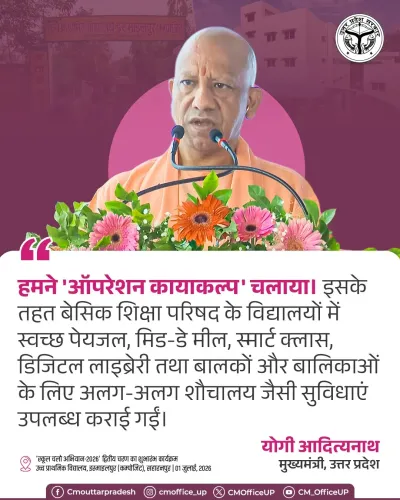
The scheme focuses on saturating government schools with basic facilities including toilets, drinking water, and functional classrooms.
Community participation ( jan sahbhagita ) is cited as the core delivery mechanism, distinguishing Kayakalp from purely bureaucratic programmes.
Uttar Pradesh has prioritised government school upgrades since 2017 under the current administration.
The state operates one of India's largest networks of government schools, serving millions of children from low-income and rural families.
Official saturation data and any follow-up phases of Operation Kayakalp will be key indicators of the programme's long-term impact.
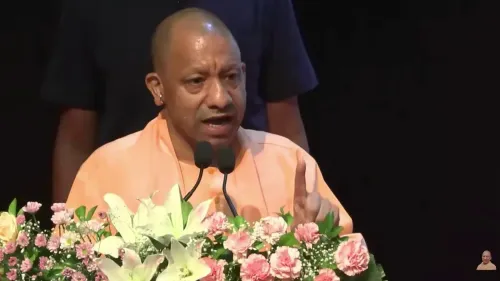
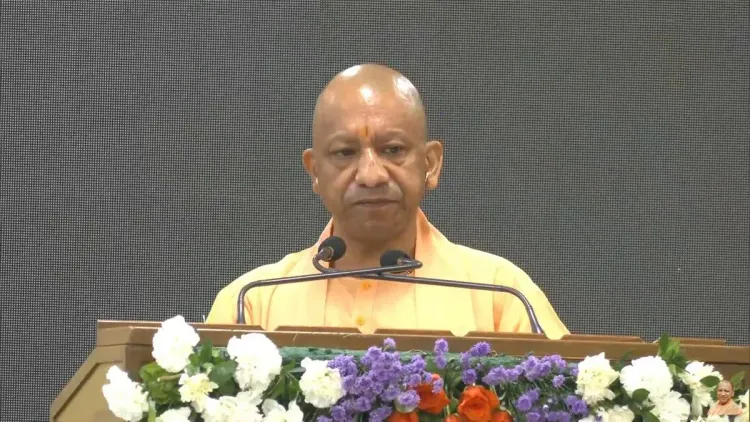
Classrooms that once lacked basic sanitation and clean drinking water are now the centrepiece of a quiet transformation — and Uttar Pradesh Chief Minister Yogi Adityanath wants the public to know who made it happen. On Monday, 16 November 2026, the Chief Minister took to X to spotlight Operation Kayakalp, crediting community participation as the driving force behind the saturation of basic facilities in government schools across the state.
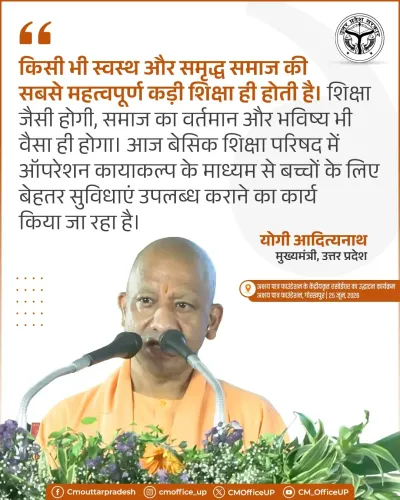
In his post, CM Yogi stated: 'ऑपरेशन कायाकल्प में जन सहभागिता के माध्यम से विद्यालयों में बुनियादी सुविधाओं को Saturate करने का काम हुआ है' — 'Through public participation in Operation Kayakalp, the work of saturating schools with basic facilities has been carried out.' The framing is deliberate: this is not government alone, but government with people.
What Operation Kayakalp Actually Does
Operation Kayakalp — the word kayakalp means 'total transformation' in Hindi — is the Uttar Pradesh government's flagship school infrastructure programme, launched to modernise government schools that had long struggled with crumbling classrooms, absent toilets, and unreliable drinking water. The scheme's distinctive feature is its insistence on community co-ownership: local residents, parents, and civil society are brought in as active partners, not passive recipients, of school upgrades.
The state has prioritised this agenda since 2017, steadily pushing 'saturation' — meaning universal provision — of core facilities as a measurable target. Toilets, potable water, and functional classrooms have been the headline deliverables. The model positions Uttar Pradesh — home to one of India's largest networks of government schools — as a test case for whether community-led delivery can move faster than purely bureaucratic execution.
Why Public Participation Is the Story Here
The Chief Minister's emphasis on jan sahbhagita ('public participation') is more than rhetorical. Across Uttar Pradesh, village-level school management committees, local philanthropists, and neighbourhood volunteers have contributed funds, labour, and oversight to the programme — a model that reduces the burden on the state exchequer while building community investment in school quality. It also creates accountability at the hyper-local level: when a parent helped paint a classroom, they are more likely to notice if it deteriorates.
For the state's roughly 1.3 lakh government primary and upper-primary schools — serving millions of children, predominantly from low-income and rural families — even marginal infrastructure improvements translate into tangible gains: girls who stay in school when toilets exist, children who can concentrate when they are not thirsty. The post comes with a video, suggesting the administration is pushing a visual narrative of visible progress.
What to Watch as Kayakalp Matures
The next critical marker will be official data on facility saturation levels — how close the state has actually come to the universal-provision target, and whether the gains are evenly distributed across districts. Any announcement of a follow-up phase or expanded scope of Operation Kayakalp will signal how the administration intends to build on this foundation. With assembly elections a constant backdrop in Uttar Pradesh politics, the government has every incentive to demonstrate that its school infrastructure numbers are real and auditable.
India's largest state is making a bet that the best school reform is one the village builds together — and CM Yogi is making sure that bet is visible.
Point of View
CM Yogi is reinforcing a governance narrative that positions the BJP-led UP administration as a facilitator of people-powered delivery rather than top-down welfare — a distinction with real electoral resonance in rural constituencies. Operation Kayakalp fits into a broader pattern of branding government schemes with high-energy names and measurable 'saturation' targets, making accountability easier to claim but also easier to scrutinise. The focus on school infrastructure, rather than curriculum or learning outcomes, reflects a pragmatic sequencing: visible physical change builds trust before the harder work of improving what happens inside the classroom. Watching whether the state publishes granular facility-completion data will determine whether this narrative holds beyond optics.
NationPress
16 Nov 2026
Frequently Asked Questions
What is Operation Kayakalp in Uttar Pradesh?
Operation Kayakalp is a Uttar Pradesh government initiative to upgrade infrastructure in government schools, focusing on basic facilities such as toilets, drinking water, and classrooms, with an emphasis on community participation in delivery.
What did CM Yogi say about Operation Kayakalp?
On 16 November 2026, CM Yogi Adityanath posted that through public participation in Operation Kayakalp, the work of saturating government schools with basic facilities has been carried out.
When did Uttar Pradesh start Operation Kayakalp?
The Uttar Pradesh government launched Operation Kayakalp as part of a broader push to modernise government schools that has been underway since 2017 under Chief Minister Yogi Adityanath.
How does community participation work in Operation Kayakalp?
Local residents, parents, and civil society groups contribute funds, labour, and oversight to school upgrades under Operation Kayakalp, reducing reliance on the state exchequer and building community investment in school quality.
How many government schools are there in Uttar Pradesh?
Uttar Pradesh has approximately 1.3 lakh government primary and upper-primary schools, making it one of the largest state-run school networks in India.