CM Yogi: Natural Farming Can Multiply UP Farmers' Profits
Synopsis
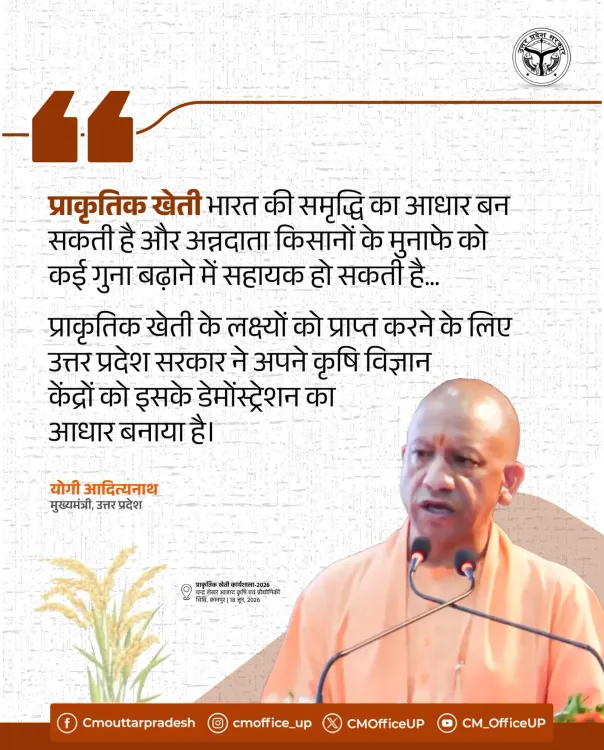
Chief Minister Yogi Adityanath has said natural farming can become the foundation of India's prosperity and multiply farmer profits. Uttar Pradesh has designated its Krishi Vigyan Kendras as demonstration centres to advance the state's natural farming goals.
Key Takeaways
CM Yogi Adityanath stated that natural farming can multiply profits for annadata farmers and underpin India's prosperity.
The Uttar Pradesh government has designated its Krishi Vigyan Kendras (KVKs) as demonstration hubs for natural farming.
The move aligns with the Government of India's Bharatiya Prakritik Krishi Padhati , a chemical-free farming scheme launched in 2020 under Paramparagat Krishi Vikas Yojana .
KVKs are district-level farm science centres under ICAR , providing an existing infrastructure for farmer training and on-farm demonstrations.
Lower input costs from reduced chemical use are the primary mechanism by which natural farming is expected to improve farmer net margins.
Progress on demonstration plots and future budget allocations will be key indicators of how seriously the state pursues scale-up.
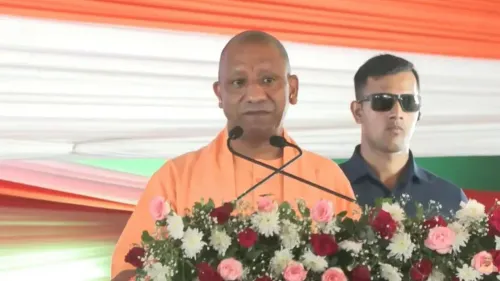
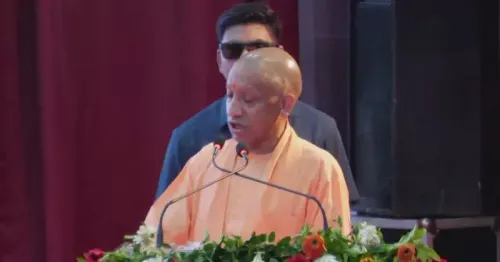
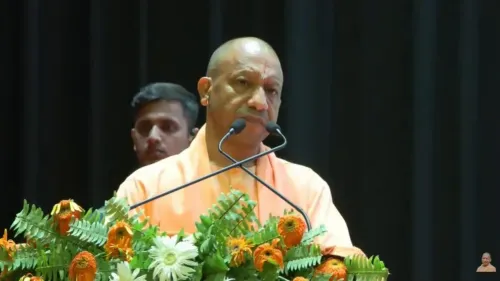
The Chief Minister's Office of Uttar Pradesh, citing Chief Minister Yogi Adityanath, declared on Thursday, 18 June 2026 that natural farming can become the foundation of India's prosperity and multiply the profits of farmers several times over. The statement came alongside an announcement that the Uttar Pradesh government has designated its Krishi Vigyan Kendras (KVKs) as demonstration hubs to advance natural farming goals across the state.
Context
The post quotes CM Yogi Adityanath directly: 'Prakritik kheti' [natural farming] 'can become the foundation of India's prosperity and can help multiply the profits of annadata [provider-farmers] several times over.' The use of the term annadata — a respectful honorific for farmers meaning 'one who provides food' — signals the political framing of natural farming as a dignified, farmer-first policy rather than a purely environmental one. The statement was shared via the official CMOfficeUP account, indicating it carries the weight of official government communication.
Policy Backdrop
The push aligns with the Government of India's Bharatiya Prakritik Krishi Padhati, launched in 2020 as a sub-component of the Paramparagat Krishi Vikas Yojana, which promotes chemical-free, low-input farming methods. Indian agricultural policy has increasingly moved toward reducing dependence on synthetic inputs, driven by concerns about soil degradation, rising input costs, and farmer indebtedness. Uttar Pradesh's decision to route demonstrations through the existing KVK network — district-level farm science centres under the Indian Council of Agricultural Research (ICAR) — follows a pattern seen in other states of using established public extension infrastructure rather than building parallel systems.
Stakeholders and Impact
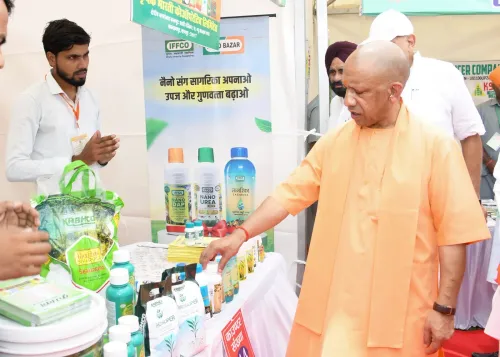
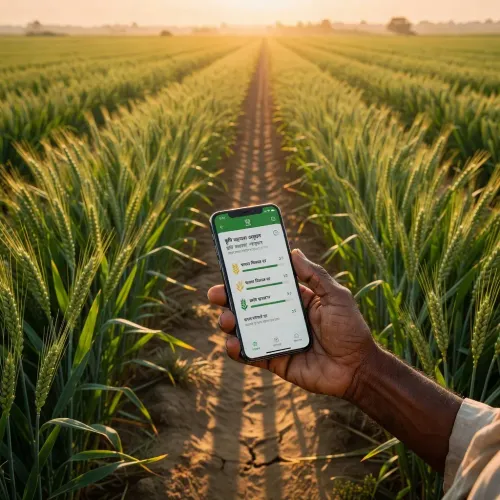
Uttar Pradesh is India's most populous state and one of its largest agricultural economies, with a farming population running into several crore households. For these farmers, natural farming promises lower input costs — eliminating or sharply reducing expenditure on chemical fertilisers and pesticides — which directly improves net margins even without a change in output prices. KVKs, present in nearly every district of the state, are well-placed to serve as on-ground demonstration and training nodes, giving smallholder farmers accessible, localised exposure to natural farming techniques before adopting them on their own plots.
What's Next
The immediate marker to watch is the rollout of demonstration plots at KVKs across Uttar Pradesh's districts, and whether the state follows up with specific acreage targets or dedicated budget lines in subsequent agricultural-season announcements. Broader adoption will depend on how effectively the extension network can translate demonstration results into farmer-level confidence. If the UP model shows measurable income gains, it could serve as a template for other large agricultural states looking to scale natural farming through existing public infrastructure.
Point of View
Which is more politically resonant in a state where farmer welfare is a persistent electoral fault line. By routing demonstrations through the KVK network rather than announcing a new scheme, the UP government is signalling institutional pragmatism, but the real test will be whether extension-level demonstrations translate into measurable adoption at scale. The timing also reinforces UP's alignment with the Centre's Bharatiya Prakritik Krishi Padhati, strengthening the state's credentials as a cooperative partner in national agricultural reform. If KVK-led demonstrations yield credible income data, UP could emerge as a reference state for the natural farming push across India's Hindi heartland.
NationPress
18 Sept 2026
Frequently Asked Questions
What is natural farming and how does it benefit farmers in UP?
Natural farming is a chemical-free agricultural method that relies on locally available inputs such as cow dung and biomass, sharply reducing input costs. For farmers in Uttar Pradesh, lower expenditure on fertilisers and pesticides directly improves net profit margins even without higher output prices.
What are Krishi Vigyan Kendras and why is UP using them for natural farming?
Krishi Vigyan Kendras are district-level farm science centres run under the Indian Council of Agricultural Research that conduct on-farm demonstrations and farmer training. UP is using them as demonstration hubs because they already exist in nearly every district, avoiding the need to build new infrastructure.
What is Bharatiya Prakritik Krishi Padhati?
Bharatiya Prakritik Krishi Padhati is a Government of India scheme launched in 2020 as a sub-component of Paramparagat Krishi Vikas Yojana to promote chemical-free natural farming across the country.
What did CM Yogi Adityanath say about natural farming?
CM Yogi Adityanath said that natural farming can become the foundation of India's prosperity and can help multiply the profits of farmers — referred to as annadata — several times over.
How many KVKs does Uttar Pradesh have for natural farming demonstrations?
Uttar Pradesh has Krishi Vigyan Kendras present across nearly all of its districts, giving the state a wide-reaching network to run natural farming demonstration plots and farmer training programmes.