CM Yogi calls Chhath 'divine light of Sanatan soul'
Synopsis
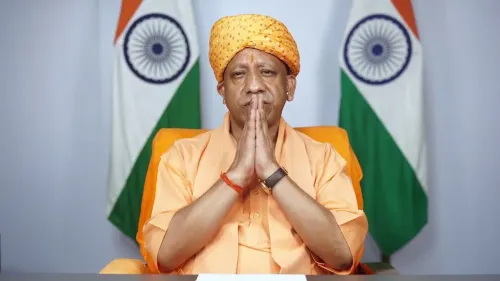
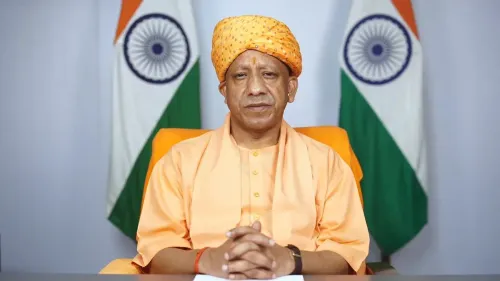
Chief Minister Yogi Adityanath's office marks Chhath Mahaparv by quoting him calling the four-day Sun God festival the 'divine light of India's Sanatan cultural soul,' underscoring themes of devotion, purity, and strict discipline central to the UP government's cultural messaging.
Key Takeaways
The Chief Minister's Office of Uttar Pradesh posted CM Yogi Adityanath's Chhath message on 15 November 2026 .
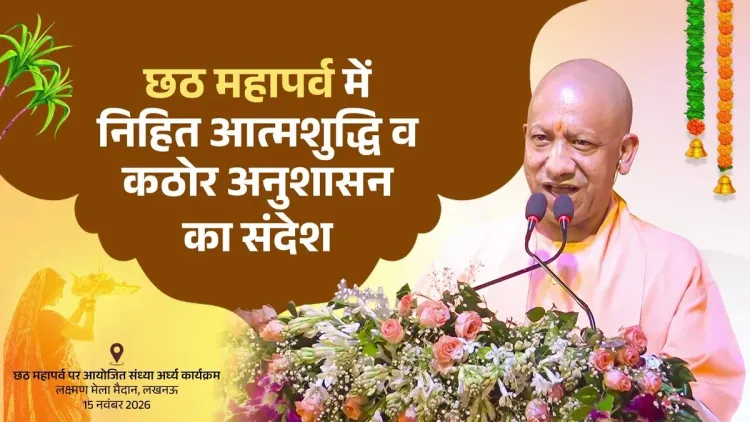
CM Yogi described Chhath Mahaparv as 'the divine light of India's Sanatan cultural soul.' He highlighted four values the festival embodies: devotion, purity, self-purification, and strict discipline .
Chhath is a four-day Hindu festival dedicated to the Sun God , observed widely in Uttar Pradesh, Bihar, and Jharkhand .
The statement continues a pattern of Sanatan-focused cultural messaging from the UP government since 2017 .
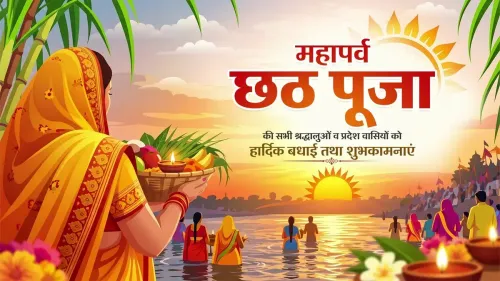
As twilight gatherings of devotees wade into rivers across Uttar Pradesh, Bihar, and Jharkhand for Chhath Mahaparv, Chief Minister Yogi Adityanath's office has distilled the festival's essence into a single resonant phrase — the divine light of India's eternal cultural soul.
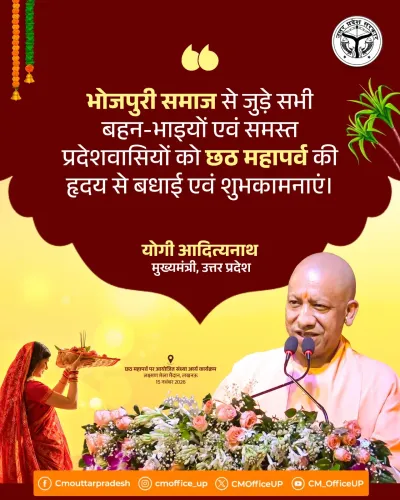
The Chief Minister's Office of Uttar Pradesh posted the message on Sunday, 15 November 2026, quoting CM Yogi Adityanath directly: 'Chhath Mahaparv Bharat ki Sanatan sanskritik aatma ka vah divya prakash hai jo hamein shraddha, pavitrata, aatmashuddhi aur kathor anushasan ka paath padhata hai' — 'Chhath Mahaparv is the divine light of India's Sanatan cultural soul, one that teaches us devotion, purity, self-purification, and strict discipline.'
Four days, one flame: what Chhath demands of its devotees
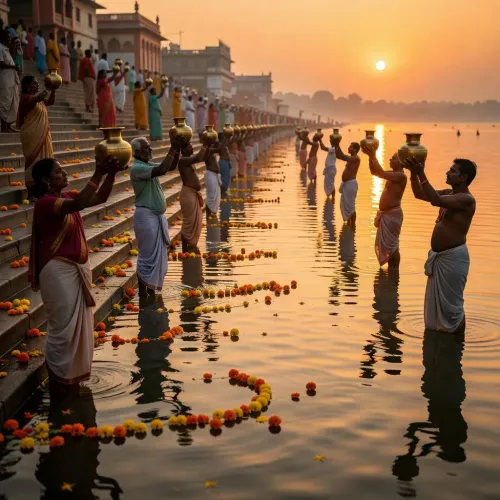
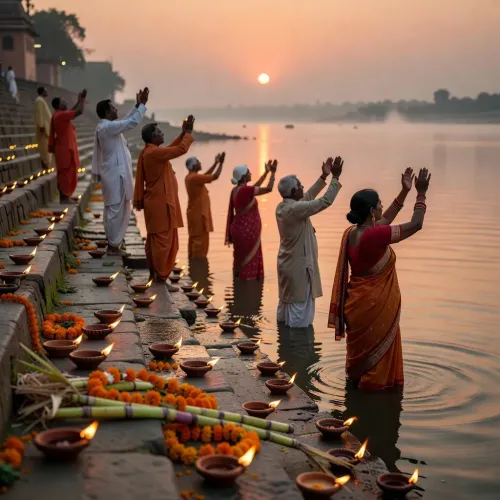
Chhath Mahaparv is among India's most physically demanding festivals — a four-day observance dedicated to Surya Dev, the Sun God. Devotees fast without water for extended stretches, stand in rivers at both sunset and sunrise, and offer arghya (ritual offerings) with scrupulous precision. The discipline CM Yogi invokes is not rhetorical; it is lived, hour by hour, by millions.
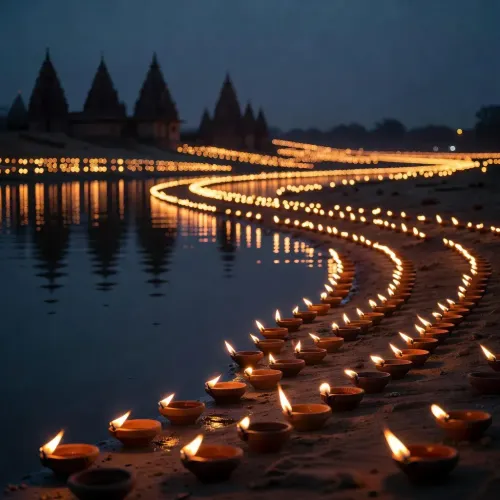
The festival draws its deepest roots from the Ganga-Yamuna belt, with Uttar Pradesh among the states where it commands the widest popular participation. For the state government, the occasion carries both spiritual and logistical weight — ghats along major rivers require crowd management, lighting, and sanitation arrangements on a large scale.
A consistent Sanatan register from Lucknow since 2017
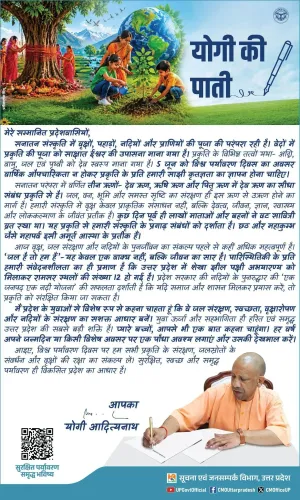
Since Yogi Adityanath assumed office as Chief Minister of Uttar Pradesh in 2017, the government has made the public articulation of Hindu festival sentiment a deliberate part of its communications calendar. Messages on Diwali, Navratri, Makar Sankranti, and now Chhath follow a consistent pattern: linking the festival's ritual structure to larger civilisational values — discipline, purity, collective faith.
Today's statement fits precisely within that arc. The choice of the phrase 'Sanatan sanskritik aatma' (Sanatan cultural soul) is deliberate, echoing a vocabulary the Chief Minister's administration has used repeatedly to frame cultural governance in India's most populous state.
Chhath does not merely belong to a calendar — it belongs to an identity. And in Lucknow's telling, that identity is worth amplifying every single year.
Point of View
Long-running effort by the UP government to anchor state identity in Sanatan Hindu cultural values — a strategy that has political salience in India's most electorally significant state. By framing a mass popular festival in civilisational language, the government both reflects and reinforces a broader BJP cultural agenda. The consistency of this messaging across nearly a decade suggests it is policy-as-communication, not incidental. As Chhath's footprint grows in urban centres and diaspora communities, this vocabulary travels further than any single state boundary.
NationPress
15 Nov 2026
Frequently Asked Questions
What did CM Yogi Adityanath say about Chhath Mahaparv?
CM Yogi Adityanath called Chhath Mahaparv 'the divine light of India's Sanatan cultural soul,' saying it teaches devotion, purity, self-purification, and strict discipline.
What is Chhath Mahaparv and why is it important?
Chhath Mahaparv is a four-day Hindu festival dedicated to the Sun God, observed mainly in Uttar Pradesh, Bihar, and Jharkhand. It is known for its rigorous rituals of fasting, river bathing, and sunrise-sunset offerings.
When is Chhath Puja celebrated in 2026?
The Chief Minister's Office posted its Chhath message on 15 November 2026, indicating the festival period falls around this date, though specific day-wise logistics for 2026 are unverified.
What does 'Sanatan' mean in CM Yogi's Chhath message?
'Sanatan' refers to the eternal or timeless nature of Hindu civilisational tradition. CM Yogi used the phrase 'Sanatan cultural soul' to position Chhath as a living expression of India's oldest religious identity.
How does the UP government typically mark Hindu festivals?
Since 2017, the Yogi Adityanath-led Uttar Pradesh government has consistently issued official statements on major Hindu festivals, linking their rituals to broader cultural and civilisational values.