CM Yogi Cites Rishi Tradition to Elevate Teacher's Role in UP
Synopsis
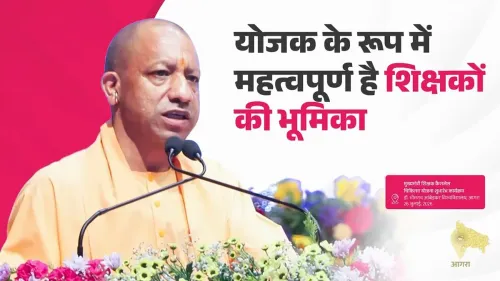
Chief Minister Yogi Adityanath invoked a Sanskrit verse from the Rishi tradition to argue that teachers are the rare 'connectors' who guide students in direction and discipline, signalling UP's continued push to anchor education policy in classical Indian values.
Key Takeaways
CM Yogi Adityanath quoted the Sanskrit verse 'Ayogyah Purushoh Nasti Yojakastatra Durlabhah' to argue no person is incapable — only the right connector is rare.
He identified that rare connector ( yojak ) as the teacher , not any institution or technology.
The statement stresses continuous dialogue with students on life direction and discipline as the path to real transformation.
Uttar Pradesh has pursued integration of traditional Indian knowledge systems into school education since 2017 .
The position aligns with the National Education Policy 2020 , which centres teachers as mentors for holistic and value-based education.
Possible policy follow-through includes teacher training modules, curriculum updates, and performance-linked incentives in UP .
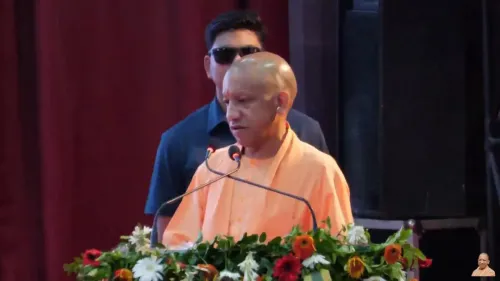
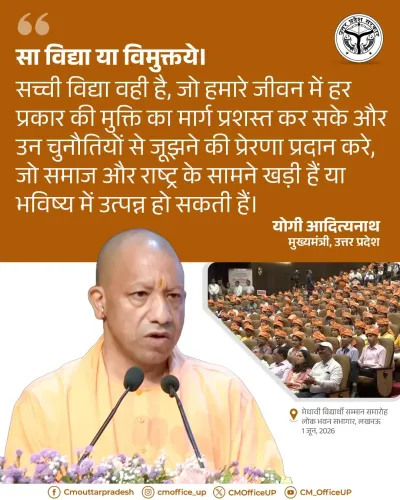
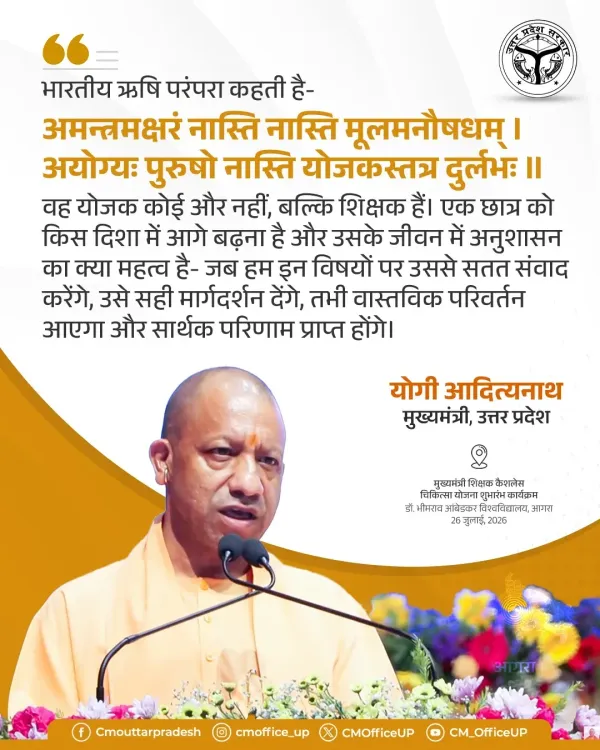
The Chief Minister's Office of Uttar Pradesh, on behalf of Chief Minister Yogi Adityanath, shared a statement on Sunday, 26 July 2026, invoking ancient Indian philosophical wisdom to underline the irreplaceable role of teachers in shaping students' direction and discipline.
Quoting the Sanskrit verse 'Amantramaksharam Nasti Nasti Mulamanaushadham, Ayogyah Purushoh Nasti Yojakastatra Durlabhah' — meaning 'There is no syllable that is not a mantra, no root that is not a medicine, no person who is incapable; what is rare is the one who can connect and channel' — CM Yogi identified that rare 'connector' (yojak) as none other than the teacher. The statement affirms that real transformation in a student's life comes only through sustained dialogue, correct guidance, and an emphasis on discipline.
Context
The statement, posted in Hindi by the official Chief Minister's Office account, draws on the Rishi Parampara — the ancient Indian tradition of sage-teachers — to make a contemporary argument about the centrality of educators. CM Yogi stressed that a teacher's role goes beyond academic instruction: it is about continuously engaging with a student on questions of life direction and the value of discipline. 'When we will continuously dialogue with the student on these subjects and give correct guidance, only then will real change come and meaningful results be achieved,' the statement reads.Policy Backdrop
The sentiment aligns closely with the National Education Policy 2020, which positions teachers as primary mentors responsible for value-based education, holistic development, and student guidance — not merely subject delivery. Uttar Pradesh has, since 2017, pursued a parallel track of integrating traditional Indian knowledge systems into school education alongside infrastructure upgrades and structured teacher training programmes. This approach reflects a deliberate state-level emphasis on reviving the guru-shishya tradition within the public education system, combining character formation with academic instruction.Stakeholders and Impact
The primary stakeholders are Uttar Pradesh's vast teacher workforce and the state's student population — one of the largest in the country. Teachers are cast here not as functionaries but as agents of social transformation. The invocation of Sanskrit scriptural authority also signals the state government's intent to ground its education philosophy in classical Indian thought, appealing to both educators and parents who value cultural continuity alongside modern learning outcomes. Students, particularly at the school level, stand to be most directly affected by any policy shifts that flow from this philosophy.What's Next
The statement could precede or accompany state-level announcements on teacher training modules, curriculum updates incorporating value education, or new recruitment and performance-linked incentive frameworks. Uttar Pradesh has previously signalled interest in partnerships with traditional knowledge institutions, and this public articulation by CM Yogi may set the philosophical groundwork for such initiatives. Observers will watch for concrete policy follow-through that translates this vision of the teacher as yojak into structural changes within the state's education system.Point of View
A framing that dovetails with the National Education Policy 2020's emphasis on holistic mentoring. By elevating the concept of the yojak, the Chief Minister signals that the state's education agenda will continue to blend cultural revivalism with structural reform. Whether this philosophical stance translates into measurable teacher empowerment or curriculum change will be the real test of its policy intent.
NationPress
26 Jul 2026
Frequently Asked Questions
What did CM Yogi say about teachers on 26 July 2026?
CM Yogi Adityanath quoted a Sanskrit verse from the Rishi tradition to argue that the teacher is the rare 'connector' ( yojak ) who guides students in the right direction and instils discipline, stating that real transformation comes only through sustained dialogue and correct mentoring.
What is the Sanskrit verse CM Yogi quoted about teachers?
The verse is 'Amantramaksharam Nasti Nasti Mulamanaushadham, Ayogyah Purushoh Nasti Yojakastatra Durlabhah' , which translates roughly as: there is no syllable that is not a mantra, no root that is not a medicine, no incapable person — only the one who can connect and channel is rare.
How does CM Yogi's statement connect to UP education policy?
Uttar Pradesh has since 2017 integrated traditional Indian knowledge systems into school education alongside teacher training. CM Yogi's statement reinforces this approach, aligning with the National Education Policy 2020's emphasis on teachers as value-based mentors.
What is the National Education Policy 2020 and how does it relate to this?
The National Education Policy 2020 is the central government's framework that repositions teachers as primary mentors responsible for holistic development, discipline, and value-based education — closely matching the philosophy CM Yogi articulated in this statement.
What policy changes might follow CM Yogi's statement on teachers?
Possible follow-through includes state-level teacher training modules incorporating value education, curriculum updates drawing on classical Indian thought, and performance-linked incentives or partnerships with traditional knowledge institutions in Uttar Pradesh.