CM Yogi Claims UP Economy, Per Capita Income Tripled in 9 Years
Synopsis
Chief Minister Yogi Adityanath claimed on 14 July 2026 that Uttar Pradesh has tripled its economy and per capita income in nine years, pointing to investor summits, infrastructure expansion and industrial policy as drivers of the state's growth.
Key Takeaways
CM Yogi Adityanath claimed on 14 July 2026 that Uttar Pradesh's economy and per capita income have tripled over nine years of BJP rule.
The Adityanath government has held multiple investor summits since 2017 , with the 2023 Global Investors Summit drawing proposals worth over Rs 33 lakh crore .
Key growth drivers cited by the government include expressway construction, airport modernisation and defence manufacturing corridors.
The state's Directorate of Economics and Statistics tracks per capita income trends that underpin such official claims.
Independent verification of the precise tripling figure requires cross-referencing with the latest state or RBI data releases.
The next Uttar Pradesh Economic Survey and 2026-27 budget session will be critical checkpoints for validating the claimed economic trajectory.
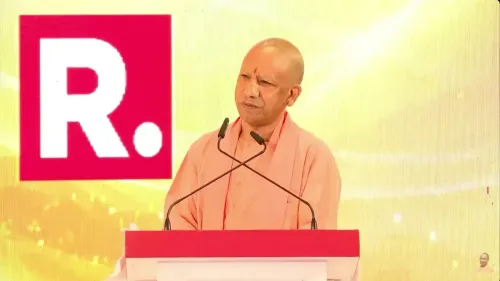
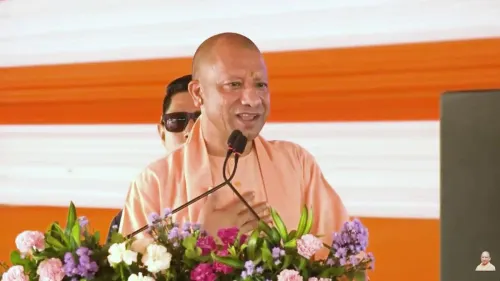
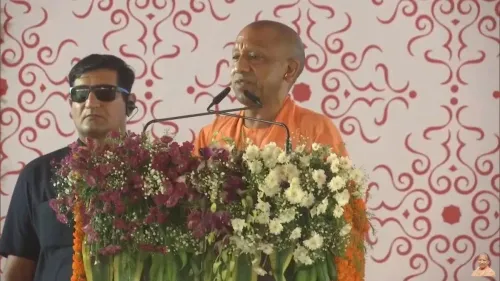
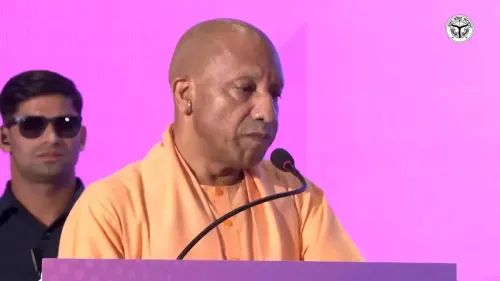
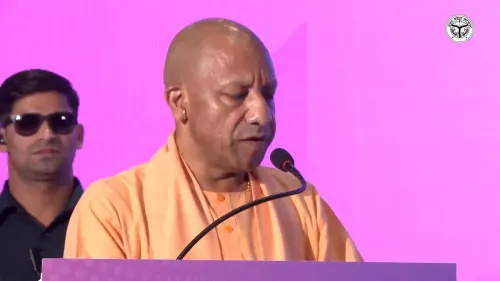
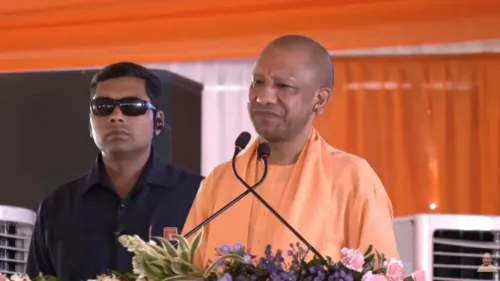
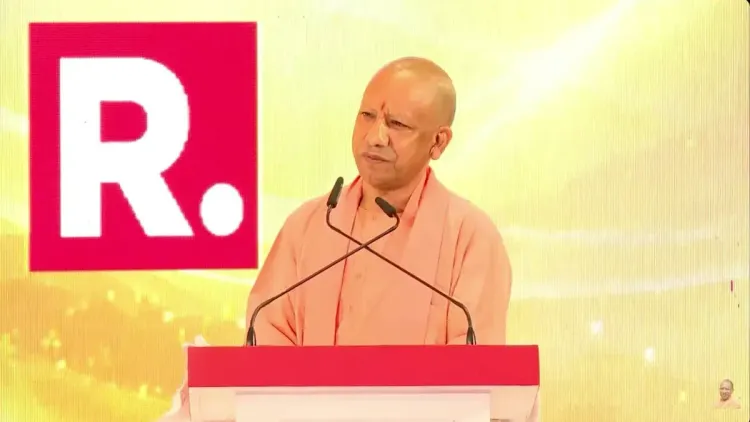
Uttar Pradesh Chief Minister Yogi Adityanath on Tuesday, 14 July 2026, claimed that his government has tripled both the state's economy and per capita income over the past nine years, citing the achievement as a milestone in Uttar Pradesh's development trajectory.
Context
In his post, CM Yogi stated — 'हमने 9 वर्षों में उत्तर प्रदेश की अर्थव्यवस्था तथा प्रति व्यक्ति आय को तीन गुना करने में सफलता प्राप्त की है' ['We have succeeded in tripling the economy of Uttar Pradesh as well as per capita income in 9 years'] — framing it as a defining achievement of the Bharatiya Janata Party administration that took office in March 2017. The claim encompasses both gross state domestic product growth and individual income levels across the state's population of over 24 crore.
The nine-year window referenced by the Chief Minister spans from the BJP's first electoral victory in Uttar Pradesh in 2017 through to the present term. Official tracking of per capita income trends has been conducted by the state's Directorate of Economics and Statistics, whose periodic releases form the basis for such government claims.
Policy Backdrop
The Adityanath government has pursued a multi-pronged economic strategy since 2017, introducing investor summits, single-window clearance mechanisms, and large-scale infrastructure programmes. A landmark Global Investors Summit in 2023 attracted investment proposals exceeding Rs 33 lakh crore, spanning manufacturing, logistics and services sectors.
Parallel investments in expressway construction, airport modernisation, and the establishment of defence manufacturing corridors have been positioned as structural shifts away from an agriculture-dominant economy toward industry and services. These efforts broadly mirror strategies adopted by Gujarat and Maharashtra to expand their share of India's national economic output.
The state government has consistently used GSDP growth figures and per capita income data in its public communication to benchmark progress since the change of government in 2017. However, independent verification of the precise claim of an exact tripling requires cross-referencing the latest official statistics from state agencies or the Reserve Bank of India.
Stakeholders and Impact
If the economic growth figures are borne out by official data, the primary beneficiaries would be Uttar Pradesh's residents — particularly those in the MSME sector, which has been a focus of the state's ease-of-doing-business reforms. Rising per capita income, if sustained, would signal improved living standards across a state that has historically ranked among India's lower-income regions.
Private investors who committed capital through successive investor summits would also be significant stakeholders, as realised investment translates into employment and tax revenue. The claim carries political weight ahead of any assessment of the government's economic record in the run-up to the next state budget cycle.
What's Next
The publication of the next Uttar Pradesh Economic Survey and any revised GSDP targets announced during the 2026-27 budget session will be closely watched to substantiate or contextualise the figures cited by the Chief Minister. Independent economists and opposition parties are likely to scrutinise the underlying data methodology, particularly the base-year calculations used to measure the claimed tripling. The trajectory of investment conversion — from proposals secured at summits to on-ground projects — will remain a key indicator of whether the economic momentum is structural or cyclical.
Point of View
The credibility of the claim will hinge on independent verification of base-year methodology and actual investment realisation beyond summit-stage proposals. If substantiated by official data, it would mark one of the most significant economic turnarounds by any large Indian state government in a single decade.
NationPress
14 Jul 2026
Frequently Asked Questions
Has Uttar Pradesh's economy really tripled under Yogi Adityanath?
CM Yogi Adityanath has claimed that both the state's GSDP and per capita income tripled in nine years since 2017. Independent verification of the exact tripling figure requires the latest data from the state's Directorate of Economics and Statistics or the Reserve Bank of India, which have not yet been cross-referenced publicly against this specific claim.
What is Uttar Pradesh's per capita income in 2026?
The precise current per capita income figure for Uttar Pradesh in 2026 has not been independently confirmed in publicly available records at the time of CM Yogi's post; the state Directorate of Economics and Statistics is the authoritative source for this data.
What economic policies did Yogi Adityanath introduce in Uttar Pradesh?
Since 2017, the Adityanath government introduced investor summits, single-window clearance mechanisms, expressway construction, airport modernisation, and defence manufacturing corridors to shift UP from an agriculture-dominant economy toward manufacturing and services.
How much investment did UP's Global Investors Summit 2023 attract?
The 2023 Global Investors Summit in Uttar Pradesh attracted investment proposals exceeding Rs 33 lakh crore across manufacturing, logistics and services sectors, though the conversion of proposals into on-ground projects continues to be tracked.
When did Yogi Adityanath become Chief Minister of Uttar Pradesh?
Yogi Adityanath became Chief Minister of Uttar Pradesh in March 2017 following the BJP's victory in the state assembly elections, and has since served two consecutive terms.