CM Yogi Directs UP to Become India's Top IT Hub

Synopsis
Chief Minister Yogi Adityanath has directed Uttar Pradesh officials to revise the state's IT policy to be more practical, investor-friendly, and employment-oriented, with a focus on youth skilling, innovation, patents, and time-bound investor approvals, targeting UP's emergence as India's leading IT and digital services hub.
Key Takeaways
CM Yogi Adityanath on 16 July 2026 issued directives to make Uttar Pradesh India's leading IT, digital services, and innovation centre.
The state's information technology policy is to be revised to be more practical, investor-friendly, and employment-oriented in line with evolving global requirements.
Directives include promoting skill development, internships, research, innovation, and patent filings among local youth.
Investors are to receive simplified, transparent, and time-bound processes for land, infrastructure, and other approvals.
The push builds on UP's IT and Electronics Policy 2019 and investment tracks from the Global Investors Summit 2023 .
Technology clusters in Noida and Lucknow are expected to be primary beneficiaries of the revised framework.
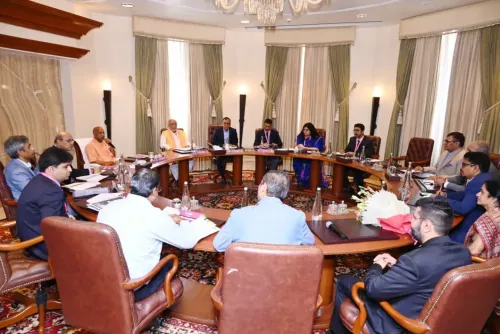
The Chief Minister's Office of Uttar Pradesh, on behalf of Chief Minister Yogi Adityanath, on 16 July 2026 issued directives to reshape the state's information technology policy with the goal of making Uttar Pradesh the country's leading centre for IT, digital services, and innovation.
Context
The Chief Minister's Office stated that CM Yogi Adityanath has directed officials to work toward positioning Uttar Pradesh as India's foremost IT, digital services, and innovation hub. In his words, 'suchna praudyogiki niti ko badalti vaishvik aavashyaktaon ke anurup adhik vyavaharik, niveshak anukool aur rozgaaronmukh banaya jae' — the information technology policy must be made 'more practical, investor-friendly and employment-oriented in line with evolving global requirements.'
The directives also emphasise simplifying, making transparent, and time-binding the processes related to land, infrastructure, and other approvals for investors — a signal that the government intends to reduce friction in setting up technology enterprises in the state.
Policy Backdrop
The push builds on Uttar Pradesh's IT and Electronics Policy 2019, which sought to attract investment and generate employment in the technology sector. The Global Investors Summit 2023 had included dedicated tracks for IT, electronics, and innovation, with a range of policy incentives announced at the time.
The latest directive goes further by explicitly linking skills development, internships, research, innovation, and patents to the revised policy framework. This signals a shift from purely attracting capital to also building indigenous technological capability among UP's large youth population.
The approach mirrors policy revisions undertaken by other large Indian states that have prioritised ease of doing business, single-window clearances, and skilling programmes to compete for technology investments.
Stakeholders and Impact
The directive names local youth as a primary beneficiary, with explicit instructions to promote skill development, internship opportunities, research, innovation, and patent filings. This is particularly significant given that Uttar Pradesh is India's most populous state, with a large and growing working-age population seeking high-value employment.
IT investors and technology startups stand to benefit from the promised streamlining of land, infrastructure, and permission-related processes. Time-bound approvals, if implemented, would address one of the most frequently cited barriers to investment in the state.
Existing technology clusters in cities such as Noida and Lucknow are likely to be focal points for the revised policy's rollout, given their established IT ecosystems and connectivity with national and global markets.
What's Next
The key deliverable to watch is the rollout timeline and final text of the revised IT policy, along with any dedicated budget allocations or enhancements to single-window portal features for technology projects. Officials will need to translate the broad directives on patents, internships, and investor facilitation into specific, measurable targets.
If the revised policy is enacted with time-bound approvals and clear incentive structures, Uttar Pradesh could accelerate its transition from a state associated primarily with agriculture and traditional manufacturing to one that competes seriously for technology investment alongside states with longer-established IT ecosystems.
Point of View
Moving beyond its traditional economic identity. By pairing investor facilitation with youth skilling and patent promotion, the government is signalling that it wants technology-led growth to be broad-based rather than confined to a handful of industrial enclaves. This fits into a multi-year pattern of UP updating sector-specific policies ahead of major investor summits, using policy announcements as both a signal to markets and a political statement about the state's transformation. The real test will be whether the promised time-bound approvals and simplified land processes are operationalised in the final policy text or remain aspirational language.
NationPress
16 Jul 2026
Frequently Asked Questions
What has CM Yogi Adityanath directed regarding Uttar Pradesh's IT policy?
CM Yogi Adityanath has directed officials to revise UP's IT policy to be more practical, investor-friendly, and employment-oriented, with the goal of making the state India's leading IT, digital services, and innovation hub.
How will the revised UP IT policy benefit local youth?
The directives specifically call for promoting skill development, internship opportunities, research, innovation, and patent filings among local youth, aiming to generate high-value employment in the technology sector.
What changes are planned for investors under the new UP IT policy directions?
Investors are to receive simplified, transparent, and time-bound processes for obtaining land, infrastructure, and other approvals, reducing barriers to setting up technology enterprises in Uttar Pradesh.
What is the background of Uttar Pradesh's IT policy?
UP's IT and Electronics Policy was last comprehensively updated in 2019, and the state has since used platforms such as the Global Investors Summit 2023 to announce additional technology sector incentives.
Which cities in UP are expected to benefit from the new IT policy push?
Existing technology clusters in Noida and Lucknow are likely to be the primary focal points for the revised policy, given their established IT ecosystems and market connectivity.