CM Yogi: Double-Engine Govt Believes in Satisfaction, Not Appeasement
Synopsis
UP Chief Minister Yogi Adityanath declared on 30 June 2026 that the double-engine BJP government stands for the satisfaction of common citizens, not appeasement — reinforcing a central pillar of his administration's political and governance identity.
Key Takeaways
CM Yogi Adityanath posted on 30 June 2026 that the double-engine government believes in 'santushtikarana' (satisfaction) of the common people, not 'tushtikarana' (appeasement).
The 'double-engine government' refers to BJP being in power simultaneously in Uttar Pradesh and at the Centre.
The statement continues a long-standing BJP messaging strategy that contrasts universal welfare with identity-based vote-bank politics.
CM Yogi also heads the Gorakhnath Math , whose public-service tradition lends additional framing to his all-inclusive governance claims.
Uttar Pradesh has over 15 crore registered voters, making it the most electorally significant state in India.
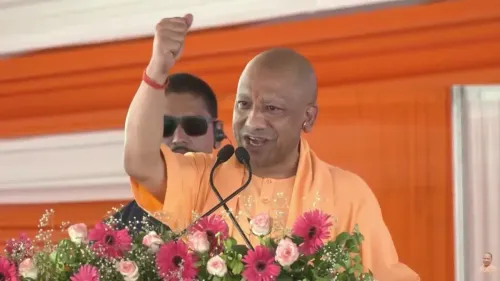
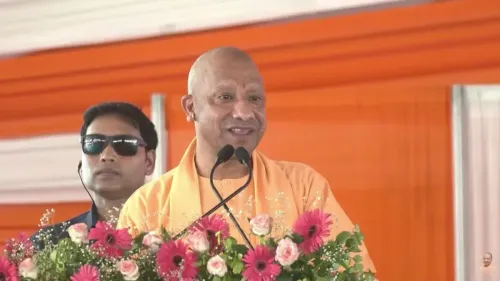
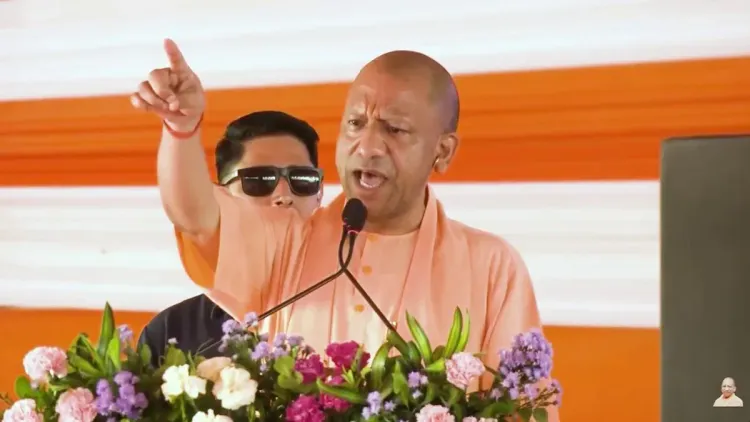
Uttar Pradesh Chief Minister Yogi Adityanath on Tuesday, 30 June 2026, declared that the double-engine government — referring to the BJP-led administrations at both the state and central levels — is committed to the satisfaction of ordinary citizens rather than the politics of appeasement. The statement, posted on his official X account, encapsulates a recurring ideological position that has defined his tenure in Lucknow.
In the post, CM Yogi wrote: 'डबल इंजन की सरकार तुष्टीकरण नहीं, आमजन के संतुष्टीकरण पर विश्वास करती है' — meaning, 'The double-engine government believes not in appeasement, but in the satisfaction of the common people.' The remark is a pointed contrast to what the BJP has long characterised as the minority-vote-bank politics of opposition parties.
Context
The phrase 'double-engine government' has been a cornerstone of BJP's political messaging since at least the 2022 Uttar Pradesh assembly elections, used to argue that having the same party in power at the state and Centre accelerates development delivery. CM Yogi Adityanath has repeatedly invoked it to contrast his administration's universal-welfare approach with what he frames as selective, community-based patronage by rival parties.
The term 'tushtikarana' (appeasement) holds particular resonance in Uttar Pradesh, a state with a diverse religious demography and a long history of identity-based electoral mobilisation. By pairing it with 'santushtikarana' (satisfaction) of the 'aamjan' (common people), the Chief Minister signals a governance philosophy centred on universal entitlement rather than targeted community benefit.
Policy Backdrop
Yogi Adityanath has anchored his government's record on welfare schemes that claim universal reach — from free ration distribution under the Pradhan Mantri Garib Kalyan Anna Yojana to housing under Pradhan Mantri Awas Yojana, and direct-benefit transfers across multiple sectors. His administration has frequently cited these as evidence that development, not caste or religious identity, drives policy in Uttar Pradesh.
The 'double-engine' framing also serves to highlight Centre-state coordination on infrastructure — expressways, metro rail, and industrial corridors — that the state government presents as fruits of political alignment between Lucknow and New Delhi.
Stakeholders and Impact
The statement is directed at Uttar Pradesh's electorate of over 15 crore registered voters, the largest of any Indian state. It reinforces messaging aimed at consolidating support among communities that the BJP argues have historically been overlooked in favour of vote-bank constituencies. Opposition parties are likely to contest the framing, arguing that welfare schemes under the current dispensation have their own patterns of exclusion.
For the Gorakhnath Math, the religious institution CM Yogi heads as its Mahant, the statement also carries symbolic weight — positioning his leadership as one rooted in service to all, consistent with the Math's public-welfare tradition.
What's Next
With Uttar Pradesh perpetually on the political radar given its outsized role in determining national electoral outcomes, statements of this nature from CM Yogi Adityanath are closely watched as indicators of campaign positioning. As the state moves toward its next political cycle, the 'satisfaction vs appeasement' binary is expected to remain a central axis of BJP's communication strategy in UP and beyond.
Point of View
Helping the party consolidate a broad non-Muslim coalition across caste lines. The timing — mid-year, outside any immediate electoral pressure — suggests the Chief Minister is engaged in continuous ideological reinforcement rather than reactive campaigning. The statement also quietly pre-empts opposition narratives around exclusion by anchoring the government's identity in the language of 'aamjan,' a term that cuts across community boundaries.
NationPress
30 Jun 2026
Frequently Asked Questions
What did CM Yogi Adityanath say about appeasement?
CM Yogi Adityanath said that the double-engine government believes in the satisfaction of common people ('santushtikarana'), not in appeasement ('tushtikarana') — drawing a contrast with what the BJP characterises as vote-bank politics.
What is the double-engine government in Uttar Pradesh?
The 'double-engine government' is a BJP phrase referring to the same party — BJP — being in power both in Uttar Pradesh and at the Centre in New Delhi, which the party argues leads to faster and better development delivery.
What does tushtikarana mean in Indian politics?
'Tushtikarana' is the Hindi word for appeasement and is used in Indian political discourse to describe policies perceived as favouring specific religious or caste communities to secure their votes, rather than serving all citizens equally.
Who is Yogi Adityanath?
Yogi Adityanath is the Chief Minister of Uttar Pradesh and a senior BJP leader. He is also the Mahant (head) of the Gorakhnath Math, a prominent Hindu religious institution in Gorakhpur, UP.
Why does Uttar Pradesh matter politically in India?
Uttar Pradesh is India's most populous state with over 15 crore registered voters and sends the largest number of members to the Lok Sabha, making it the single most important state in determining the outcome of national elections.