CM Yogi finalises Ayodhya Deepotsav: drones, aarti, 13 states
Synopsis
The Chief Minister's Office of Uttar Pradesh has announced that CM Yogi Adityanath has finalised preparations for Deepotsav in Ayodhya, featuring a 2,147-person Saryu aarti, 2,100 swadeshi drones, 3D projection mapping, and nearly 1,000 folk artists representing 13 states.
Key Takeaways
2,147 participants will perform the Saryu river aarti as the festival's centrepiece.
2,100 indigenous (swadeshi) drones will power an aerial light display over Ayodhya.
Nearly 1,000 folk artists from 13 states — including Kerala, Goa, Assam and West Bengal — will perform.
CM Yogi Adityanath directed coordination with the Shri Ram Janmabhoomi Tirth Kshetra Nyas and Ayodhya's saints.
Local traders and social organisations have been specifically instructed to be brought into the preparation process.
The event also features 3D projection mapping alongside traditional cultural performances.
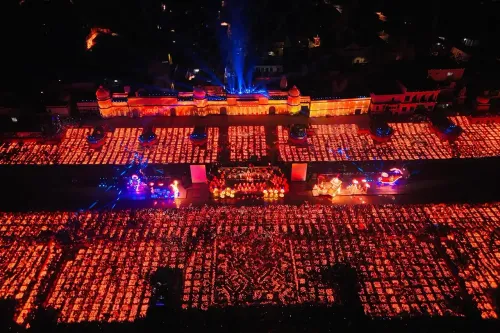
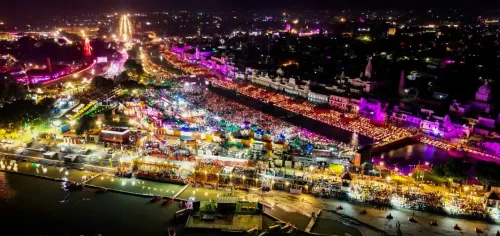
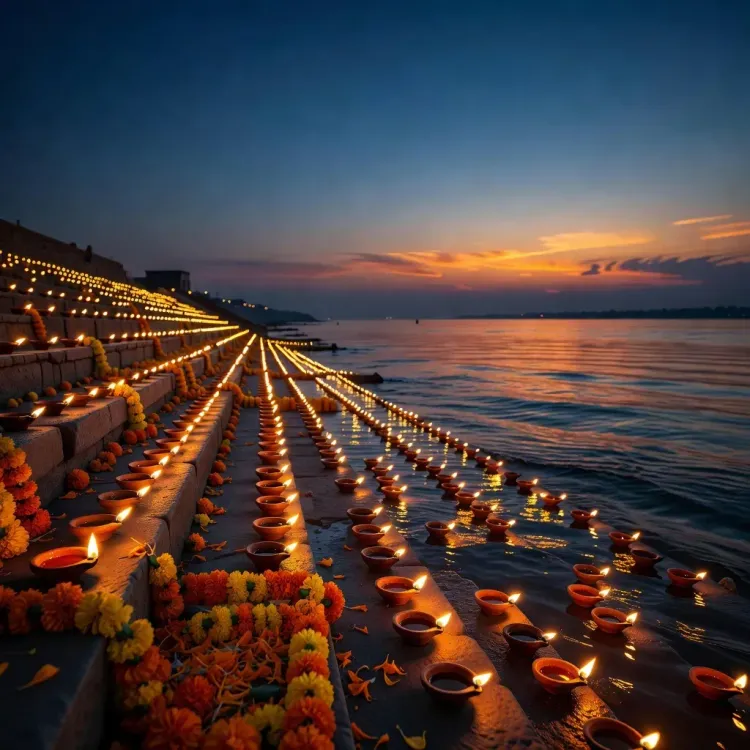
A river aarti performed by 2,147 participants, a sky lit by 2,100 indigenous drones, and folk artists drawn from 13 states — Ayodhya's Deepotsav is shaping up to be the most elaborately choreographed edition yet, and Chief Minister Yogi Adityanath has now issued direct instructions to lock down every detail before the festival opens.
What CM Yogi has directed — and who is in the room
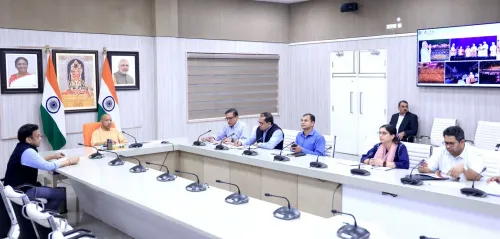
According to the Chief Minister's Office of Uttar Pradesh, CM Yogi Adityanath held coordination meetings with officials of the Shri Ram Janmabhoomi Tirth Kshetra Nyas — the trust managing the Ram Temple — and with revered saints of Ayodhya. He instructed organisers to finalise preparations in close consultation with those bodies and to actively involve local traders and social organisations. The directive signals a deliberate effort to make the celebration both institutionally anchored and economically inclusive.
The Saryu aarti, 2,100 drones, and a 13-state cultural map
The centrepiece of Deepotsav 2026 will be the Saryu river aarti, conducted simultaneously by 2,147 participants — a number that in past editions has been calibrated for world-record attempts on the banks of the holy river. Alongside that, 2,100 swadeshi drones will paint the night sky in what organisers describe as an 'aerial presentation', accompanied by 3D projection mapping and a full slate of cultural performances. The drone count underlines a deliberate 'Made in India' framing the state government has leaned into in recent editions.
Nearly 1,000 folk artists from across the country will perform. The participating states span the subcontinent's full cultural breadth: Uttar Pradesh, Madhya Pradesh, Odisha, Karnataka, Jharkhand, West Bengal, Maharashtra, Assam, Rajasthan, Bihar, Kerala, Goa and Telangana. The choice to draw from a coalition of states — cutting across linguistic and regional lines — is a recurring feature of the event's architecture, framing Ayodhya not as a regional religious site but as a national cultural stage.
Ayodhya's post-consecration cultural economy
The strategic backdrop matters here. Since the Ram Temple's consecration in January 2024, the Uttar Pradesh government has steadily layered cultural programming onto Ayodhya's religious identity, treating large-scale events as a lever for heritage tourism and the local economy. Deepotsav — the state's annual Diwali mega-event in the city — has grown each year in scale, technological ambition, and multi-state participation. The inclusion of local traders in this year's coordination loop is a visible nod to ensuring the festival's footfall translates into economic benefit for the city's commercial fabric.
The eyes to keep on after the lamps are lit: official attendance figures, reports on the drone-display technology's performance, and any infrastructure or tourism investment announcements the state government may use the occasion to unveil.
Point of View
The state projects Ayodhya as pan-Indian cultural property rather than a regionally specific religious site — a politically resonant framing. The insistence on '2,100 swadeshi drones' also slots neatly into a broader 'Make in India' technology narrative the administration favours at high-visibility events. The directive to loop in local traders signals awareness that festivals of this scale must generate ground-level economic returns to sustain political goodwill.
NationPress
23 Oct 2026
Frequently Asked Questions
What is Deepotsav in Ayodhya?
Deepotsav is the Uttar Pradesh government's annual grand Diwali celebration held in Ayodhya, featuring mass lamp-lighting on the banks of the Saryu river, cultural performances, drone displays and light shows. It has grown significantly in scale since the Ram Temple consecration in 2024.
How many drones will be used at Deepotsav 2026?
According to the Chief Minister's Office, 2,100 indigenous (swadeshi) drones will be deployed for the aerial presentation at Deepotsav 2026 in Ayodhya.
Which states are sending artists to Ayodhya Deepotsav 2026?
Artists from 13 states are participating: Uttar Pradesh, Madhya Pradesh, Odisha, Karnataka, Jharkhand, West Bengal, Maharashtra, Assam, Rajasthan, Bihar, Kerala, Goa, and Telangana — with nearly 1,000 folk and dance performers in total.
What role does the Ram Janmabhoomi Nyas play in Deepotsav?
The Shri Ram Janmabhoomi Tirth Kshetra Nyas , the trust managing the Ram Temple in Ayodhya, coordinates with the state government on event preparations. CM Yogi specifically directed officials to align with the Nyas and with local saints to finalise arrangements.
When was the Ram Temple in Ayodhya consecrated?
The Ram Temple in Ayodhya was consecrated in January 2024 , after which the Uttar Pradesh government significantly expanded cultural programming and tourism infrastructure in the city.