CM Yogi: Godhoyia Nala to end Gorakhpur north waterlogging
Synopsis
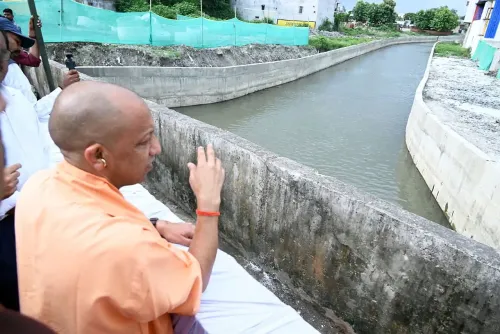
Chief Minister Yogi Adityanath has announced that the Godhoyia Nala will act as a dedicated drainage channel for monsoon waterlogging in northern Gorakhpur, carrying stormwater through Ramgarh Tal and Tarkulani before discharging it into the Rapti River — part of UP's broader flood-resilience push in eastern districts.
Key Takeaways
The Chief Minister's Office of Uttar Pradesh announced on 22 July 2026 that the Godhoyia Nala will serve as an effective monsoon drainage outlet for northern Gorakhpur .
The channel will route stormwater from waterlogged northern localities to Ramgarh Tal , then through Tarkulani and into the Rapti River .
Gorakhpur has historically faced severe monsoon waterlogging due to flat terrain and proximity to river systems.
The project aligns with drainage corridor plans incorporated in the 2018–2023 Gorakhpur Master Plan and post- 2017 flood infrastructure upgrades.
Ramgarh Tal — already a key urban water body in Gorakhpur — serves as the intermediate storage and routing node in the drainage alignment.
Tendering, land acquisition, and civil progress will determine whether waterlogging days fall measurably in the next monsoon season.
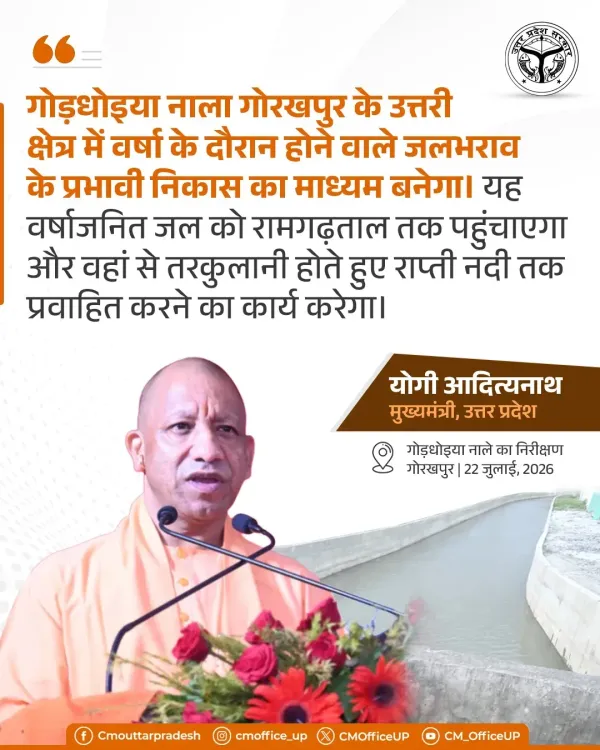
The Chief Minister's Office of Uttar Pradesh on Wednesday, 22 July 2026 shared a statement from Chief Minister Yogi Adityanath announcing that the Godhoyia Nala project will serve as an effective drainage channel for monsoon waterlogging in the northern parts of Gorakhpur, routing stormwater through Ramgarh Tal and onward via Tarkulani to the Rapti River.
Context
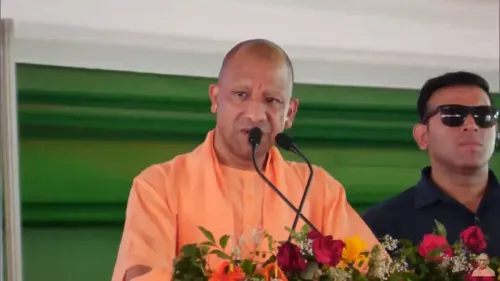
The Chief Minister stated: 'Godhoyia Nala Gorakhpur ke uttari kshetra mein varsha ke dauran hone wale jalbharav ke prabhavi nikas ka madhyam banega' — 'The Godhoyia Nala will become an effective outlet for waterlogging that occurs during rainfall in the northern region of Gorakhpur.' He added that it will carry rainwater to Ramgarh Tal and from there channel it through Tarkulani into the Rapti River.
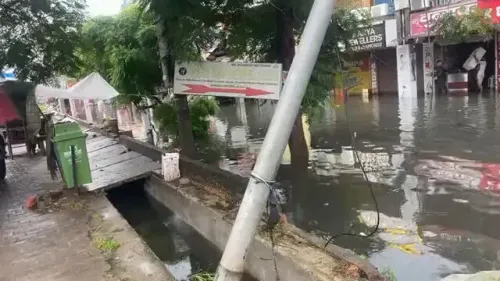
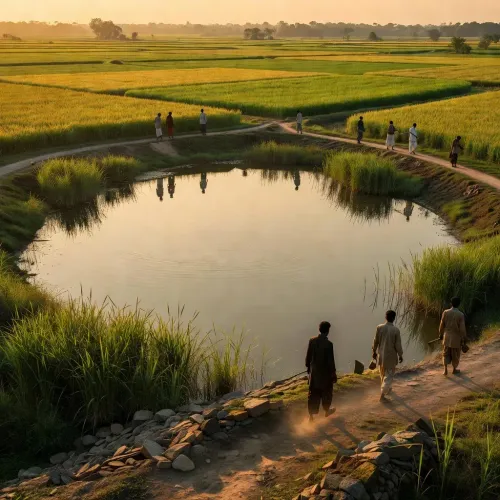
Gorakhpur, a major city in eastern Uttar Pradesh, has historically suffered from severe monsoon waterlogging owing to its flat terrain and proximity to river systems. Residents of the city's northern localities have long faced prolonged inundation during the rainy season.
Policy Backdrop
Following the 2017 floods, the Uttar Pradesh government initiated targeted drainage upgrades and desilting operations at Ramgarh Tal, treating the lake as a central node in Gorakhpur's stormwater management system. The 2018–2023 Gorakhpur Master Plan formally incorporated stormwater drainage corridors that link local nalas to existing water bodies and rivers.
The Godhoyia Nala project fits within a broader state-level pattern of engineering drainage links between urban low-lying areas, lakes, and rivers across flood-prone eastern districts. Such interventions typically combine nala widening, desilting, and outlet creation to reduce the duration of post-rainfall waterlogging.
Ramgarh Tal — a large natural lake within Gorakhpur — has been progressively developed as a flood-buffer and urban amenity under the Yogi administration, making it a logical intermediary in any north-Gorakhpur drainage alignment. The Rapti River, which flows through eastern Uttar Pradesh, serves as the ultimate discharge point for the region's excess monsoon water.
Stakeholders and Impact
Residents of Gorakhpur's northern urban localities stand to benefit most directly if the project delivers on its stated objective. Prolonged waterlogging in these areas disrupts daily commutes, damages property, and poses public health risks — particularly the spread of vector-borne diseases during the monsoon.
The project's success also has implications for the broader Ramgarh Tal ecosystem, as increased channelled inflow must be balanced against the lake's storage and outflow capacity. Downstream communities along the Rapti corridor will need to be factored into the hydraulic design to avoid transferring the waterlogging burden further downstream.
What's Next
Key milestones to watch include the tendering process, land acquisition along the nala alignment, and the commencement of civil works. The most tangible test of the project's effectiveness will be a measurable reduction in waterlogging days in northern Gorakhpur during the next monsoon season after completion.
The announcement signals continued political priority on flood resilience in Gorakhpur — a city with which CM Yogi Adityanath has deep personal and political ties, having represented it in Parliament for two decades before becoming Chief Minister.
Point of View
A specific lake, and a named river, the Chief Minister's Office is signalling implementation intent rather than merely aspirational planning. The focus on Gorakhpur — CM Yogi's political home base — also reflects the administration's pattern of using visible infrastructure projects to consolidate its urban constituency. Whether the project moves from announcement to measurable flood relief before the next monsoon will be the real test of its political and policy value.
NationPress
21 Oct 2026
Frequently Asked Questions
What is the Godhoyia Nala project in Gorakhpur?
The Godhoyia Nala is a drainage channel project in Gorakhpur designed to carry monsoon rainwater from waterlogged northern localities through Ramgarh Tal and Tarkulani into the Rapti River, reducing urban flooding.
Why does northern Gorakhpur face waterlogging every monsoon?
Northern Gorakhpur sits on flat terrain close to river systems, which means rainwater has limited natural outflow. Without engineered drainage channels, water accumulates in low-lying residential and commercial areas for extended periods.
What is Ramgarh Tal and what role does it play in Gorakhpur's drainage?
Ramgarh Tal is a large natural lake within Gorakhpur that serves as a central stormwater storage and routing node. The Godhoyia Nala project will channel floodwater into the lake before it is discharged further downstream toward the Rapti River.
What did CM Yogi Adityanath say about the Godhoyia Nala?
CM Yogi stated that the Godhoyia Nala will become an effective outlet for waterlogging in northern Gorakhpur during rainfall, routing water to Ramgarh Tal and from there through Tarkulani to the Rapti River.
When will the Godhoyia Nala project be completed?
No specific completion date has been announced. Key milestones to watch include tendering, land acquisition along the nala alignment, and the start of civil works.