CM Yogi Flags UP's 18% Farm Growth, ₹1.03 Lakh Cr Paddy Payout
Synopsis
CM Yogi Adityanath says UP's agricultural growth rate has risen from 8% to 18% since 2017, with over ₹1.03 lakh crore paid directly to 80 lakh paddy farmers, as the state leads India in wheat, milk, and sugarcane production.
Key Takeaways
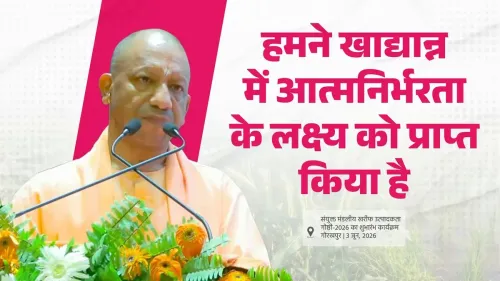
Uttar Pradesh now contributes 21 percent of India's total foodgrain production, according to CM Yogi Adityanath.
The state's agricultural growth rate has risen from 8 percent to 18 percent since 2017.
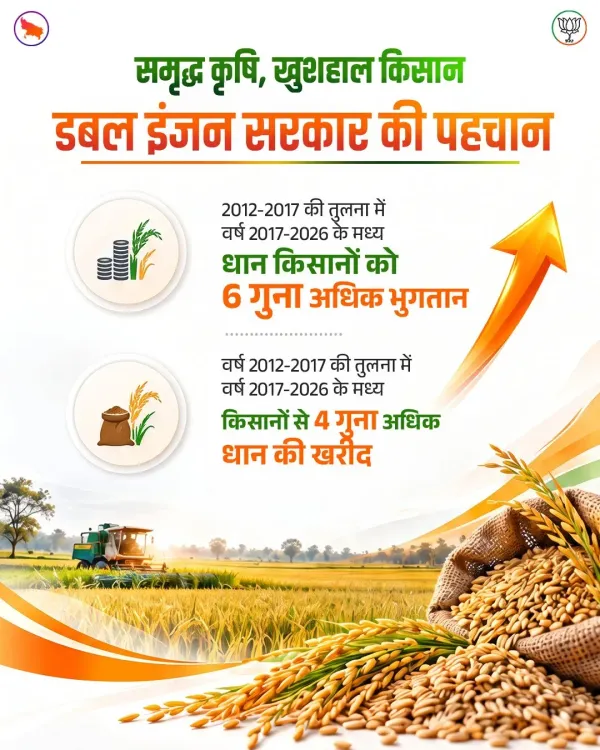
Between 2017 and March 2026 , over 80 lakh farmers sold 519 lakh metric tonnes of paddy to the government at MSP.
Direct payments to paddy farmers over the same period total ₹1,03,833 crore , transferred via DBT.
The MSP for paddy has been raised by ₹71 per quintal for the current season.
UP ranks first in India in production of milk, sugarcane, and wheat.
From debt-ridden despair to a 21 percent share of India's total foodgrain output — Uttar Pradesh Chief Minister Yogi Adityanath on Saturday, October 10, 2026, laid out a sweeping agricultural scorecard for the state, citing numbers that reframe UP's identity from a farmer-crisis headline to the country's single largest grain basket.
The debt-to-dignity shift UP's farmers have lived through
CM Yogi's post draws a sharp before-and-after. Before 2017, he writes, the annadata kisan ('provider farmer') was 'drowned in debt, distress and helplessness, forced to chase middlemen.' Today, that same farmer is, he argues, free from debt and accessing improved seeds, irrigation, and direct benefit transfers (DBT) for MSP payments and PM Kisan Samman Nidhi — the central government's income-support scheme that deposits cash directly into cultivators' bank accounts, bypassing every intermediary layer.
The shift matters because UP's agrarian economy is not a footnote — it is the story. The state's agricultural growth rate has, according to CM Yogi's post, climbed from 8 percent to 18 percent, and UP now ranks first nationally in the production of milk, sugarcane, and wheat. Each of those three commodities anchors a distinct rural economy across different agro-climatic zones of the state.
₹1,03,833 crore paid directly to paddy farmers since 2017
The centrepiece statistic in the post is the paddy procurement record. Between 2017 and March 2026, the UP government bought 519 lakh metric tonnes of paddy from over 80 lakh farmers and made a direct payment of ₹1,03,833 crore — over one lakh crore rupees, transferred straight to growers. That figure, if accurate, would represent one of the largest state-level procurement operations in modern Indian agricultural history.
For the current season, the Minimum Support Price for paddy has been raised by ₹71 per quintal, a move CM Yogi frames as consistent with the government's stated commitment to ensuring fair value for farm produce.
Irrigation projects and the 'double engine' dividend
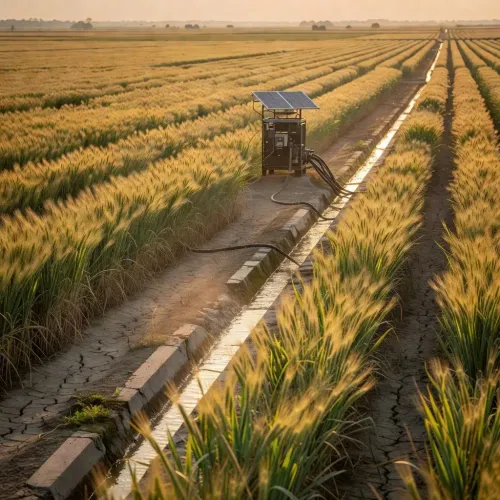
CM Yogi also points to the completion of irrigation projects that had been stalled for decades — a chronic bottleneck in UP's farm economy, where rain-fed cultivation left millions of smallholders exposed to erratic monsoons. The post credits Prime Minister Narendra Modi's guidance and the 'double engine government' framework — the BJP's term for aligned central and state administrations working in tandem — as the enabling force behind these gains.
The framing is explicitly political: the contrast with the pre-2017 era is drawn to highlight BJP governance, and the linkage to PM Modi's leadership underscores that this is as much a political statement as an agricultural one. But the underlying data points — procurement volumes, DBT utilisation, sector-wise rankings — are the kind of verifiable benchmarks that the government will be measured against in any serious policy review.
What the numbers signal for UP's rural economy
An 18 percent agricultural growth rate and a 21 percent share of national foodgrain output from a single state would, if sustained, represent a structural transformation rather than a cyclical uptick. UP's contribution to India's food security has always been significant by geography and population; the claim here is that institutional reform — direct procurement, MSP enforcement, DBT pipelines, and completed irrigation infrastructure — has converted that potential into measurable output.
The kicker, as CM Yogi frames it: 'protecting the rights of the annadata farmer and ensuring his prosperity is our highest priority.' The government will now be held to that standard — harvest season by harvest season.
Point of View
Deploying the 'double engine' framing to consolidate BJP's rural support base in India's most populous state ahead of future electoral cycles. The pivot from middleman-dependent procurement to direct DBT transfers is a genuine policy shift that began at the Centre and was implemented at scale in UP — the numbers cited, if validated, reflect a meaningful institutional overhaul rather than mere rhetoric. The emphasis on UP's first-place rankings in milk, sugarcane, and wheat simultaneously addresses three distinct farmer constituencies — dairy, cash-crop, and cereal growers — signalling broad-based outreach. The political risk is equally clear: with farm-growth claims this specific, any reversal in output data or procurement delays in subsequent seasons will attract sharp scrutiny.
NationPress
10 Oct 2026
Frequently Asked Questions
How much did the UP government pay paddy farmers between 2017 and 2026?
According to CM Yogi Adityanath, the Uttar Pradesh government made direct payments of over ₹1,03,833 crore to more than 80 lakh farmers for the procurement of over 519 lakh metric tonnes of paddy between 2017 and March 2026.
What is UP's share in India's total foodgrain production?
CM Yogi Adityanath stated that Uttar Pradesh contributes 21 percent of India's total foodgrain production, making it the country's largest grain-producing state.
By how much has the MSP for paddy been increased in UP for 2026?
The Minimum Support Price for paddy has been raised by ₹71 per quintal for the current season, as announced in CM Yogi Adityanath's post.
What is the 'double engine government' CM Yogi refers to?
The 'double engine government' is the BJP's political term for a configuration where the same party governs both the state and the Centre, arguing that aligned administrations can implement welfare and development schemes faster and with less friction.
In which agricultural commodities does UP rank first in India?
According to CM Yogi Adityanath, Uttar Pradesh ranks first in India in the production of milk, sugarcane, and wheat .