CM Yogi Hails Modi's PM-KISAN, PMKSY as Farmer Milestones
Synopsis
UP Chief Minister Yogi Adityanath praised PM Narendra Modi on 18 June 2026 for delivering two landmark farmer-welfare firsts: the PM-KISAN direct income support of Rs 6,000 annually and the PMKSY irrigation guarantee, calling them historic steps for India's food-provider farming community.
Key Takeaways
CM Yogi Adityanath posted on 18 June 2026 crediting PM Narendra Modi with historic firsts in farmer welfare.
The Pradhan Mantri Krishi Sinchayee Yojana (PMKSY) , launched in 2015 , aims to guarantee irrigation access for farmers across India.
The Pradhan Mantri Kisan Samman Nidhi (PM-KISAN) , announced in December 2018 , provides Rs 6,000 per year in direct cash transfers to eligible farmer families.
Uttar Pradesh is among the largest beneficiary states under PM-KISAN due to its large rural and small-farmer population.
Both schemes operate through Direct Benefit Transfer (DBT) , targeting small and marginal farmers who hold less than two hectares of land.
The post signals the BJP 's continued political emphasis on agrarian welfare in Uttar Pradesh .
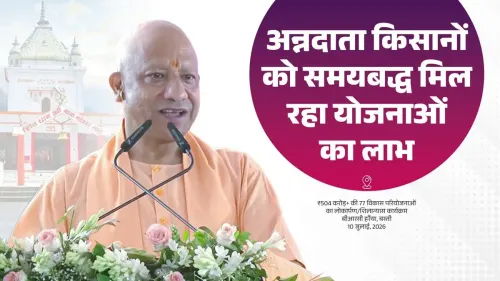
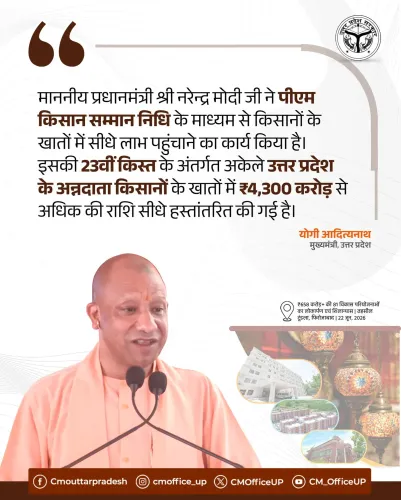
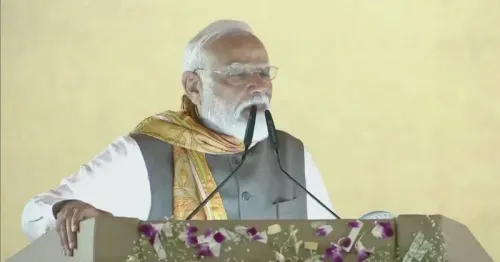
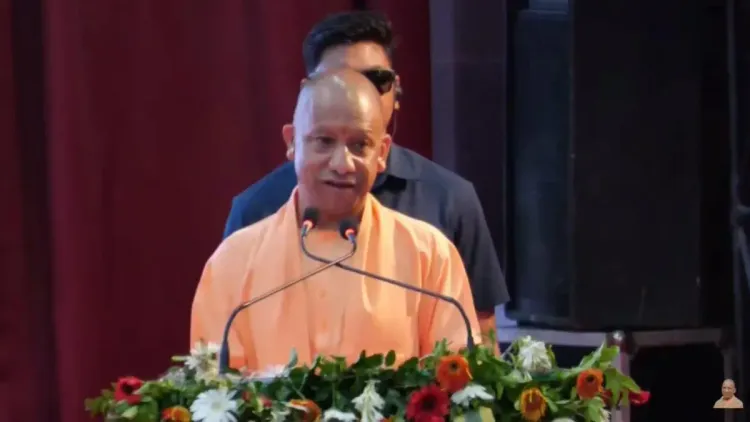
Uttar Pradesh Chief Minister Yogi Adityanath on Thursday, 18 June 2026 took to X to credit Prime Minister Narendra Modi with delivering two landmark firsts for India's farming community — a guaranteed irrigation scheme and a direct income-support programme — calling them historic interventions for the annadata (food-provider) farmers of the country.
In his post, CM Yogi wrote: 'Pehli baar Pradhan Mantri Krishi Sinchai ki guarantee mili... Pehli baar annadata kisanon ke liye Kisan Samman Nidhi ki ghoshna hui...' — translated: 'For the first time, a guarantee of Prime Minister's agricultural irrigation was given... For the first time, the Kisan Samman Nidhi was announced for the food-provider farmers...' He attributed both achievements directly to PM Narendra Modi.
Context
CM Yogi's post frames two central government schemes as unprecedented milestones in Indian agricultural policy. The Pradhan Mantri Krishi Sinchayee Yojana (PMKSY) and the Pradhan Mantri Kisan Samman Nidhi (PM-KISAN) are both Union government programmes that have been at the centre of the BJP's farmer-welfare narrative since 2015 and 2019 respectively. The statement comes amid the ongoing political focus on rural and agrarian constituencies ahead of state and national electoral cycles.
Policy Backdrop
PMKSY was launched in 2015 with the objective of expanding irrigation coverage and improving water-use efficiency across Indian agriculture, operating through a convergence of pre-existing central schemes. PM-KISAN was announced in December 2018 and rolled out from February 2019, providing an annual direct cash transfer of Rs 6,000 to eligible landholding farmer families in three equal instalments. Both programmes are funded through a centre-state cost-sharing model and implemented at the state level.
Uttar Pradesh has consistently been among the largest beneficiary states under PM-KISAN, given its large rural population and the high proportion of small and marginal farmers in the state's agricultural economy. The scheme reaches farmer accounts directly through the Direct Benefit Transfer (DBT) mechanism, bypassing intermediaries.
Stakeholders and Impact
The primary beneficiaries of both schemes are small and marginal farmers — those holding less than two hectares of land — who form the bulk of India's farming households. For this segment, the Rs 6,000 annual support under PM-KISAN provides a modest but guaranteed income floor, while PMKSY targets the persistent challenge of rain-fed agriculture by expanding access to assured irrigation sources. Together, the schemes address two of the most cited drivers of agrarian distress: income volatility and water insecurity.
State governments, including Uttar Pradesh, play a critical role in identifying eligible beneficiaries, maintaining land records, and ensuring last-mile delivery of irrigation infrastructure. CM Yogi's public endorsement reinforces the state administration's alignment with the Centre's farm-welfare agenda.
What's Next
Analysts and farm-sector observers will watch for any revision in PM-KISAN transfer amounts or expansion of PMKSY coverage in the next Union Budget cycle, which could signal the government's continued prioritisation of agrarian welfare. State-level utilisation reports for PMKSY funds will also indicate how effectively irrigation guarantees are translating into on-ground infrastructure. CM Yogi's framing of these schemes as historic 'firsts' suggests the BJP intends to keep farmer welfare at the centre of its political messaging in Uttar Pradesh.
Point of View
' the statement reinforces the BJP's narrative that structural farmer welfare began only after 2014, drawing a sharp contrast with the pre-Modi era. The timing and tone suggest the party is recalibrating its rural messaging, keeping the 'annadata' framing central to its identity in India's most populous state. Observers will note that such top-down endorsements also serve to align state administration visibly with the Centre, consolidating the BJP's unified federal image on welfare delivery.
NationPress
18 Sept 2026
Frequently Asked Questions
What is PM-KISAN and how much money do farmers get?
PM-KISAN, or Pradhan Mantri Kisan Samman Nidhi, provides eligible landholding farmer families with an annual direct cash transfer of Rs 6,000 , paid in three equal instalments of Rs 2,000 each directly into bank accounts.
What did CM Yogi say about Modi and farmers?
CM Yogi Adityanath posted on 18 June 2026 that PM Modi was responsible for delivering two historic firsts for farmers — the PM-KISAN income support scheme and the PMKSY irrigation guarantee — calling farmers the 'annadata' or food providers of the nation.
What is PMKSY and what does it do for farmers?
PMKSY, or Pradhan Mantri Krishi Sinchayee Yojana, is a central government scheme launched in 2015 to expand irrigation coverage and improve water-use efficiency in Indian agriculture, helping reduce dependence on monsoon rains.
How many farmers in Uttar Pradesh benefit from PM-KISAN?
Uttar Pradesh is among the largest beneficiary states under PM-KISAN given its large rural population and high proportion of small and marginal farmers, though exact current beneficiary counts are subject to periodic state-level verification.
Why is Yogi Adityanath highlighting Modi's farmer schemes?
CM Yogi's post publicly credits PM Modi for landmark agricultural welfare programmes, reinforcing the BJP's political narrative on farmer support in Uttar Pradesh, which is a key electoral state with a large agrarian voter base.