CM Yogi: Gonda's development lost to appeasement and nepotism
Synopsis
Chief Minister Yogi Adityanath has declared that Gonda's development was sacrificed to appeasement, anarchy, nepotism, and casteism, sharpening the BJP's contrast between pre-2017 patronage politics and its own governance record in eastern Uttar Pradesh ahead of the 2027 assembly elections.
Key Takeaways
CM Yogi Adityanath posted on 6 June 2026 that Gonda's development had been lost to appeasement, anarchy, nepotism, and casteism.
Gonda is a district in eastern Uttar Pradesh historically associated with underdevelopment and law-and-order challenges.
The statement continues the BJP 's established narrative contrasting its post- 2017 governance with previous SP and BSP administrations.
Eastern Uttar Pradesh has been a priority zone for the Yogi government's infrastructure and law-and-order push since 2017 .
The messaging is widely seen as part of early electoral positioning ahead of the 2027 Uttar Pradesh assembly elections .
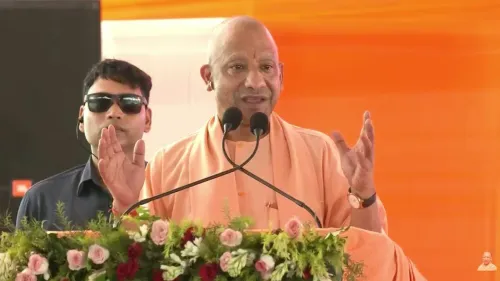
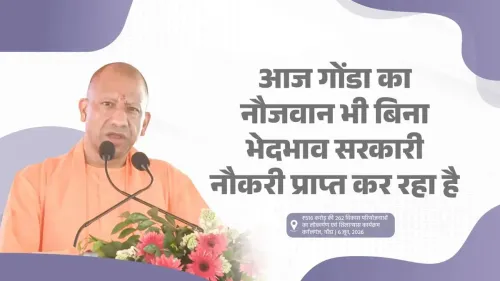
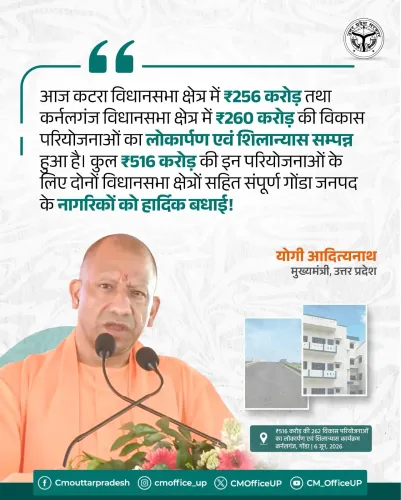
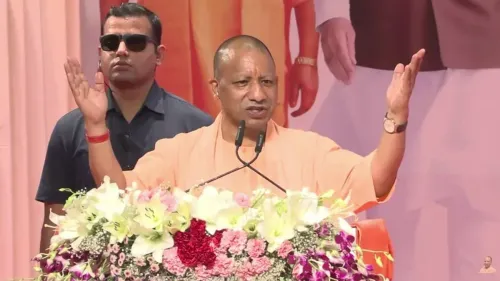
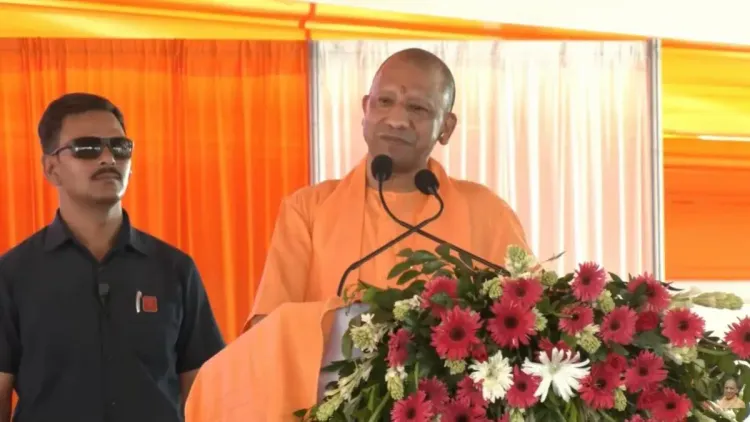
Uttar Pradesh Chief Minister Yogi Adityanath on Saturday, 6 June 2026, sharply criticised the pre-2017 governance record in Gonda, a district in eastern Uttar Pradesh, asserting that its development had been sacrificed at the altar of appeasement, anarchy, nepotism, and casteism.
Context
In his post on X, CM Yogi wrote: 'Gonda ka vikas tushtikaran, arajkata, bhai-bhatijawad aur jaatiwaad ki bhent chadh gaya tha' — ['Gonda's development had been sacrificed to appeasement, anarchy, nepotism, and casteism']. The statement is a direct indictment of the political culture that, the Chief Minister argues, kept one of eastern Uttar Pradesh's prominent districts mired in underdevelopment for decades before the BJP came to power in 2017.
Gonda has historically featured in political discourse as a district burdened by weak infrastructure, law-and-order challenges, and sluggish public service delivery. The Chief Minister's remarks frame these conditions as the deliberate outcome of identity-based patronage politics rather than administrative failure alone.
Policy Backdrop
Since assuming office in 2017, the Yogi Adityanath government has positioned eastern Uttar Pradesh as a priority zone for infrastructure investment and law-and-order reform. Districts such as Gonda, which were governed for extended periods under Samajwadi Party and Bahujan Samaj Party administrations, have been repeatedly cited by the ruling dispensation as examples of what it terms governance by 'vote-bank arithmetic.'
The BJP's broader narrative in Uttar Pradesh has consistently contrasted what it calls 'double-engine' growth — aligned central and state government investment — with the patronage networks and caste calculations it attributes to previous regimes. Chief Minister Yogi's post on Gonda fits squarely within this established messaging framework.
Stakeholders and Impact
The immediate audience for this messaging is Gonda's residents and the wider eastern UP electorate, a constituency that has seen significant outreach from the state government in recent years. For local communities, the subtext of the statement is a promise: that the era of stalled projects and selective governance is over.
Opposition parties, particularly the Samajwadi Party, are likely to contest the framing, pointing to their own development record in the region. The statement also signals to the administrative machinery in Gonda that the Chief Minister is watching the district's progress closely.
What's Next
With the 2027 Uttar Pradesh assembly elections on the horizon, political messaging around eastern UP districts is expected to intensify. Progress on centrally and state-funded infrastructure projects in Gonda — roads, power, water, and connectivity — will be the tangible measure against which the Chief Minister's critique of the past will be tested by voters.
Any formal announcement of new schemes or project completions in Gonda in the coming weeks would lend concrete weight to the governance contrast the Chief Minister is drawing.
Point of View
Anarchy, nepotism, and casteism together, the statement targets the core vote-bank critique the party has used to consolidate support across eastern Uttar Pradesh since 2017. With the 2027 assembly elections approaching, such district-specific callouts serve a dual purpose — activating local grievance memory while signalling administrative intent. The real test will be whether visible project deliverables in Gonda follow the rhetoric.
NationPress
21 Oct 2026
Frequently Asked Questions
What did CM Yogi Adityanath say about Gonda?
Chief Minister Yogi Adityanath stated on 6 June 2026 that Gonda's development had been sacrificed to appeasement, anarchy, nepotism, and casteism, referring to governance in the district before the BJP came to power in Uttar Pradesh in 2017.
Why is Gonda significant in UP politics?
Gonda is a district in eastern Uttar Pradesh that has historically been cited for underdevelopment, weak infrastructure, and law-and-order problems, making it a recurring reference point in debates about governance quality in the region.
What is the BJP's governance narrative in eastern Uttar Pradesh?
The BJP, under Chief Minister Yogi Adityanath, argues that eastern UP districts were deliberately kept underdeveloped under previous Samajwadi Party and BSP governments due to caste-based patronage politics, and contrasts this with its own 'double-engine' development push since 2017.
How does this statement connect to the 2027 UP elections?
Political analysts see district-specific governance critiques like this as early electoral messaging, aimed at consolidating voter support in eastern Uttar Pradesh by reminding residents of pre-2017 conditions ahead of the 2027 assembly elections.
What does 'double-engine government' mean in UP politics?
'Double-engine government' is a BJP phrase referring to the alignment of the central government led by the Prime Minister and the state government led by Chief Minister Yogi Adityanath, which the party argues accelerates infrastructure and development funding to states like Uttar Pradesh.