CM Yogi Performs Gopashtami Cow Service at Mathura's Deen Dayal Dham
Synopsis
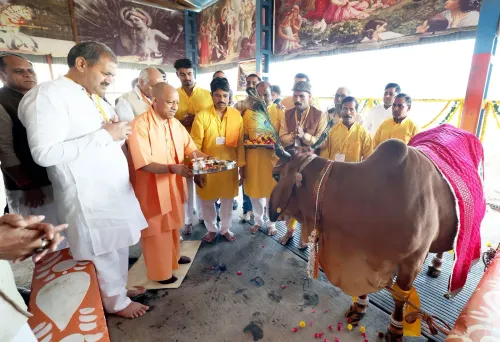
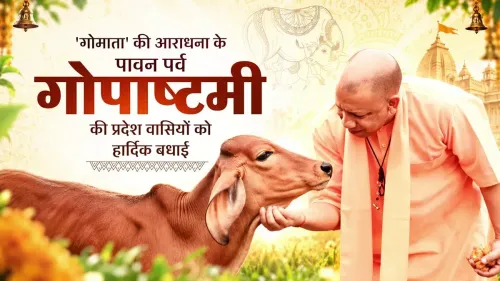
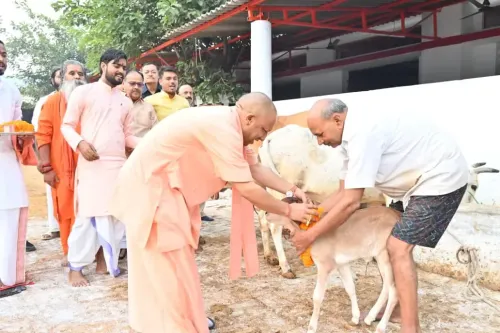
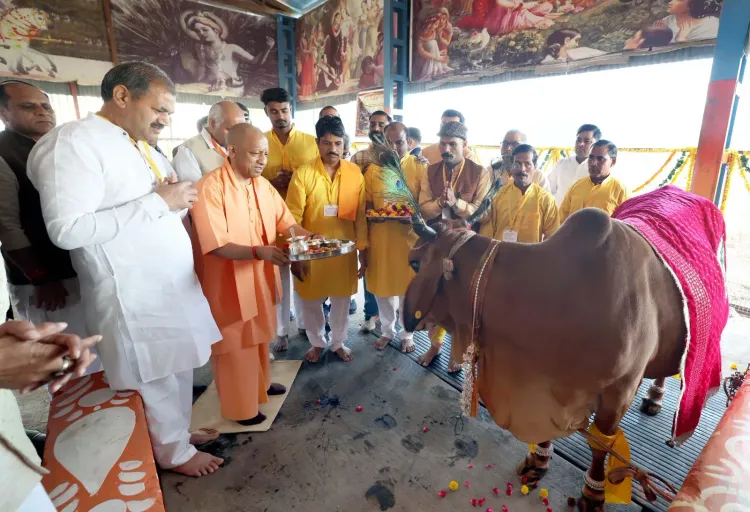
On Gopashtami, Chief Minister Yogi Adityanath performed cow service at Deen Dayal Dham in Mathura, feeding cows green fodder and jaggery while expressing reverence for the sacred animal's place in Indian culture.
Key Takeaways
CM Yogi Adityanath observed Gopashtami at Deen Dayal Dham village, Mathura on November 17, 2026 .
He personally fed cows green fodder and jaggery as an act of goseva .
The venue — Deen Dayal Dham — is associated with BJP ideologue Deendayal Upadhyaya , adding ideological significance.
Gopashtami falls on the eighth day of Kartik Shukla Paksha and is dedicated to cow veneration linked to Lord Krishna .
Since 2017 , the UP government has expanded gaushala networks and tightened cow slaughter prohibitions as state policy.
On the sacred occasion of Gopashtami, Chief Minister Yogi Adityanath of Uttar Pradesh travelled to Deen Dayal Dham village in Mathura on Tuesday, November 17 to personally feed cows green fodder and jaggery — an act of goseva (cow service) that blends devotion with the state's broader cultural messaging around bovine welfare.
The Chief Minister's Office of Uttar Pradesh announced that CM Yogi expressed his reverence for Gomata (the sacred cow) and paid tribute to 'her venerable place in Indian culture' during the visit. The event unfolded at Deen Dayal Dham, the village site in Mathura associated with ideologue Deendayal Upadhyaya, lending the occasion an added layer of ideological resonance for the ruling BJP.
Gopashtami: What the Festival Marks
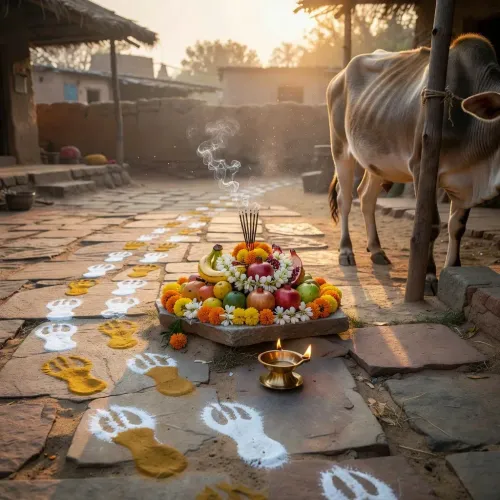
Gopashtami falls on the eighth day of the Kartik Shukla Paksha — the bright fortnight of the Hindu month of Kartik — and is dedicated entirely to venerating and serving cows. The festival is rooted in the legend of Lord Krishna first being entrusted with cow-herding on this day, making Mathura, his birthplace and one of Hinduism's holiest cities, its spiritual epicentre. Thousands of devotees across northern India feed, bathe, and circumambulate cows as an act of worship.
UP's Gaushala Push and the Politics of Cow Protection
CM Yogi's public goseva is not purely ceremonial. Since taking office in 2017, his government has significantly expanded the gaushala (cow shelter) network across Uttar Pradesh and enforced stricter prohibitions on cow slaughter — framing both moves as animal welfare as well as cultural policy. The state has channelled budget allocations toward stray cattle management, a persistent challenge in rural UP where free-roaming bovines damage crops.
Choosing Deen Dayal Dham as the venue ties the religious observance to Deendayal Upadhyaya's legacy of 'Integral Humanism', a philosophy that underpins BJP's ideological identity — signalling to the party's base that cultural governance and political lineage are inseparable.
Mathura's significance is not incidental either. The district sits at the heart of the Braj cultural belt, where cow-rearing traditions are woven into everyday rural life. For a government that has consistently emphasised its Hindu-cultural credentials, being seen performing goseva here — in person, on camera, on Gopashtami — is a carefully composed statement.
How the Uttar Pradesh government directs its upcoming budget allocations toward gaushala infrastructure and rural livestock schemes will reveal whether Tuesday's symbolism translates into sustained institutional commitment.
Point of View
Ideological lineage, and cultural policy into a single public act — connecting the BJP's Deendayal Upadhyaya heritage with its cow-protection governance record. The choice of Mathura, the Braj belt's spiritual core, amplifies the message to a base that views bovine welfare as inseparable from Hindu identity. It also keeps pressure on rival parties in the state to respond on cow-protection terrain ahead of any electoral cycle. Whether ceremonial visibility converts into verifiable gaushala funding in the next budget will be the real test of institutional follow-through.
NationPress
17 Nov 2026
Frequently Asked Questions
What is Gopashtami and why is it celebrated?
Gopashtami is an annual Hindu festival observed on the eighth day of the bright fortnight of Kartik, dedicated to venerating cows. It marks the day Lord Krishna was traditionally first entrusted with cow-herding, making it especially significant in the Braj-Mathura region.
Where is Deen Dayal Dham in Mathura?
Deen Dayal Dham is a village site in the Mathura district of Uttar Pradesh associated with the memory of BJP ideologue Deendayal Upadhyaya, frequently used for cultural and political events by the state government.
What is CM Yogi Adityanath's cow protection policy in Uttar Pradesh?
Since 2017, the Yogi Adityanath government has expanded the gaushala (cow shelter) network across UP, enforced stricter cow slaughter laws, and allocated state funds for stray cattle management as part of its animal welfare and cultural policy agenda.
Why is Mathura significant for Gopashtami celebrations?
Mathura is the birthplace of Lord Krishna and the spiritual heart of the Braj cultural belt, where cow-herding traditions are central to daily rural life. This makes it the foremost site for Gopashtami observances across India.