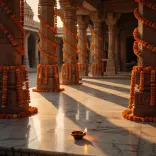
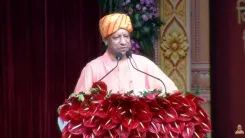
CM Yogi Hails Ayodhya's Rebirth, Recalls Era of Ram-Name Ban
Synopsis
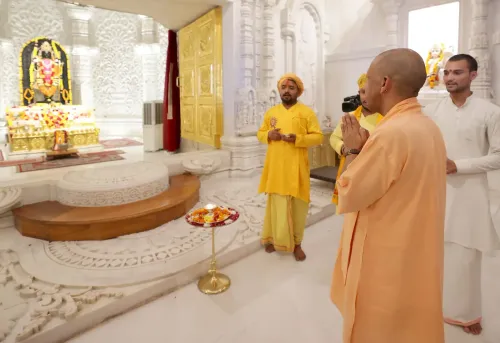
Uttar Pradesh CM Yogi Adityanath marked Ayodhya's revival in a 7 November 2026 post, contrasting an era when chanting 'Shri Ram' drew lathi charges with the city's present rebirth as a living echo of the Tretayuga.
Key Takeaways
CM Yogi Adityanath posted on 7 November 2026 invoking Ayodhya's transformation from a site of religious repression to a thriving pilgrimage city.
His post recalled an era when uttering 'Shri Ram' in Ayodhya allegedly attracted lathi charges and gunfire , framing it against the city's present revival.
The Supreme Court's 2019 verdict cleared the way for the Ram Temple's construction on the contested Ram Janmabhoomi site.
Ayodhya's redevelopment is part of a broader cultural infrastructure push under Yogi's government since 2017 , paralleling the Kashi Vishwanath Corridor in Varanasi.
The reference to Tretayuga — the mythological age of Lord Ram — signals that the state frames the moment as civilisational restoration, not merely construction.
Further phases of Ayodhya pilgrim infrastructure and temple-related programming are expected from the state government in coming months.
A city where, by one account, chanting 'Shri Ram' once invited lathi charges and bullets — that same city now pulses with the energy of a living Tretayuga. On Saturday, 7 November 2026, Uttar Pradesh Chief Minister Yogi Adityanath posted a charged reflection on Ayodhya's transformation, invoking both the wounds of history and the pride of its present revival.
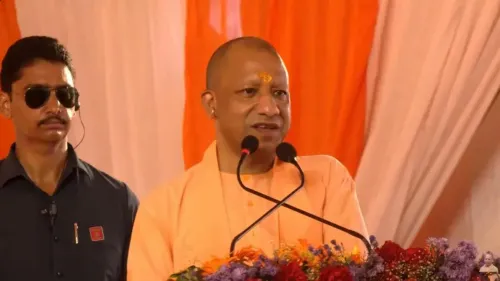
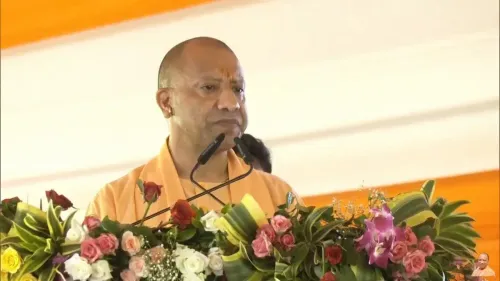
Posting in Hindi, CM Yogi wrote: 'The same Shri Ayodhya Ji where lathis and bullets were once fired for uttering the name of Shri Ram, where banning the very name of Shri Ram was a sin of the state... today that same Shri Ayodhya Ji has come alive again, evoking the memory of the Tretayuga.' The post was accompanied by a video, though no specific event was named.From Conflict to Consecration: The Long Arc of Ayodhya
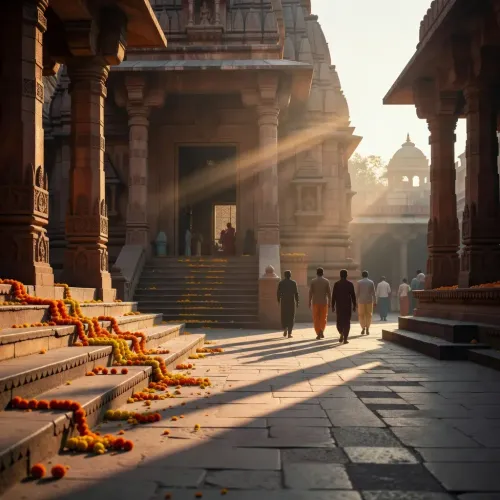
Ayodhya, the ancient city in Uttar Pradesh regarded as the birthplace of Lord Ram, spent decades at the centre of one of independent India's most consequential legal and social disputes. The Ram Janmabhoomi question consumed courts, communities, and governments across generations. The turning point arrived with the Supreme Court's unanimous verdict in November 2019, which cleared the path for construction of the Ram Temple on the contested site — a judgment that reshaped the city's destiny overnight.
Yogi Adityanath's post leans into that before-and-after contrast sharply. His imagery of 'lathis and bullets' invokes a specific period of communal and political tension — a time when religious expression in Ayodhya carried tangible physical risk. That darkness, in his framing, now stands against a city he describes as 'jeevant ho uthi hain' — 'come alive again.'
Ayodhya Inside the Bigger UP Revival Narrative
Ayodhya's redevelopment is the most visible pillar of a broader cultural infrastructure push that CM Yogi has championed since taking office in 2017. The pattern mirrors what happened in Varanasi with the Kashi Vishwanath Corridor — ancient religious sites reimagined as grand pilgrimage destinations, with new infrastructure woven around their spiritual identity. Each project carries a double message: devotional pride for Hindu communities and a signal about which civilisational symbols the current administration elevates.
The reference to Tretayuga — the age in which the Hindu epics place Lord Ram's earthly life — is deliberate and loaded. It is not a comparison Yogi's office makes lightly. It positions the present moment not merely as construction or policy, but as the resumption of something ancient and sacred, interrupted for generations and now restored.
What Comes Next for Ayodhya
Further phases of infrastructure development, expanded pilgrim facilities, and temple-related cultural programming are all in various stages of planning for Ayodhya. The city's footprint as a pilgrimage and tourism destination has expanded sharply since the temple's consecration, and state government announcements in this space are expected to continue through the coming months. CM Yogi's post, arriving on a Saturday evening with a video attachment, suggests a fresh cycle of that messaging may be underway.
Ayodhya has waited a very long time for this moment. By all signs, its chief minister intends to make sure no one forgets how long.
Point of View
He draws a moral and political line of credit: the transformation of Ayodhya, in this framing, is inseparable from the administration that enabled it. The Tretayuga reference elevates the narrative from infrastructure to civilisational restoration — a register that resonates deeply with his core constituency and sets a tone well ahead of any future electoral cycle. Watch for whether fresh state announcements on Ayodhya's next development phases follow closely on this post.
NationPress
7 Nov 2026
Frequently Asked Questions
What did CM Yogi Adityanath post about Ayodhya on 7 November 2026?
CM Yogi posted in Hindi recalling an era when chanting 'Shri Ram' in Ayodhya invited lathi charges and bullets, contrasting that history with the city's present revival, which he described as evoking the Tretayuga — the mythological age of Lord Ram.
What is the significance of Ayodhya's transformation under CM Yogi?
Since 2017, Yogi Adityanath's government has positioned Ayodhya's redevelopment as a civilisational restoration, building on the Supreme Court's 2019 verdict that cleared the path for the Ram Temple and investing in pilgrim infrastructure on the scale seen at Varanasi's Kashi Vishwanath Corridor.
What was the Supreme Court's verdict on Ayodhya?
In November 2019, the Supreme Court of India delivered a unanimous verdict in the Ram Janmabhoomi case, clearing the legal path for construction of a Ram Temple at the disputed site in Ayodhya.
What does 'Tretayuga' mean in the context of Ayodhya?
In Hindu tradition, Tretayuga is the second of four cosmic ages and the era in which the epic Ramayana is set — meaning Lord Ram lived and ruled during this period. CM Yogi's use of the term frames Ayodhya's revival as a return to its deepest spiritual identity.
What are Uttar Pradesh's other major religious redevelopment projects?
The most prominent parallel to Ayodhya is the Kashi Vishwanath Corridor in Varanasi, inaugurated under Yogi Adityanath's government. Both projects link temple redevelopment with enhanced pilgrim facilities and are framed as cultural and civilisational restoration.