CM Yogi calls Ram Temple movement an 'ideological victory'
Synopsis
Uttar Pradesh CM Yogi Adityanath declared on 7 November 2026 that those who once denied Lord Ram's existence in court have now accepted it, calling the shift a 'ideological victory' for the Ram Temple movement rooted in the 2019 Supreme Court verdict.
Key Takeaways
CM Yogi Adityanath posted on 7 November 2026 declaring an 'ideological victory' in the Ram Temple movement.
He stated that those who earlier deployed lawyers in court to deny Lord Ram's existence now accept it.
The remark is rooted in the Ayodhya title dispute , which the Supreme Court resolved in November 2019 , awarding the site for temple construction.
The Babri Masjid was demolished at the disputed site in December 1992 , triggering communal violence and prolonged legal proceedings.
Yogi, who heads both the UP government and the Gorakhnath Math , has been a consistent advocate of the Ram Janmabhoomi cause since before his tenure as Chief Minister.
The post does not name the specific individuals or groups said to have changed their position on Ram's existence.
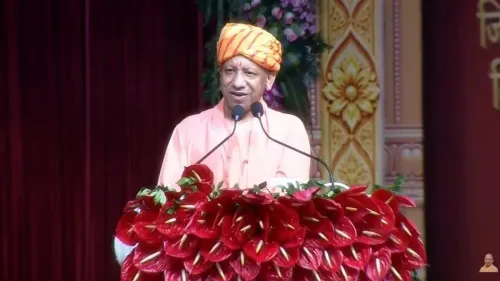
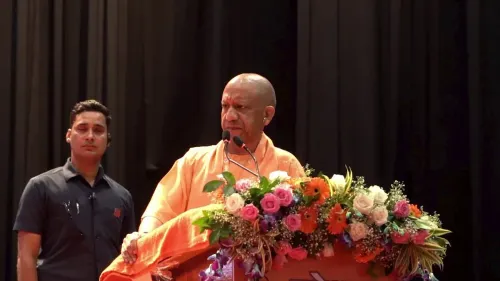
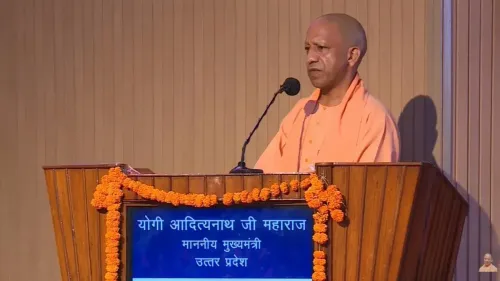
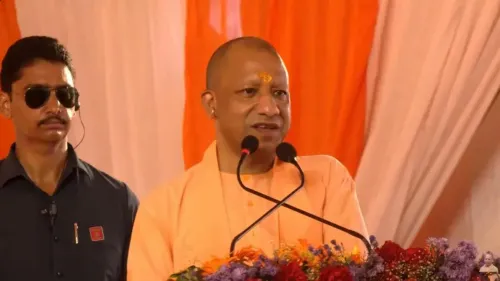
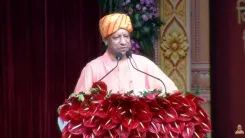
Decades after courtrooms became battlegrounds over whether Lord Ram ever existed, Uttar Pradesh Chief Minister Yogi Adityanath declared on Saturday, 7 November 2026 that those who once denied Ram's very existence have finally come around — and he called that shift a civilisational win.
Posting on X, CM Yogi wrote: 'जिन लोगों ने न्यायालयों में वकीलों की फौज खड़ी करके प्रभु श्री राम के अस्तित्व को नकारने का प्रयास किया था, आज कम से कम उनको इतनी सद्बुद्धि तो आई कि वे प्रभु श्री राम के अस्तित्व को स्वीकार कर पा रहे हैं।' In English: 'Those who once deployed armies of lawyers in courts to deny the very existence of Lord Ram — at least today they have gained enough sense to accept his existence. This is our ideological victory.'
The legal war over Ram's existence
The remark is rooted in one of independent India's longest and most charged legal battles. The Ayodhya title dispute — centred on the site Hindus revere as the birthplace of Lord Ram — wound through courts for decades, with arguments on one side contesting the historicity and even the existence of the deity himself. The Supreme Court of India delivered its landmark verdict in November 2019, awarding the disputed site to a Hindu trust for temple construction while formally acknowledging the widespread Hindu belief in Ram's birthplace. It was a ruling that settled the land question — but the ideological contest, Yogi's post suggests, is still being tallied.
Before the verdict, the site had already been scarred by the demolition of the Babri Masjid in December 1992, an event that triggered communal violence across the country and years of litigation that followed. The arc from that demolition to a Supreme Court verdict, and then to a consecrated temple, is the backdrop against which Yogi's words land.
Yogi's framing of 'ideological victory'
The phrase 'वैचारिक विजय' — 'ideological victory' — is deliberate. For CM Yogi Adityanath, who heads the Gorakhnath Math as well as the BJP government in Uttar Pradesh, the Ram Temple cause is not merely political; it is doctrinal. By framing the opponents' apparent shift in position as a concession extracted through sustained legal and political struggle, he casts the movement as one that won not just a courtroom argument but a larger cultural argument about identity and history.
The BJP has championed the Ram Janmabhoomi movement since the 1980s, and CM Yogi has been among its most consistent and vocal advocates. Saturday's post fits a broader pattern of the party reinforcing the narrative that the temple's construction represents a restoration of historical justice — a message aimed squarely at a devout Hindu voter base ahead of any future electoral cycle.
The specific individuals or groups Yogi refers to as now accepting Ram's existence are not named in the post, leaving the precise target of his remark open to interpretation.
An ideological contest that once required armies of lawyers to wage is now, in CM Yogi's telling, settled — not just in stone and mortar in Ayodhya, but in the minds of those who once challenged it in court.
Point of View
He shifts the discourse from administration to identity — a register the BJP has consistently dominated since the 1980s. The statement also serves as a soft warning on other disputed religious sites, signalling that the same 'ideological' template could be applied elsewhere. Its timing, well after the 2024 temple consecration, suggests a consolidation phase: cementing the movement's legacy in cultural memory as much as in stone.
NationPress
7 Nov 2026
Frequently Asked Questions
What did CM Yogi Adityanath say about Lord Ram's existence?
CM Yogi said that those who once deployed lawyers in courts to deny Lord Ram's existence have now come to accept it, calling this shift an 'ideological victory' for the Ram Temple movement.
What was the Supreme Court verdict on the Ayodhya dispute?
In November 2019, the Supreme Court of India ruled in favour of the Hindu side in the Ayodhya title dispute, awarding the site to a trust for Ram Temple construction while acknowledging the Hindu belief in Ram's birthplace.
What is the Ram Janmabhoomi movement?
The Ram Janmabhoomi movement is the decades-long legal and political campaign to build a Ram Temple at the site in Ayodhya believed by Hindus to be the birthplace of Lord Ram. It culminated in the 2019 Supreme Court verdict and subsequent temple construction.
What is CM Yogi Adityanath's connection to the Ram Temple?
CM Yogi Adityanath is a BJP leader, Uttar Pradesh Chief Minister, and head of the Gorakhnath Math who has been one of the most consistent advocates of the Ram Temple cause, framing it as both a religious and cultural priority.
What happened at the Babri Masjid site in Ayodhya?
The Babri Masjid structure at the disputed Ayodhya site was demolished in December 1992, triggering communal violence across India and setting off years of legal proceedings that eventually ended with the 2019 Supreme Court verdict.