CM Yogi shares VP's tribute linking Modi and Adityanath to Ram's ideals

Synopsis
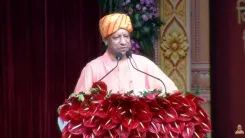
Vice President C.P. Radhakrishnan invoked Lord Ram's ideals of duty and dharma to describe the governance approach of PM Narendra Modi and UP CM Yogi Adityanath, in remarks amplified by CM Yogi on Saturday.
Key Takeaways
Radhakrishnan drew a direct comparison between Lord Ram's governance ideals and the conduct of PM Narendra Modi and CM Yogi Adityanath .
Radhakrishnan described Modi as a karmayogi and Adityanath as a yogi , mapping both to Ram's virtues of kartavya and dharma .
CM Yogi shared the remarks on 7 November 2026 , amplifying the message across his platform.
The framing connects to the BJP's historical association with the Ram Janmabhoomi movement and the January 2024 Ayodhya Ram Temple consecration .
References to Ram Rajya as a governance template have become a consistent feature of BJP political communication at the national and state level.
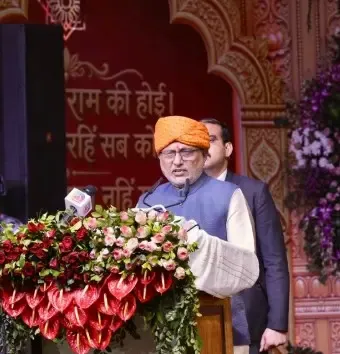
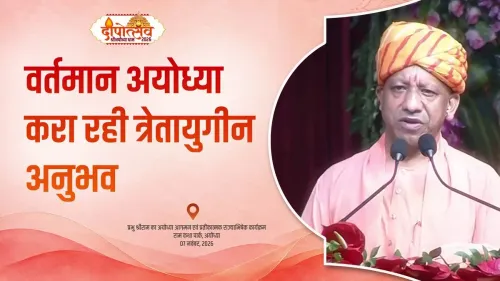
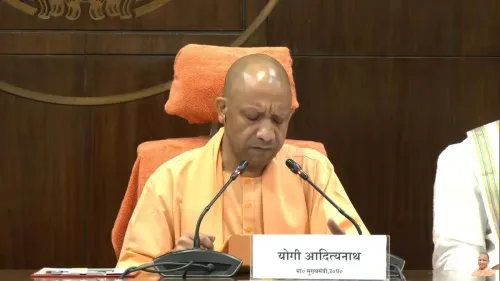
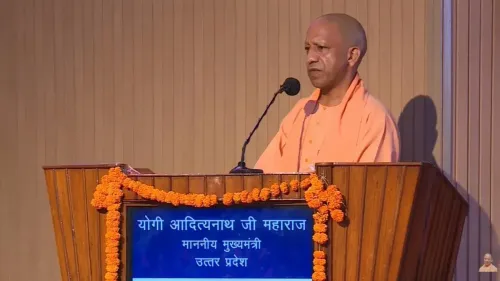
A governance philosophy rooted in ancient duty found fresh voice on Saturday evening, when Uttar Pradesh Chief Minister Yogi Adityanath shared remarks by the Vice President of India, Shri C.P. Radhakrishnan, drawing a direct line between the ideals of Prabhu Shri Ram and the conduct of two of the country's most prominent leaders.
Quoting the Vice President, the post reads: 'Prabhu Shri Ram placed Kartavya above personal comfort, Dharma above personal interest and the welfare of his people above everything else. That is the reason why two yogis, one being Yogi Adityanath Ji and the other, Karmayogi Narendra Modi Ji, are following the path of Prabhu Shri Ram.'
The Ram ideal as a governance template
The comparison is deliberate and loaded with symbolism. Lord Ram, the central figure of the Hindu epic Ramayana, is traditionally venerated not only as a deity but as the archetype of a just and self-sacrificing ruler — one who subordinated personal happiness to the demands of kartavya (duty) and dharma (righteousness). The Vice President's framing maps those qualities directly onto modern statecraft.
Prime Minister Narendra Modi is described here as a karmayogi — one who performs action without attachment to personal reward, a concept drawn from the Bhagavad Gita. CM Yogi Adityanath, as head of the Gorakhnath Math and a practising ascetic in public life, is cast in the complementary role of a yogi-administrator. The pairing of the two titles — yogi and karmayogi — reinforces an identity the BJP has cultivated for both leaders for years.
Ayodhya's long shadow over BJP's cultural messaging
The invocation of Ram's ideals does not emerge in a vacuum. In January 2024, Prime Minister Modi participated in the consecration ceremony of the Ram Temple in Ayodhya, Uttar Pradesh — the culmination of a decades-long movement that defined the BJP's political identity from the 1980s and 1990s onward. Since that moment, references to Ram Rajya — the golden age of Ram's rule — have become a recurring motif in speeches by both Modi and Adityanath, linking contemporary governance ambitions to that civilisational touchstone.
The Vice President's words, amplified through CM Yogi's platform on a Saturday evening, signal that this cultural messaging remains very much alive — and that its use as a frame for political leadership shows no sign of retreating.
When a civilisation's oldest idea of perfect governance becomes the benchmark for today's leaders, the political statement being made is not just about two men — it is about whose moral vocabulary defines the age.
Point of View
Shared by CM Yogi, represent a mature iteration of the BJP's decades-long project of anchoring its governance identity in the symbolic universe of Lord Ram. By pairing the titles 'yogi' and 'karmayogi', the framing simultaneously elevates Adityanath's ascetic credentials and Modi's selfless-service image under a single civilisational umbrella. Coming after the 2024 Ayodhya temple consecration cemented Ram as a living political symbol, such messaging helps the party sustain cultural momentum between electoral cycles. The choice of the Vice President as the voice lending this comparison adds institutional weight that a party spokesperson simply could not.
NationPress
7 Nov 2026
Frequently Asked Questions
What did VP C.P. Radhakrishnan say about Yogi Adityanath and Narendra Modi?
VP Radhakrishnan said that just as Prabhu Shri Ram placed duty and dharma above personal interest, both Yogi Adityanath and Narendra Modi are following the same path — describing Modi as a karmayogi and Adityanath as a yogi.
Why did CM Yogi Adityanath share the Vice President's remarks?
CM Yogi shared the Vice President's remarks to amplify a governance philosophy that links BJP leadership to the ideals of Lord Ram, reinforcing a cultural and political message his party has consistently promoted.
What is the significance of calling Narendra Modi a 'karmayogi'?
The term karmayogi, drawn from the Bhagavad Gita, describes one who acts selflessly without attachment to personal reward. Applying it to PM Modi frames his governance as spiritual duty rather than political ambition.
How does the Ram Temple in Ayodhya connect to this messaging?
The consecration of the Ram Temple in Ayodhya in January 2024, in which PM Modi participated, marked the culmination of a decades-long movement central to BJP's identity, making references to Ram's ideals especially resonant.
What is Ram Rajya and how do BJP leaders use the concept?
Ram Rajya refers to the ideal, just and prosperous rule of Lord Ram as described in the Ramayana. BJP leaders including Modi and Adityanath regularly invoke it to describe their governance vision, linking modern administration to a classical moral standard.