CM Yogi hails Modi govt for fulfilling OROP after four decades
Synopsis
Uttar Pradesh CM Yogi Adityanath credited PM Narendra Modi's 'double engine government' for delivering One Rank One Pension — a demand that India's ex-servicemen had raised since the 1970s — calling it an act of honour for the country's brave soldiers.
Key Takeaways
CM Yogi Adityanath posted on 14 November 2026 honouring the implementation of One Rank One Pension (OROP) .
OROP ensures equal pension for military personnel of the same rank and service length, regardless of retirement date.
The demand for OROP dates back to the 1970s and 1980s ; the central government formally notified its implementation in 2015 .
CM Yogi attributed the achievement to PM Narendra Modi and the BJP's 'double engine government' framework.
Uttar Pradesh has one of India's largest veteran populations, giving the post significant political and social weight.
Further OROP revisions or veteran welfare measures in upcoming Union Budgets remain a key policy area to watch.
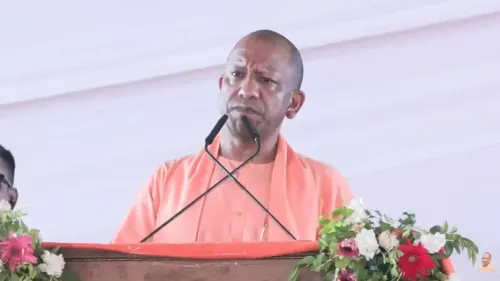
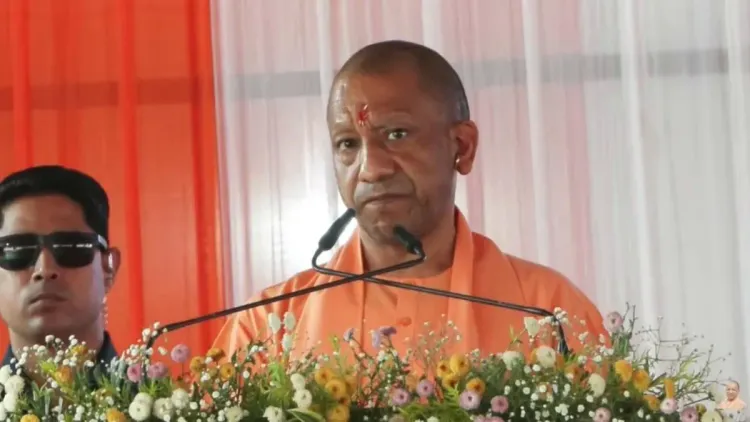
A promise made to India's veterans across four decades of waiting — Uttar Pradesh Chief Minister Yogi Adityanath says it has finally been kept. On Saturday, 14 November 2026, CM Yogi took to X to credit the BJP-led 'double engine' government under Prime Minister Narendra Modi for delivering the long-pending One Rank One Pension (OROP) scheme — a demand that soldiers and their families had raised since the 1970s and 1980s.
In his post, CM Yogi wrote: 'Aadaraniya Pradhan Mantri Shri @narendramodi ji ke netritva mein double engine sarkar ne veer sainikon ke samman mein chaar dashakon se lambit 'One Rank-One Pension' ki maang ko poora kiya hai...' — translating to: 'Under the leadership of respected Prime Minister Shri Narendra Modi, the double engine government has fulfilled the demand for One Rank One Pension, pending for four decades, in honour of our brave soldiers.'
What OROP means — and why the wait was so long
One Rank One Pension is a straightforward but powerful principle: two soldiers who retired at the same rank with the same years of service must receive the same pension — regardless of when they retired. Before OROP, pension amounts varied sharply based on the year of retirement, meaning veterans who left service in earlier decades received significantly less than those who retired later, even with identical careers.
The agitation for OROP began in earnest in the 1970s and 1980s, with veterans staging repeated protests across decades. The central government formally notified the scheme's implementation in 2015, under PM Modi's first term — ending what supporters called one of the longest-standing injustices in Indian military welfare policy.
The 'double engine' framing and its political weight
CM Yogi's use of the phrase 'double engine sarkar' — the BJP's signature slogan for states where both the state and central governments are BJP-led — is deliberate. It positions OROP not merely as a central government achievement, but as a shared dividend of aligned political leadership at both levels. Uttar Pradesh, home to one of India's largest veteran populations, is a state where armed forces welfare carries significant electoral and emotional resonance.
The post arrives at a moment when veteran welfare remains a live policy conversation — with observers watching Union Budgets and Defence Ministry notifications for any further OROP revisions or new pension-linked announcements for ex-servicemen.
For India's veterans, OROP was never just a pension revision. It was a question of dignity. And on that count, CM Yogi is making sure the ruling coalition gets credit — loudly, and on record.
Point of View
And revisiting it publicly in 2026 signals the party's intent to keep veterans firmly within its political coalition. For a state like Uttar Pradesh, where ex-servicemen and their families form a substantial voter bloc, this kind of high-visibility tribute serves both commemorative and electoral purposes. The broader pattern suggests the BJP will continue to foreground defence welfare as a differentiator ahead of any major electoral cycle.
NationPress
14 Nov 2026
Frequently Asked Questions
What is One Rank One Pension (OROP)?
One Rank One Pension is a policy that ensures military personnel who retire at the same rank with the same years of service receive equal pension, regardless of their retirement date. It was formally notified by the Indian government in 2015.
When was OROP implemented in India?
The central government notified the implementation of OROP in 2015 , under Prime Minister Narendra Modi's first term, ending a demand that had been raised since the 1970s and 1980s.
Why did OROP take so long to be implemented?
The demand for OROP began in the 1970s-1980s as veterans realised that those retiring in earlier decades received far lower pensions than those retiring later, despite identical ranks and service lengths. Successive governments deferred the decision over fiscal and administrative concerns for nearly four decades.
What did CM Yogi Adityanath say about OROP?
On 14 November 2026, CM Yogi posted on X crediting PM Modi's 'double engine government' for fulfilling the four-decade-old demand of One Rank One Pension in honour of India's brave soldiers.
What is the 'double engine government' that CM Yogi refers to?
'Double engine government' is the BJP's term for states where both the state and central governments are led by the BJP, implying coordinated and faster delivery of governance and welfare schemes.