CM Yogi Highlights Bundelkhand Connectivity, Water Push
Synopsis
Chief Minister Yogi Adityanath says Bundelkhand is now well-connected and that work on clean drinking water and farm irrigation across the region is moving at pace, citing dual policy pillars of the Bundelkhand Expressway and Jal Jeevan Mission.
Key Takeaways
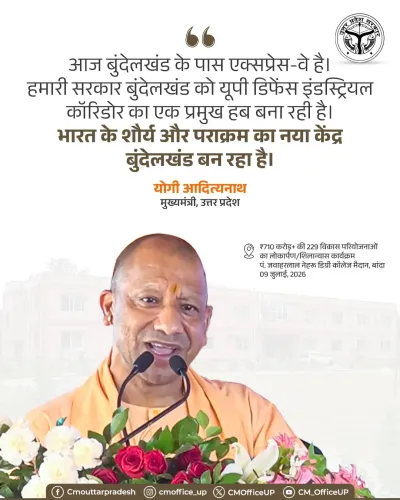
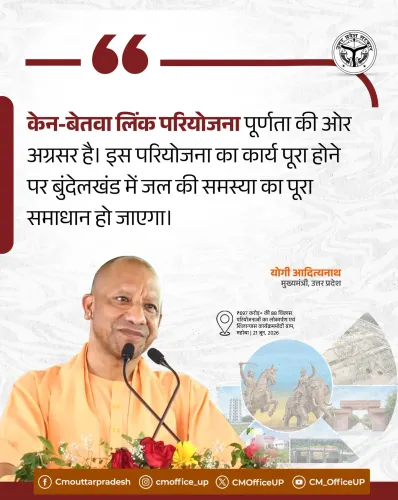
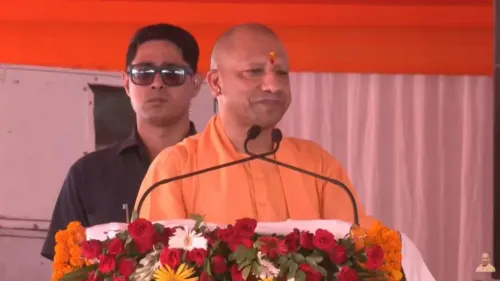
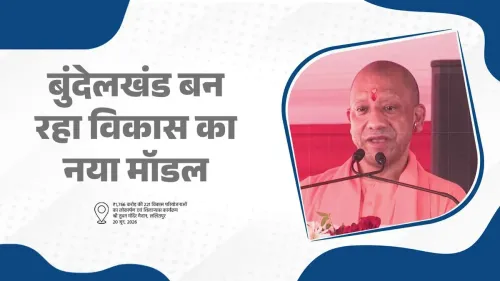
The Chief Minister's Office of Uttar Pradesh quoted CM Yogi Adityanath on 9 July 2026 highlighting progress in Bundelkhand .
Bundelkhand is described as now having 'excellent connectivity,' referencing road infrastructure built since 2017 , including the Bundelkhand Expressway .
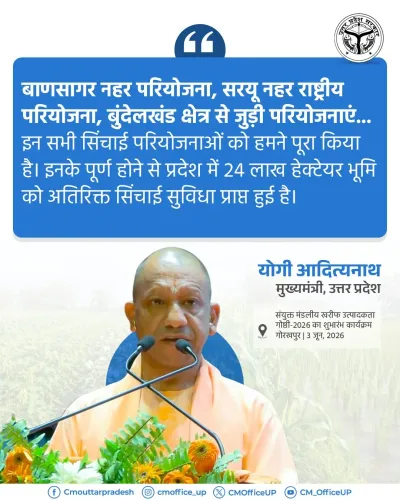
Work on supplying pure drinking water to rural households is said to be advancing rapidly under the Jal Jeevan Mission .
The drive to provide water to every farm ( har khet ko paani ) is framed as a continuing priority for the state government.
Key beneficiaries include Bundelkhand's farming communities and rural households in historically water-scarce districts such as Jhansi , Banda , and Mahoba .
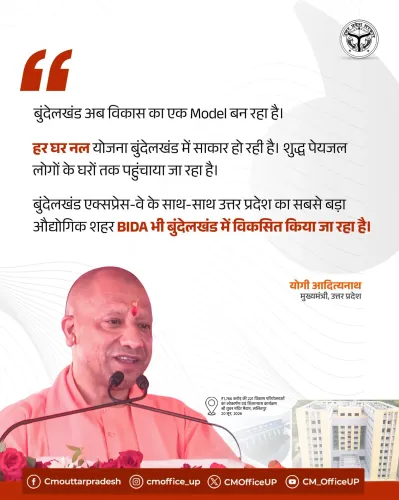
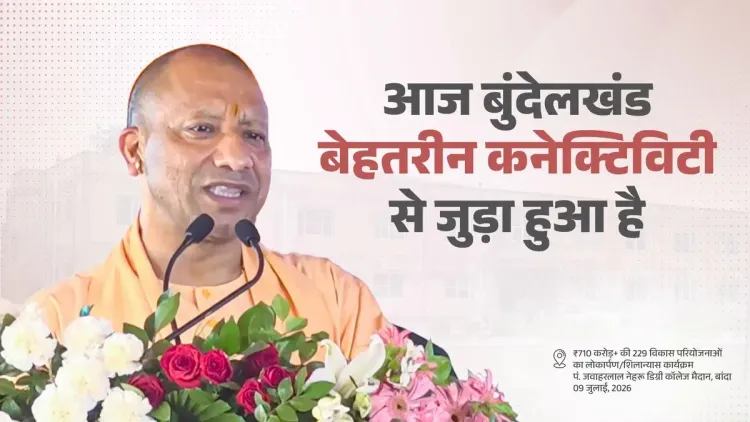
The Chief Minister's Office of Uttar Pradesh, citing Chief Minister Yogi Adityanath, declared on Thursday, 9 July 2026 that Bundelkhand is now connected through 'excellent connectivity' and that work to supply clean drinking water and irrigation to every farm in the region is advancing at speed.
The post, shared on the official CMO handle, quoted the Chief Minister directly: 'Aaj Bundelkhand behtareen connectivity se juda hua hai. Shuddh peyajal va har khet ko paani ki aapurti ki karvahi tez gati se aage badh rahi hai.' ('Today Bundelkhand is connected with excellent connectivity. Work on supplying pure drinking water and water to every farm is moving forward at fast pace.')
Context
Bundelkhand is a semi-arid region spanning southern Uttar Pradesh and parts of Madhya Pradesh, historically characterised by acute water scarcity, drought-prone agriculture, and poor road infrastructure. For decades, the region lagged behind the state's more developed districts in basic services and economic activity. Targeted state and central interventions have been directed here since 2017, when Yogi Adityanath assumed office as Chief Minister.
Policy Backdrop
Two policy pillars underpin CM Yogi's statement. The first is the Bundelkhand Expressway, a major road project initiated after 2017 that has significantly cut travel time across the region and opened corridors for commerce and agriculture logistics. The second is the Jal Jeevan Mission, the central government scheme launched in 2019, under which Uttar Pradesh has been working to provide functional household tap connections for drinking water across rural areas, including Bundelkhand's most water-stressed villages.
The phrase 'har khet ko paani' ('water to every farm') echoes a national agricultural priority that has been part of successive Union budgets and state irrigation plans. In Uttar Pradesh, this translates to canal network expansion, micro-irrigation drives, and ground-level implementation of central irrigation schemes in districts like Jhansi, Banda, Chitrakoot, and Mahoba.
Stakeholders and Impact
The primary beneficiaries of these twin pushes are Bundelkhand's farming households and rural communities, who have historically depended on erratic monsoon rainfall and distant water sources. Improved road connectivity also benefits small traders, daily-wage workers, and students accessing district-level services. State officials have repeatedly framed Bundelkhand's development as a model for reversing historical regional neglect within Uttar Pradesh.
Women and children in rural Bundelkhand stand to gain particularly from clean tap water access, reducing the burden of fetching water over long distances — a pattern documented across water-scarce districts in the state.
What's Next
Attention will now turn to specific completion milestones for ongoing water supply and road projects in Bundelkhand, including coverage figures under the Jal Jeevan Mission for the current fiscal year. State budget allocations and any review meetings convened by the Chief Minister's Office for the next fiscal cycle will indicate whether this momentum translates into accelerated ground-level delivery. The government's ability to demonstrate measurable outcomes — households with tap connections, farms with assured irrigation — will be the metric by which these claims are ultimately assessed.
Point of View
The Chief Minister's Office is reinforcing the narrative that long-neglected areas are receiving priority attention under the current dispensation. The twin focus on expressways and Jal Jeevan Mission implementation also allows the state government to claim credit for both state-funded and centrally-sponsored achievements simultaneously. The real test, however, lies in independently verifiable coverage data — the number of households with functional tap connections and farms with assured irrigation access.
NationPress
9 Jul 2026
Frequently Asked Questions
What did CM Yogi say about Bundelkhand in July 2026?
CM Yogi Adityanath stated on 9 July 2026 that Bundelkhand is now connected through excellent infrastructure and that work on providing clean drinking water and farm irrigation is advancing rapidly.
What is the Bundelkhand Expressway?
The Bundelkhand Expressway is a major road project initiated by the Uttar Pradesh government after 2017 to improve connectivity across the historically under-served Bundelkhand region in southern UP.
How is Jal Jeevan Mission helping Bundelkhand?
The Jal Jeevan Mission, launched in 2019, aims to provide functional household tap connections for drinking water in rural areas. In Bundelkhand, it targets villages that have long faced acute water scarcity.
Which districts are part of Bundelkhand in Uttar Pradesh?
Key Bundelkhand districts in Uttar Pradesh include Jhansi, Banda, Chitrakoot, Mahoba, Hamirpur, and Lalitpur, all of which have been targeted under state and central development programmes.
What does 'har khet ko paani' mean?
'Har khet ko paani' is a Hindi phrase meaning 'water to every farm.' It is a national agricultural policy goal, reflected in irrigation expansion and micro-irrigation schemes being implemented across Uttar Pradesh, including Bundelkhand.