CM Yogi Highlights Modi Govt's Welfare Reach for India's Poor

Synopsis
The Chief Minister's Office of Uttar Pradesh quoted CM Yogi Adityanath crediting PM Modi's government with unprecedented welfare delivery — housing, sanitation, free rations and Ayushman Bharat health cover of ₹5 lakh per family annually for 55 crore people.
Key Takeaways
CM Yogi Adityanath credited PM Narendra Modi with delivering unprecedented welfare change for India's poor in a statement issued on November 1, 2026 .
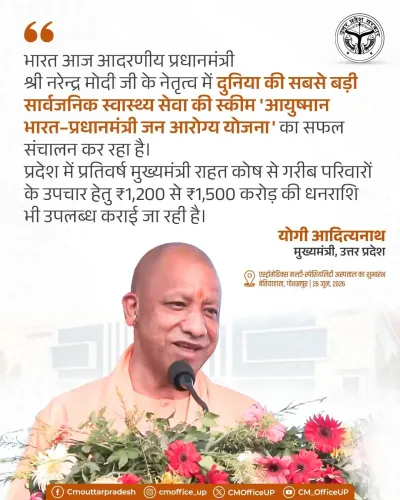
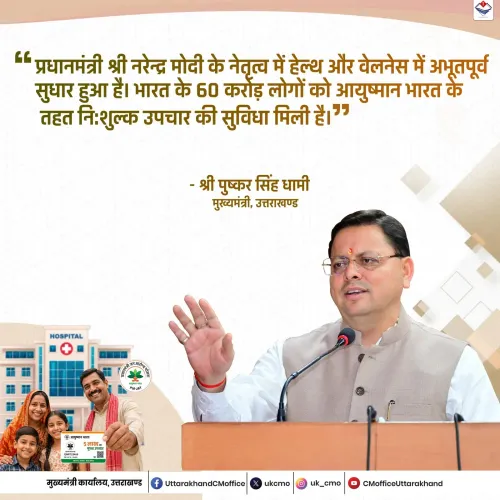
Ayushman Bharat is cited as covering 55 crore people with free treatment up to ₹5 lakh per family per year — described as a first in India's history.
Four central schemes are highlighted: Pradhan Mantri Awas Yojana (housing), Swachh Bharat Mission (sanitation), PM Garib Kalyan Anna Yojana (free rations), and Ayushman Bharat (health insurance).
Uttar Pradesh's official communications regularly amplify central government welfare messaging, aligning state-level political branding with national schemes.
Official enrolment and utilisation data for Ayushman Bharat in UP will be critical to verifying the beneficiary figures cited.
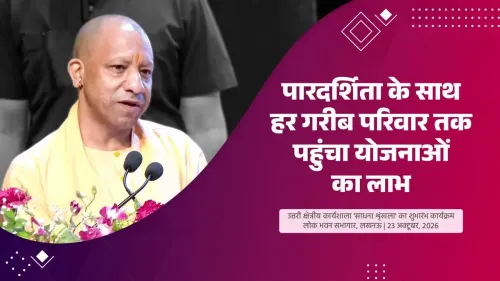
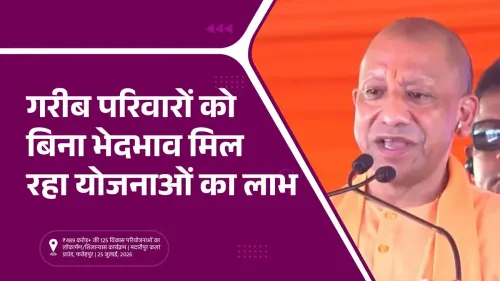
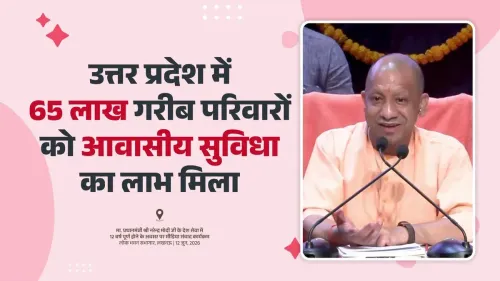
Housing, toilets, free rations, and now health cover up to ₹5 lakh per family per year — the Chief Minister's Office of Uttar Pradesh on Sunday, November 1, 2026, quoted Chief Minister Yogi Adityanath citing a sweeping set of central welfare schemes as evidence of unprecedented change in the lives of India's poor under Prime Minister Narendra Modi.
The post, in Hindi, carries a direct attribution to the Chief Minister: 'प्रधानमंत्री श्री @narendramodi जी के नेतृत्व में गरीबों के जीवन में अभूतपूर्व बदलाव आया है' — 'Under the leadership of Prime Minister Modi, an unprecedented change has come in the lives of the poor.' Four pillars are named in the same breath: homes, sanitation, free foodgrain, and health insurance.
Four Flagship Schemes, One Political Narrative
The statement brings together four of the central government's most visible welfare programmes under a single frame. Pradhan Mantri Awas Yojana, launched in 2015, provides pucca homes to eligible rural and urban poor households. Swachh Bharat Mission, initiated in 2014, has driven household toilet construction across the country. The Pradhan Mantri Garib Kalyan Anna Yojana, introduced during the pandemic year of 2020, extended free foodgrain distribution to economically vulnerable families and has since been renewed repeatedly.
The centrepiece of Sunday's statement is Ayushman Bharat — the national health protection mission launched in 2018. The post claims the scheme now provides 55 crore people with free medical treatment worth up to ₹5 lakh per family per year for secondary and tertiary hospitalisation, described as a first in India's history. The scale of that claim, if borne out by official enrolment data, would make it one of the largest government-funded health insurance programmes in the world by coverage.
UP's Role in Amplifying Central Welfare Messaging
Uttar Pradesh, India's most populous state, has consistently aligned its official communications with central government flagship schemes — a pattern that serves both state and national political messaging. CM Yogi Adityanath has frequently foregrounded Modi-era welfare programmes in public statements, positioning UP's administration as an active delivery arm of New Delhi's social sector agenda.
The timing of such messaging — aggregating housing, sanitation, food security, and health under one post — is characteristic of a broader communications strategy that frames these distinct schemes as a coherent poverty-alleviation ecosystem rather than isolated interventions. What ties them together in this narrative is the year 2014: every scheme cited either began then or was significantly scaled after that year.
Credible official data on Ayushman Bharat enrolment and beneficiary utilisation rates, particularly at the state level in UP, will be the real test of whether these numbers translate into health outcomes on the ground. That data, when released, will sharpen the picture considerably.
Point of View
If verified, would cement it as a defining social contract of the Modi era — health security as a political promise fulfilled. The aggregation of housing, sanitation, food and health under one narrative also signals a maturation in welfare communication strategy, shifting from scheme-by-scheme announcements to a composite 'development dividend' argument. The real pressure point will be outcomes data — utilisation rates, claim settlements, and hospital network adequacy — which will determine whether the political narrative and lived experience of beneficiaries align.
NationPress
1 Nov 2026
Frequently Asked Questions
What is Ayushman Bharat and how many people does it cover?
Ayushman Bharat is a central government health protection scheme launched in 2018 that provides free hospitalisation cover of up to ₹5 lakh per family per year. The UP Chief Minister's Office cited a figure of 55 crore beneficiaries, though this requires confirmation from official government enrolment data.
What did CM Yogi Adityanath say about PM Modi's welfare schemes?
CM Yogi Adityanath stated that under PM Modi's leadership, the poor have seen unprecedented change — receiving homes through Pradhan Mantri Awas Yojana, toilets through Swachh Bharat Mission, free rations through PM Garib Kalyan Anna Yojana, and health cover through Ayushman Bharat.
When was Pradhan Mantri Awas Yojana launched?
Pradhan Mantri Awas Yojana, covering both rural and urban poor, was announced in 2015 to provide pucca homes to eligible families across India.
What is PM Garib Kalyan Anna Yojana?
PM Garib Kalyan Anna Yojana is a free foodgrain distribution programme introduced by the central government in 2020 for economically vulnerable households; it has been extended multiple times since its launch.
Why does the UP government frequently highlight central government schemes?
Uttar Pradesh, as India's most populous state, regularly aligns its official messaging with central flagship welfare programmes — a strategy that links state governance credibility to national policy achievements and reinforces the political alignment between the state and central administrations.