CM Yogi honours Ambedkar's fight to end colonial 'criminal tribes' law
Synopsis
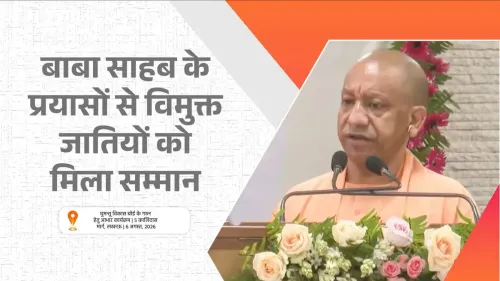
UP Chief Minister Yogi Adityanath paid tribute to Dr. B.R. Ambedkar for ending the Criminal Tribes Act, 1871 — a British colonial law that branded entire nomadic communities as hereditary criminals — and granting them dignity as Vimukta Jatis in independent India.
Key Takeaways
CM Yogi Adityanath posted a tribute on 6 August 2026 honouring Dr.
Ambedkar's role in ending the Criminal Tribes Act, 1871 .
The Act, enacted by British colonial authorities, classified entire nomadic communities as hereditary criminals subject to surveillance and movement restrictions.
Parliament passed the Criminal Tribes Laws (Repeal) Act in 1952 , formally freeing these communities and recognising them as Vimukta Jatis (liberated castes).
Ambedkar served as India's first Law Minister from 1947 to 1951 and was a foundational force behind the republic's early social-justice legislation.
The post reflects a broader pattern of Indian political leaders invoking Ambedkar's legacy to connect with Dalit, OBC, and denotified community constituencies.
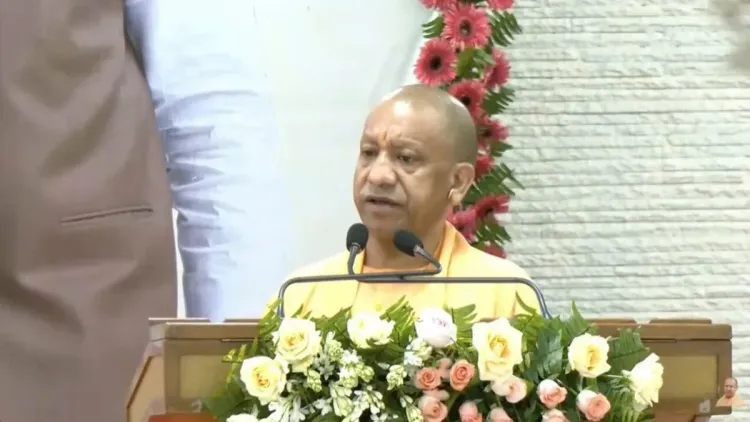
A colonial law that branded entire communities as hereditary criminals by birth — simply for who they were, not what they did — was one of independent India's earliest targets for repeal. Uttar Pradesh Chief Minister Yogi Adityanath on Thursday, 6 August 2026, invoked Bharat Ratna Dr. B.R. Ambedkar's role in dismantling the Criminal Tribes Act, 1871, honouring the dignity restored to Vimukta Jatis — the denotified communities who had lived under that colonial stigma for over eight decades.
Posting in Hindi, CM Yogi wrote: 'भारत रत्न बाबा साहब डॉ. भीमराव आंबेडकर जी ने स्वतंत्र भारत में Criminal Tribes Act, 1871 को समाप्त किया और विमुक्त जाति के रूप में इन जातियों को सम्मान दिया' — ('Bharat Ratna Baba Sahab Dr. Bhimrao Ambedkar ended the Criminal Tribes Act, 1871 in independent India and gave these communities dignity as Vimukta Jatis.').The law that made birth a crime
The Criminal Tribes Act, 1871 was enacted by the British colonial government to control nomadic and semi-nomadic communities it classified as 'hereditary criminals.' Under its provisions, members of notified communities faced mandatory registration, movement restrictions, and constant police surveillance — not for any individual offence, but purely by virtue of the community they were born into. Dozens of nomadic groups across the subcontinent fell under its shadow.
The Act remained on the books through the entirety of British India. Its repeal became one of the early social-justice imperatives of the new republic. Dr. Bhimrao Ramji Ambedkar — chairman of the Constituent Assembly's drafting committee and India's first Law Minister — was a central voice for the rights of communities crushed by caste-based and colonial discrimination. Parliament passed the Criminal Tribes Laws (Repeal) Act in 1952, formally denotifying these communities and granting them the status of Vimukta Jatis — 'liberated castes.'
Why Ambedkar's name anchors this moment
Dr. Ambedkar served as Law Minister from 1947 to 1951, resigning before the 1952 repeal was formally enacted. Yet his intellectual and legislative groundwork — and his lifelong campaign against institutionalised discrimination — is widely credited as foundational to the repeal. CM Yogi's post places that legacy squarely at Ambedkar's feet, framing the 1952 legislation as a direct expression of his vision for a republic built on equal dignity.
Indian political leaders across the spectrum regularly invoke Ambedkar's social-justice record to connect with Dalit, OBC, and denotified community constituencies. The post fits into a broader pattern of state-level commemorations that seek to anchor contemporary governance in the social-reform architecture Ambedkar helped design.
For the estimated millions of Indians who descend from denotified tribes — communities that carry the colonial label's social stigma even today — the repeal of 1952 remains not a footnote but a founding act. CM Yogi's tribute is a reminder that some of independent India's most consequential legislation was not about borders or budgets, but about whether a person's birth could be treated as a crime.
Point of View
Even as opposition parties contest that ownership. The historical nuance — that the repeal came in 1952, after Ambedkar's resignation — does not diminish his intellectual authorship, but it does illustrate how political tributes often compress complex legislative histories into cleaner, more resonant narratives.
NationPress
20 Sept 2026
Frequently Asked Questions
What was the Criminal Tribes Act, 1871?
The Criminal Tribes Act, 1871 was a British colonial law that classified certain nomadic and semi-nomadic communities as 'hereditary criminals' by birth, subjecting them to mandatory registration, movement restrictions, and police surveillance regardless of any individual offence.
When was the Criminal Tribes Act repealed in India?
Parliament repealed the Criminal Tribes Act through the Criminal Tribes Laws (Repeal) Act in 1952 , formally denotifying these communities and recognising them as Vimukta Jatis — meaning 'liberated castes' — in independent India.
What is a Vimukta Jati?
Vimukta Jati literally means 'liberated caste' in Sanskrit. The term refers to the communities that were denotified — freed from the criminal label — after the repeal of the Criminal Tribes Act in 1952. Many of these communities continue to face social stigma and economic marginalisation today.
What was Dr. Ambedkar's role in repealing the Criminal Tribes Act?
Dr. B.R. Ambedkar served as India's first Law Minister from 1947 to 1951 and was a foundational advocate for the rights of communities facing institutionalised discrimination. His legislative groundwork and reform vision are widely credited as central to the 1952 repeal, even though he had resigned as Law Minister before the Act was formally passed.
Why did CM Yogi Adityanath post about the Criminal Tribes Act?
CM Yogi Adityanath posted on 6 August 2026 to honour Dr. Ambedkar's legacy in dismantling colonial-era discrimination. The post is part of a broader pattern of Indian political leaders invoking Ambedkar's social-justice record to connect with Dalit, OBC, and denotified community constituencies.