CM Yogi: Vimukt Jatis Are Freedom Fighters, Not Criminals

Synopsis
Chief Minister Yogi Adityanath declared on August 6, 2026 that Vimukt Jati communities — once branded 'Criminal Tribes' by British colonial law — are rightful freedom fighters deserving full honour, with the BJP's double-engine government pledging dedicated recognition and welfare.
Key Takeaways
CM Yogi Adityanath stated that no one can label Vimukt Jatis as a 'Criminal Tribe', reframing them as contributors to India's freedom struggle.
The British Criminal Tribes Act of 1871 collectively criminalised entire communities; it was repealed in 1952 , giving rise to the term 'Vimukt Jati' (denotified/liberated community).
The statement positions these communities as swadheenata sangram senani — freedom struggle fighters — deserving formal honour.
CM Yogi invoked the 'double-engine government' framework, signalling coordinated action between Lucknow and New Delhi on Vimukt Jati welfare.
No specific new scheme was announced; the statement signals intent and direction rather than a concrete programme launch.
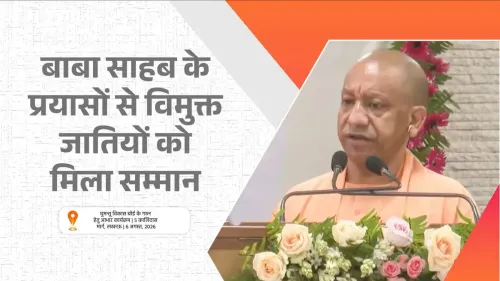
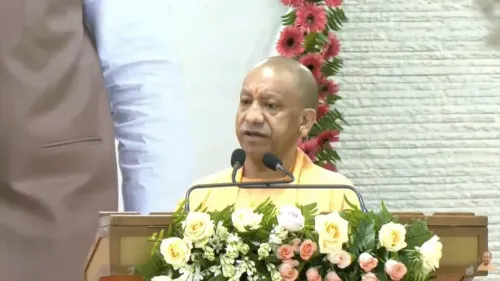
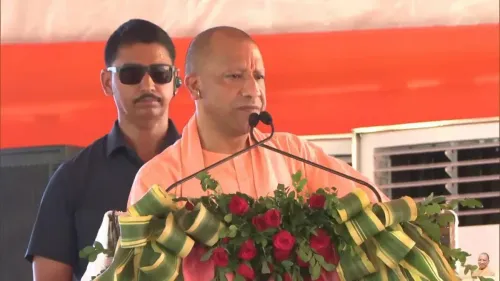
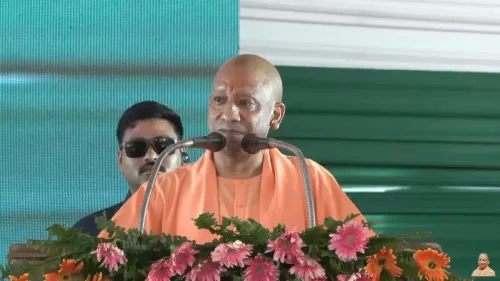
No colonial label, no matter how old, can define a community that bled for India's freedom. On Thursday, August 6, 2026, the Chief Minister's Office of Uttar Pradesh quoted Chief Minister Yogi Adityanath declaring that Vimukt Jatis — communities once branded under the British-era 'Criminal Tribes' tag — deserve recognition as freedom fighters, and that the 'double-engine government' is committed to delivering exactly that.
Translating the post, CM Yogi said: 'No one can call Vimukt Jatis a Criminal Tribe. These are communities that made significant contributions to India's freedom struggle. The double-engine government is working with the resolve to give them the same honour that should have been given to them as freedom fighters.'
A Colonial Scar That Outlasted the Empire
The wound CM Yogi is addressing is more than a century old. The Criminal Tribes Act of 1871, enacted by British colonial authorities, stamped entire communities as 'born criminals' — a collective punishment that criminalised their very existence, not their actions. The Act was repealed after independence in 1952, and these communities were formally 'denotified', giving rise to the term Vimukt Jati (liberated community).
But legal repeal did not erase social stigma. Decades after denotification, many of these communities continued to face discrimination in employment, housing, and civic life — carrying a colonial verdict that independent India had officially discarded but not fully dismantled.
Rewriting the Narrative: From 'Criminal' to 'Freedom Fighter'
CM Yogi's statement makes a pointed historical inversion: the same communities the British labelled criminal were, in fact, active participants in the resistance against colonial rule. By framing them as swadheenata sangram senani (freedom struggle fighters), the statement repositions Vimukt Jatis from the margins of national memory to its centre.
This is not merely symbolic. Post-independence governments at both the central and state level have periodically attempted to address the legacy of the Criminal Tribes Act through welfare programmes and official recognitions. Uttar Pradesh, as India's most populous state with a significant Vimukt Jati population, holds particular weight in how this recognition translates into policy.
What the 'Double-Engine' Pledge Signals
The phrase 'double-engine government' — a BJP formulation referring to aligned state and central governments — carries a specific political meaning here. It signals that welfare and recognition measures for Vimukt Jatis are to be pursued in coordination between Lucknow and New Delhi, amplifying both reach and resources.
The statement stops short of announcing a specific new scheme, but the directional intent is clear: formal honour, not just formal repeal. Whether that intent crystallises into concrete programmes — dedicated welfare funds, official freedom-fighter status, or educational provisions — is the question Vimukt Jati communities across Uttar Pradesh will now be watching closely.
Seven decades after independence, India is still in the business of correcting its colonial ledger. CM Yogi's declaration is a reminder that the most durable injustices are the ones that survive the laws meant to end them — and that fixing them requires more than a repeal date.
Point of View
This is politically significant: it converts a welfare ask into a dignity claim, which tends to have broader public resonance. The 'double-engine' framing also pre-emptively credits both state and central BJP governments for any future policy gains, tightening the party's ownership of this constituency ahead of potential electoral cycles in Uttar Pradesh. The absence of a concrete scheme announcement, however, means the statement currently carries more symbolic than material weight.
NationPress
20 Sept 2026
Frequently Asked Questions
Who are Vimukt Jatis in India?
Vimukt Jatis, meaning 'liberated communities', are groups that were branded 'criminal tribes' under the British colonial Criminal Tribes Act of 1871 and formally denotified after India's independence in 1952 . They are also called Denotified Tribes (DNTs).
What was the Criminal Tribes Act of 1871?
The Criminal Tribes Act of 1871 was a British colonial law that collectively labelled certain communities as hereditary criminals, restricting their movement and subjecting them to surveillance. It was repealed by independent India in 1952 .
What did CM Yogi Adityanath say about Vimukt Jatis?
CM Yogi Adityanath stated on August 6, 2026 that Vimukt Jatis cannot be called a Criminal Tribe and that these communities made significant contributions to India's freedom struggle. He said the double-engine government is committed to giving them the honour they deserve as freedom fighters.
What is the 'double-engine government' in the context of UP?
The 'double-engine government' is a BJP formulation referring to the alignment of the BJP government in Uttar Pradesh under CM Yogi Adityanath and the BJP-led central government, implying coordinated policy implementation with greater combined resources.
Has the UP government announced any new scheme for Vimukt Jatis?
As of August 6, 2026 , CM Yogi Adityanath's statement signals intent to honour Vimukt Jati communities as freedom fighters, but no specific new scheme or programme has been announced alongside the statement.