CM Yogi: India's sovereignty rests with the common citizen
Synopsis
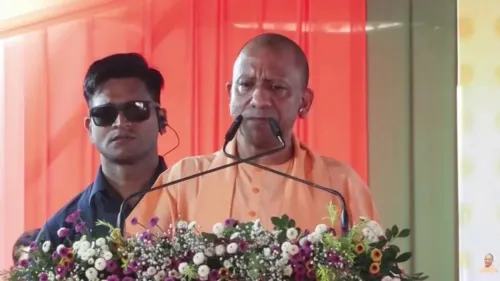
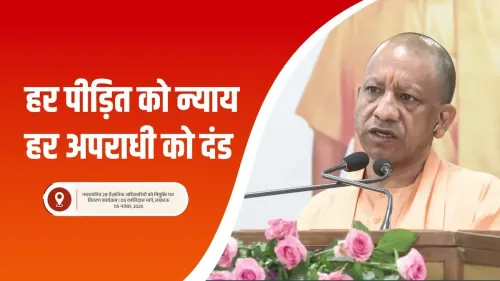
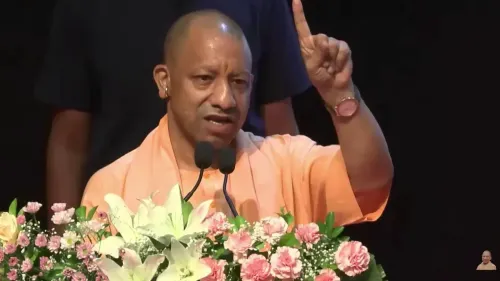
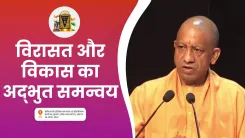
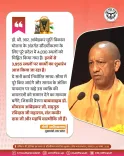
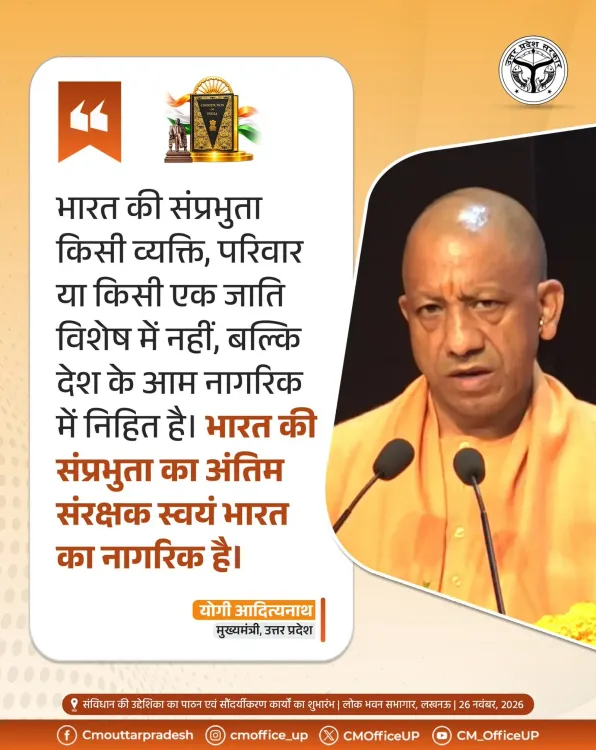
The UP CMO quoted CM Yogi Adityanath as saying India's sovereignty resides in the common citizen, not in any person, family or caste, with the citizen as its ultimate guardian.
Key Takeaways
The Chief Minister's Office of Uttar Pradesh quoted CM Yogi Adityanath on 26 November 2026.
He said India's sovereignty does not reside in any individual, family or particular caste.
He said it resides in the common citizen of the country.
He called the Indian citizen the ultimate guardian of that sovereignty.
The Preamble of the Constitution locates sovereignty in the people of India.
Sovereignty in India is not a family heirloom and not a caste privilege. On 26 November 2026, the Chief Minister's Office of Uttar Pradesh put that claim in public, quoting Chief Minister Yogi Adityanath: the republic's last guardian is the ordinary citizen, not any person, household or community.
The Hindi text attributes a clear formula to the Chief Minister: India's sovereignty does not reside in any individual, family or particular caste, but in the common citizen of the country. The ultimate protector of that sovereignty, the quote adds, is the Indian citizen himself.
Not a person, a family or a caste
The wording is deliberate. It rules out three familiar claimants at once — a strongman, a dynasty, and a community — and vests authority in the aam nagrik (common citizen). That is the political core of the message, and it is also a constitutional one.
Yogi Adityanath has led Uttar Pradesh since 2017 as a Bharatiya Janata Party leader. Public remarks from Lucknow on governance and the Constitution are a regular feature of his politics. This one goes to first principles: who, in a republic, actually holds power.
The Preamble's first claim, said out loud
The Preamble to the Constitution of India, adopted on 26 November 1949 and in force from 1950, locates sovereignty in the people. 26 November is observed across the country as Constitution Day, or Samvidhan Diwas.
Chief ministers restating that idea is part of routine democratic speech in India — a reminder that legitimacy does not concentrate in a person, a household or a caste bloc. The next test is whether the same theme returns in later addresses from the Uttar Pradesh Chief Minister, or whether this remains a single, sharp line on the record.
The citizen as sovereign is not a line from a pamphlet. It is the first claim of the republic, restated from Lucknow.
Point of View
Family or caste, the Uttar Pradesh Chief Minister restates the Preamble while drawing a line against hereditary and identity-based claims to power. That line is constitutional on its face and politically charged in practice, because Indian public life still organises around families and caste blocs. Watch whether the same formulation returns in later addresses from Lucknow, which would mark a sustained theme rather than a one-day line.
NationPress
26 Nov 2026
Frequently Asked Questions
What did CM Yogi Adityanath say about India's sovereignty?
He said India's sovereignty does not reside in any individual, family or particular caste, but in the common citizen, who is its ultimate guardian.
Does the Indian Constitution say sovereignty belongs to the people?
Yes. The Preamble to the Constitution of India locates sovereignty in the people of India, a principle restated in the Uttar Pradesh Chief Minister's quoted remarks.
Who is the Chief Minister of Uttar Pradesh?
Yogi Adityanath has been Chief Minister of Uttar Pradesh since 2017. The Chief Minister's Office quoted him on sovereignty on 26 November 2026.
When did the UP CMO issue the sovereignty statement?
The Chief Minister's Office of Uttar Pradesh posted the quoted remarks on 26 November 2026.
What is Constitution Day in India?
Constitution Day, or Samvidhan Diwas, is observed on 26 November, the date the Constitution was adopted in 1949. The UP CMO post went out on that date in 2026.