CM Yogi holds Janata Darshan at Gorakhnath Mandir, hears public woes
Synopsis
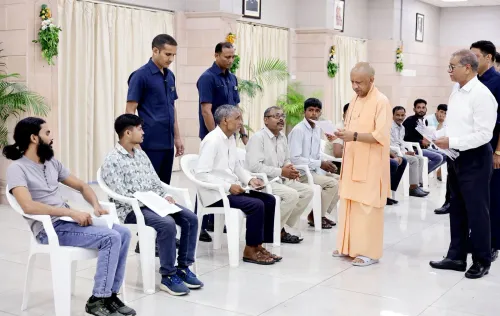
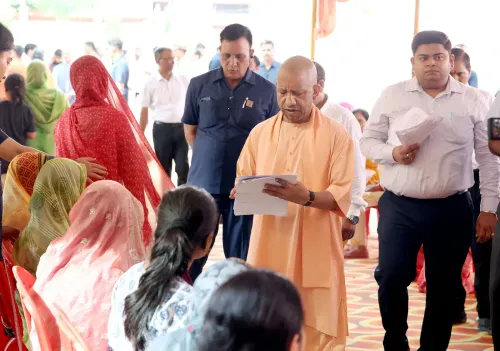
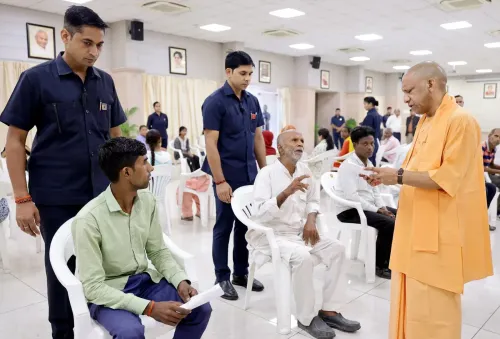
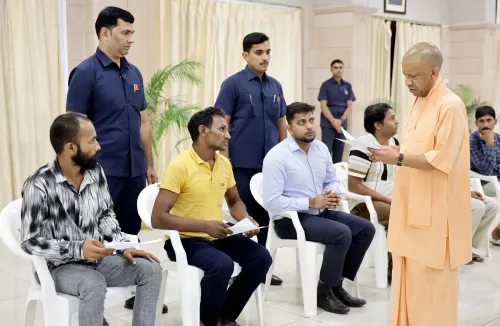
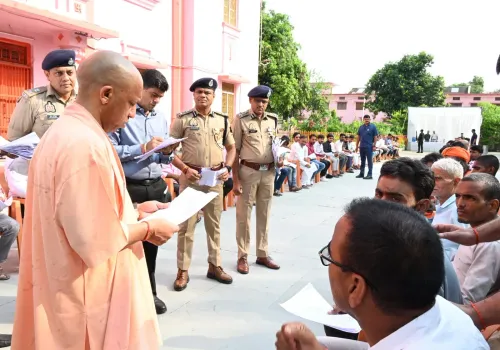
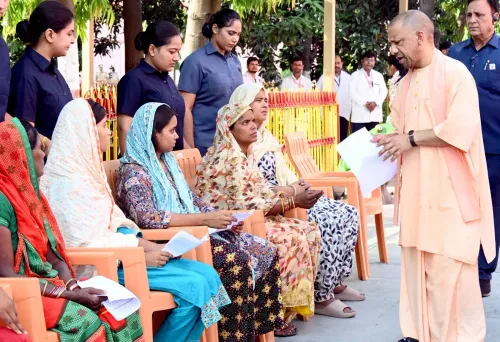
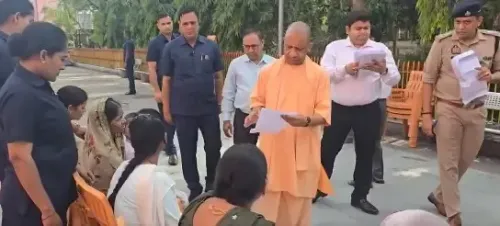
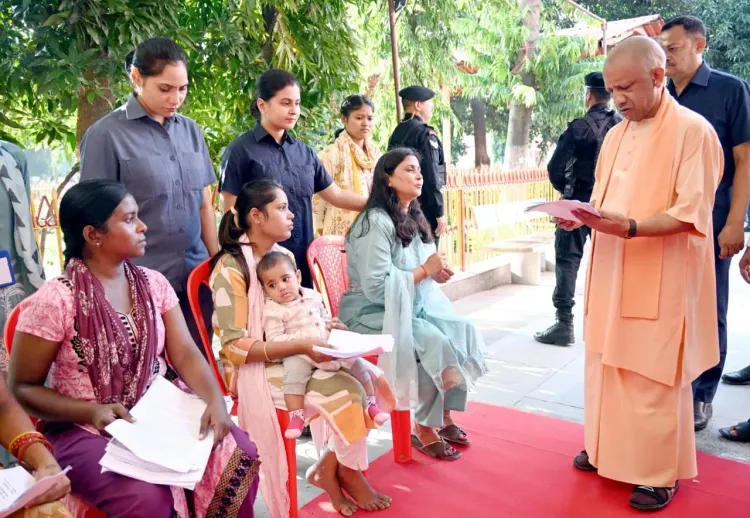
Chief Minister Yogi Adityanath held Janata Darshan at Gorakhnath Mandir on 29 September 2026, listening to citizens from multiple districts and directing officials to resolve their grievances, while also performing cow service at the temple's gaushala.
Key Takeaways
CM Yogi Adityanath conducted Janata Darshan at Gorakhnath Mandir, Gorakhpur on 29 September 2026 .
Citizens from multiple districts of Uttar Pradesh attended to present their grievances directly to the Chief Minister.
The Chief Minister issued directions to relevant officials for resolution of problems raised during the session.
Janata Darshan at Gorakhnath Mandir has been an institutionalised grievance-redressal mechanism since 2017 .
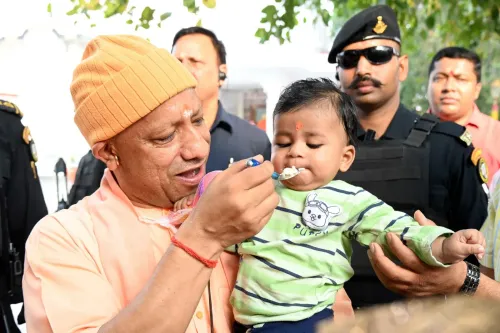
CM Yogi also performed gosewa (cow service) at the gaushala within the temple complex after the session.
The format combines direct administrative accountability with the cultural and religious symbolism central to the Chief Minister's public identity.
Every few weeks, citizens from the length and breadth of Uttar Pradesh make their way to a historic temple complex in Gorakhpur — not just to pray, but to place their problems at the feet of the state's Chief Minister. On Tuesday, 29 September 2026, Chief Minister Yogi Adityanath once again opened the gates of Gorakhnath Mandir for Janata Darshan (public audience), listening directly to grievances brought by residents from multiple districts and issuing on-the-spot directions to relevant officials for resolution. The Chief Minister's Office of Uttar Pradesh confirmed the session, calling public service the state's 'supreme priority.'
An old temple, a living grievance court
Gorakhnath Mandir in Gorakhpur is far more than a place of worship — it is the spiritual and political nerve-centre of Yogi Adityanath's public identity. The Chief Minister, who is also the head priest of the Gorakhnath Peeth, has used this complex as his home base long before he entered electoral politics. Since taking office in 2017, he has institutionalised Janata Darshan here as a structured grievance-redressal mechanism, turning a traditional practice of public access into a regular administrative forum.
Citizens arrive carrying petitions — land disputes, pension delays, law-and-order complaints, development work stalled at the local level. The Chief Minister hears them out, then directs the concerned district officials or department heads to act. It is a format that bypasses layers of bureaucracy and, at least in design, puts accountability squarely at the top.
Cow service alongside citizen service
After the darshan session on Tuesday, Yogi Adityanath also performed gosewa — tending to the cows housed in the gaushala (cow shelter) within the temple complex. The act, routine in his public calendar, is freighted with both religious and political meaning: the protection and service of cattle has been a defining plank of the BJP government in Uttar Pradesh, underpinning policies from anti-slaughter enforcement to state-funded gaushala support schemes.
Combining an administrative grievance session with a devotional act of cow care is a deliberate tableau — governance and culture woven into a single morning's work at Gorakhnath Mandir.
Why the format endures
Direct public-access programs by chief ministers are not unique to Uttar Pradesh, but few have been as consistently maintained or as visibly linked to a single location and personality. By anchoring Janata Darshan at Gorakhnath Mandir rather than the state capital Lucknow, Yogi Adityanath signals that his roots — and his accountability — run through Gorakhpur. The format also generates a steady paper trail of directed orders to officials, which the administration can later present as evidence of responsive governance.
The real test, as always, lies in what happens after the cameras leave: whether the officials directed on 29 September deliver timely action, or whether the same faces return to the next Janata Darshan with the same unresolved petitions.
Point of View
Hands-on administrator while reinforcing the Gorakhnath Mandir — and by extension the Gorakhnath Peeth's spiritual legacy — as the symbolic seat of power in Uttar Pradesh. The format keeps the Chief Minister's brand tied to grassroots accessibility rather than Lucknow's bureaucratic corridors. However, the sessions' real governance value hinges entirely on the follow-through of district-level officials, a chain of accountability that remains difficult to verify publicly. As the BJP heads deeper into the current term, maintaining high-visibility formats like this one will be essential to sustaining the narrative of a 'delivery-focused' administration.
NationPress
29 Sept 2026
Frequently Asked Questions
What is Janata Darshan in Uttar Pradesh?
Janata Darshan is a public grievance-hearing session organised by Chief Minister Yogi Adityanath at Gorakhnath Mandir in Gorakhpur, where citizens from across Uttar Pradesh can present their problems directly to the Chief Minister, who then directs concerned officials to take action.
Where does CM Yogi hold Janata Darshan?
CM Yogi Adityanath holds Janata Darshan at Gorakhnath Mandir , a historic temple complex in Gorakhpur , which also serves as his spiritual and administrative base.
How long has Yogi Adityanath been conducting Janata Darshan?
Yogi Adityanath has institutionalised Janata Darshan sessions at Gorakhnath Mandir since he took office as Chief Minister of Uttar Pradesh in 2017 .
What is gosewa and why did CM Yogi perform it?
Gosewa means the service or care of cows. CM Yogi Adityanath performed it at the gaushala (cow shelter) within Gorakhnath Mandir after the Janata Darshan session on 29 September 2026, reflecting both his religious beliefs and the BJP government's emphasis on cow protection.
What happens to complaints raised at Janata Darshan?
During Janata Darshan , the Chief Minister hears citizen grievances and issues on-the-spot directions to relevant district officials or department heads to resolve the issues raised.