CM Yogi Launches e-POS Dealer Commission System in Lucknow
Synopsis
Chief Minister Yogi Adityanath launched a new e-POS-based commission system for fair price shop dealers in Lucknow on 17 August 2026, tying kotedaar earnings directly to biometric transaction data under Uttar Pradesh's ongoing PDS digitisation drive.
Key Takeaways
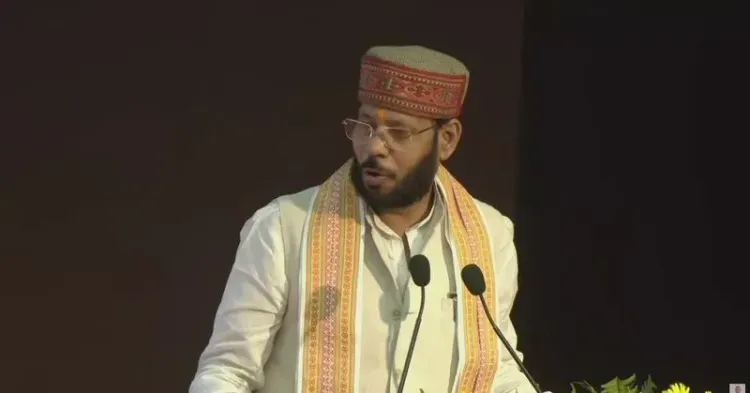
CM Yogi Adityanath attended the launch of a new e-POS-based kotedaar commission system in Lucknow on 17 August 2026 .
The system links dealer commission payments directly to e-POS transaction records , replacing manual commission tracking.
Fair price shops operate under the National Food Security Act, 2013 , which mandates subsidised grain for up to 75% of rural and 50% of urban households.
Uttar Pradesh has been progressively digitising its PDS since the nationwide e-POS rollout began around 2017 .
The reform affects fair price shop dealers (kotedaars) across one of India's largest state-level PDS networks.
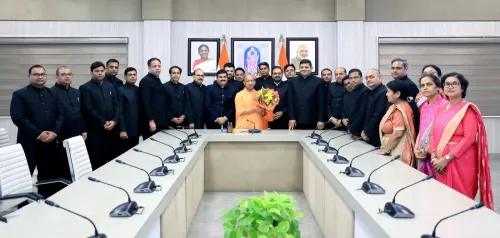
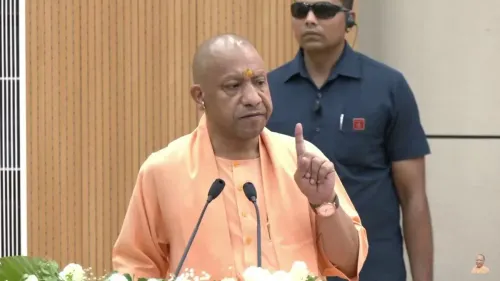
A new digital layer just landed on Uttar Pradesh's public distribution network. Chief Minister Yogi Adityanath on Monday, 17 August 2026, attended the launch of a new e-POS-based kotedaar (fair price shop dealer) commission system in Lucknow — a structural reform aimed at reshaping how the state's ration dealers are compensated for distributing subsidised food grains.
The Chief Minister's Office shared the event live, captioning it: 'लखनऊ में उचित दर विक्रेताओं के लिए नई ई-पॉस आधारित कोटेदार कमीशन प्रणाली के शुभारंभ कार्यक्रम में सम्मिलित होते मुख्यमंत्री' — 'Chief Minister participating in the launch of a new e-POS-based kotedaar commission system for fair price shop dealers in Lucknow.'
What the e-POS Commission System Changes
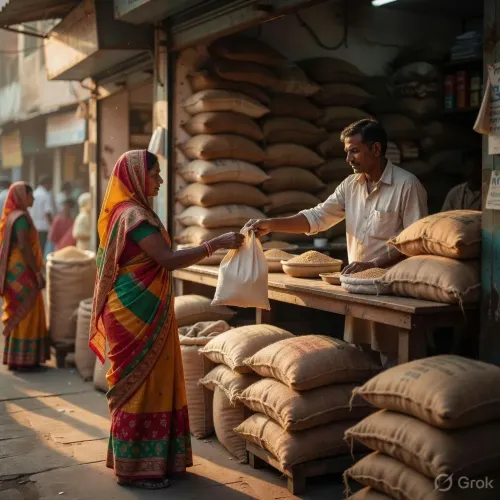
At the heart of the reform is the electronic point-of-sale (e-POS) device — the same Aadhaar-authenticated terminal that has been the backbone of UP's biometric ration distribution since the nationwide PDS digitisation push began around 2017. Until now, dealer commissions operated on a separate, largely manual track. The new system ties commission calculations directly to e-POS transaction data, meaning a dealer's earnings are now linked to verified, machine-recorded distributions — not paperwork. For fair price shop dealers — the kotedaars who serve as the last-mile link between government godowns and millions of beneficiary households — this is a significant operational shift. Their role is defined by the National Food Security Act, 2013, which mandates subsidised grain coverage for up to 75% of the rural population and 50% of urban households across India. In Uttar Pradesh, one of the country's most populous states, that translates to one of the largest PDS networks in the world.UP's Digitisation Arc and Where This Fits
This launch is not a standalone move — it is the latest step in a deliberate, multi-year effort by the Yogi Adityanath government to close the gap between welfare allocation and actual delivery. The state has progressively layered Aadhaar seeding, biometric authentication, and direct benefit transfer pilots onto its PDS infrastructure, each iteration designed to reduce diversion and improve accountability. Similar e-POS and commission reforms have been rolled out or announced in other states following central guidelines on PDS modernisation, but Uttar Pradesh's scale gives any such reform an outsized national significance. A change that works here — or fails here — becomes a data point for the entire country. What to watch now: how quickly the new commission structure rolls out across UP's districts, whether dealer participation rates shift, and whether grievance volumes from kotedaars or beneficiaries change in the months ahead. The devil, as always in PDS reform, will be in the district-level execution.Point of View
The state now digitises the incentive structure around it. For the Yogi government, this serves a dual political and administrative purpose — it signals continued anti-corruption momentum on PDS while giving dealers a transparent, auditable earnings mechanism that reduces disputes. The broader arc here is UP positioning itself as a model for tech-driven welfare delivery ahead of what will inevitably be a scrutinised record heading into future electoral cycles. Whether the reform delivers on accountability or simply shifts where opacity sits — from commission registers to e-POS data management — will depend entirely on implementation rigour at the district level.
NationPress
17 Aug 2026
Frequently Asked Questions
What is the e-POS-based kotedaar commission system launched in UP?
It is a new system that ties fair price shop dealer (kotedaar) commission payments directly to e-POS electronic transaction data, replacing manual commission tracking in Uttar Pradesh's public distribution network.
What is an e-POS machine in a ration shop?
An e-POS (electronic point-of-sale) device is a biometric terminal installed at fair price shops that authenticates beneficiaries via Aadhaar before dispensing subsidised food grains, creating a digital record of every transaction.
Who are kotedaars in the PDS system?
Kotedaars are licensed fair price shop dealers who serve as the last-mile distributors of subsidised food grains to eligible households under India's Public Distribution System.
What is the National Food Security Act and how does it relate to this launch?
The National Food Security Act, 2013 mandates subsidised grain coverage for up to 75% of rural and 50% of urban households. Fair price shops and their dealers operate under this framework, making the commission reform directly relevant to NFSA implementation.
Why is Uttar Pradesh's PDS reform significant nationally?
Uttar Pradesh has one of the largest PDS networks in India given its population size. Reforms that succeed or face challenges here generate policy learnings that influence PDS modernisation decisions in other states as well.