CM Yogi Lays Out BJP's Education and Heritage Agenda
Synopsis
UP Chief Minister Yogi Adityanath posted on October 12, 2026 that BJP's agenda encompasses education, institutions, teachers, students, development and heritage — a manifesto-like declaration pairing modern governance with civilisational identity ahead of a charged political cycle.
Key Takeaways
CM Yogi Adityanath posted on X on October 12, 2026 outlining the BJP's stated agenda priorities.
The post explicitly names education, educational institutions, teachers, students, development and heritage as BJP agenda items.
The cumulative 'bhi' structure reads as a pointed rebuttal to criticism of the party's priorities.
Pairing vikas (development) with virasat (heritage) is a core rhetorical formula in BJP political communication.
As head of the Gorakhnath Math , Yogi Adityanath brings direct institutional credibility to education-related messaging.
Uttar Pradesh 's vast student and teacher population makes education messaging here carry outsized electoral and policy weight.
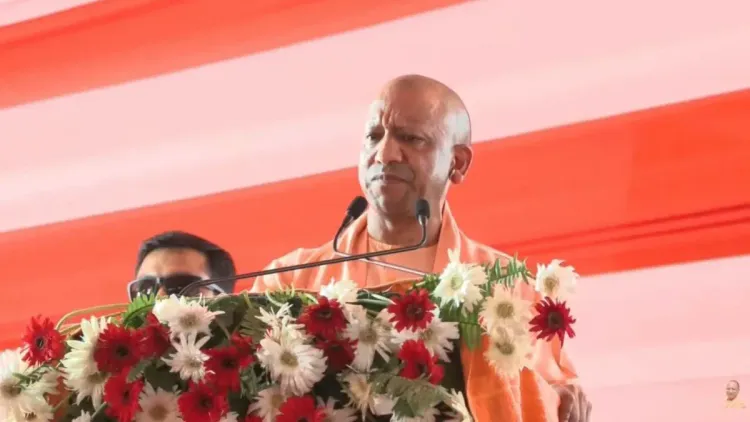
Education, institutions, teachers, students, development, heritage — Uttar Pradesh Chief Minister Yogi Adityanath has put them all at the centre of the Bharatiya Janata Party's stated agenda in a pointed post on X on Monday, October 12, 2026, signalling the party's intent to frame learning and legacy as twin pillars of its governance vision.
In Hindi, the Chief Minister wrote: 'Bharatiya Janata Party ke agenda mein shiksha bhi hai, shikshan sansthan bhi hain, shikshak bhi hain, chhaatra bhi hain, vikas bhi hai, virasat bhi hai...' — 'In the BJP's agenda there is education, there are educational institutions, there are teachers, there are students, there is development, and there is heritage too...' The deliberate, cumulative structure of the sentence — each element added with the same insistent 'bhi' (also, too) — reads as a rebuttal to the charge that the party's priorities lie elsewhere.
Why 'Heritage' alongside 'Education' Is the Political Signal
Pairing vikas (development) with virasat (heritage) is a recurring rhetorical formula in BJP communication, and its appearance here is deliberate. The framing positions the party as holding no tension between modern institution-building and the preservation of India's civilisational identity — a message aimed squarely at teachers, students, and parents who form a vast electoral constituency across Uttar Pradesh, India's most populous state.
As head of the Gorakhnath Math, one of northern India's most influential religious and educational seats, Yogi Adityanath carries personal institutional credibility on this terrain. The Math runs a network of schools and colleges, giving the Chief Minister a ground-level connection to education governance that few state-level leaders can claim.
The Stakes for UP's Education Landscape
Uttar Pradesh is home to one of the largest student populations in the world, with tens of millions enrolled across government schools, madrasas, Sanskrit pathshalas, and private colleges. Any party-level articulation of an education agenda in this state carries enormous policy weight — and equally large electoral consequence. The explicit naming of shikshak (teachers) in the post may also signal attention to a group that has repeatedly agitated over recruitment irregularities, pay arrears, and service conditions in the state.
The post carries no specific policy announcement, but its tone is manifesto-like — a declaration of intent rather than a scheme launch. That itself is news: the Chief Minister is actively contesting the narrative space around education ahead of what promises to be a charged political cycle.
When a government's top executive reaches for the language of the classroom and the cultural past in the same breath, the message to every school corridor and university campus in Uttar Pradesh is unmistakable: you are on the agenda. Whether policy follows rhetoric is the question every teacher and student will now be watching for.
Point of View
Possibly ahead of broader electoral mobilisation. The pairing of vikas and virasat remains the party's most durable ideological shorthand, and its reappearance here shows the formula has not been retired.
NationPress
12 Oct 2026
Frequently Asked Questions
What did CM Yogi Adityanath say about education in his October 2026 X post?
He stated that the BJP's agenda includes education, educational institutions, teachers, students, development, and heritage — framing all six as explicit party priorities.
What does 'virasat' mean in Yogi Adityanath's post?
'Virasat' means heritage or legacy. Its pairing with 'vikas' (development) reflects a BJP rhetorical formula that positions cultural preservation and modern progress as complementary, not competing, goals.
Why is education such a significant political issue in Uttar Pradesh?
Uttar Pradesh has one of the world's largest student populations, with millions enrolled in government schools, madrasas, Sanskrit pathshalas, and colleges. Teacher recruitment disputes and pay issues have also made the teaching community a politically mobilised constituency.
What is the Gorakhnath Math and what is its connection to education?
The Gorakhnath Math is a centuries-old religious and educational institution in Gorakhpur, UP, of which Yogi Adityanath is the head. It runs a network of schools and colleges, giving the Chief Minister direct institutional standing on education matters.
Is this post a new government scheme announcement?
No. The post contains no specific scheme or policy announcement. It is a declaration of intent, affirming education and heritage as BJP agenda priorities rather than launching a particular programme.