CM Yogi Leads Silent March in Lucknow on Partition Remembrance Day
Synopsis
On Partition Horrors Remembrance Day, 14 August 2026, UP Chief Minister Yogi Adityanath joined a silent march in Lucknow, viewed a partition tragedy exhibition, and honoured displaced families — pledging to strengthen national unity through the lessons of 1947.
Key Takeaways
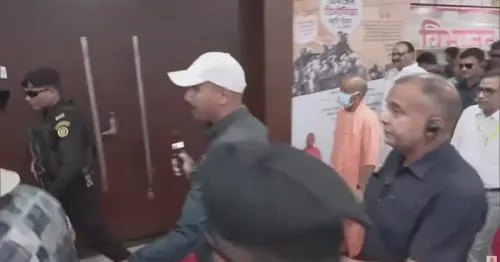
CM Yogi Adityanath participated in a silent march ( moun padyatra ) in Lucknow on 14 August 2026 for Partition Horrors Remembrance Day.
He viewed an exhibition on the 1947 Partition of India and formally honoured members of displaced families.
Vibhajan Vibhishika Smriti Divas was declared by the Union Government in August 2021 to be observed every 14 August .
The 1947 partition displaced an estimated 10–20 million people and caused mass violence across the subcontinent.
Uttar Pradesh has held annual state-level observances of the day under the BJP government.
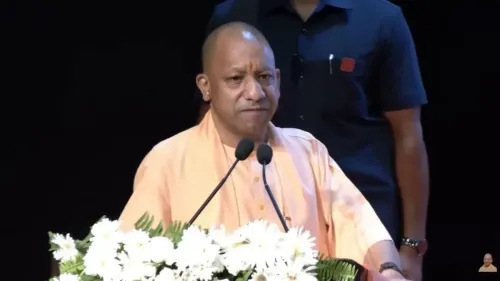
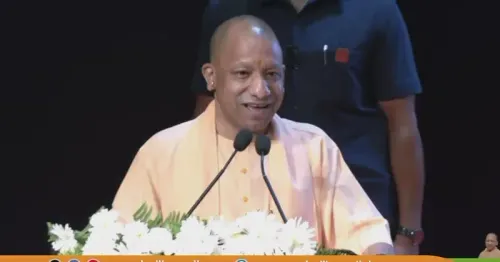
CM Yogi described the day as a pledge ( sankalp ) to reinforce national unity, integrity, and social harmony.
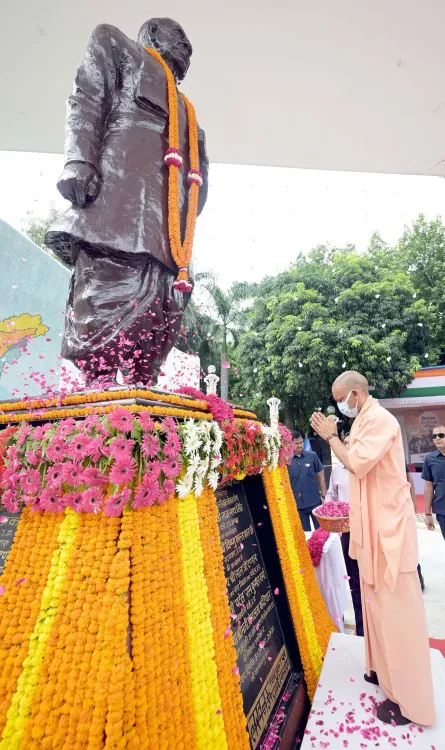
On the eve of India's 79th Independence Day, Uttar Pradesh Chief Minister Yogi Adityanath walked in silence through Lucknow — not in celebration, but in mourning. Joining a solemn silent march (moun padyatra) on Vibhajan Vibhishika Smriti Divas — Partition Horrors Remembrance Day — on 14 August 2026, he paused to honour the millions whose lives were shattered when a line was drawn across a subcontinent.
A march, an exhibition, and a reckoning
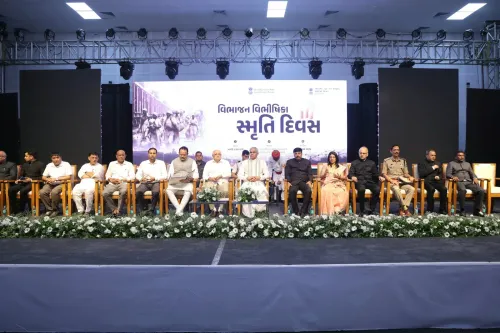
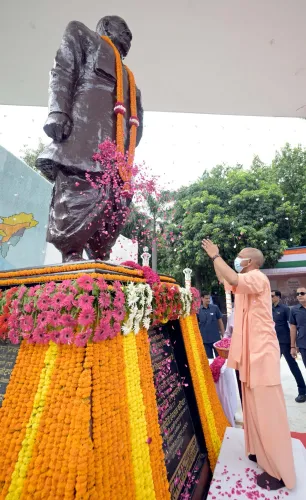
The Lucknow event brought together three distinct acts of remembrance. CM Yogi participated in the silent march, viewed an exhibition documenting the human cost of the 1947 Partition of India, and personally honoured members of families displaced by that catastrophe — people whose grandparents or parents crossed borders with nothing but their lives. His post offered a humble tribute to 'all known and unknown citizens consumed by this brutal tragedy.'
The scale of what is being remembered is staggering. The 1947 partition of British India into India and Pakistan triggered one of the largest mass migrations in recorded history — an estimated 10 to 20 million people displaced, and violence that claimed hundreds of thousands of lives. The wounds cut across communities, languages, and generations.
How 14 August became a day of remembrance
The date is not accidental. The Union Government declared 14 August as Partition Horrors Remembrance Day in August 2021, choosing the eve of Independence Day to embed the memory of partition's cost directly alongside the celebration of freedom — a deliberate pairing of grief and gratitude. The day calls on citizens to remember that independence arrived wrapped in immense human suffering.
Uttar Pradesh, under the BJP government led by Yogi Adityanath, has held annual state-level observances since the central declaration, using exhibitions, marches, and community tributes to keep the memory alive. The Chief Minister framed the day not merely as an act of looking back: it is, he said, a pledge — a sankalp — to strengthen national unity, integrity, and social harmony by learning from 'those dark chapters of history.'
Displaced families at the centre
Perhaps the most pointed gesture of the 2026 Lucknow observance was the formal honouring of displaced families — survivors and their descendants who carry partition's trauma across generations. By placing them at the centre of the ceremony, the event acknowledged that remembrance is not abstract; it has faces, names, and living inheritors.
The Partition Horrors Remembrance Day, now in its fifth year as a nationally observed date, is steadily building a civic vocabulary around a chapter of history that for decades received relatively little formal state commemoration. That vocabulary — memory, tribute, unity — was on full display on the streets of Lucknow on 14 August 2026.
Silence, it turns out, can carry a great deal.
Point of View
CM Yogi Adityanath reinforces a narrative in which the state actively curates historical trauma to build civic solidarity. The gesture of honouring survivors' descendants also signals that this remembrance project is moving beyond symbolic marches toward a more community-rooted form of commemoration. Whether that translates into sustained policy support for partition-affected communities remains the underlying question.
NationPress
28 Sept 2026
Frequently Asked Questions
What is Vibhajan Vibhishika Smriti Divas?
Vibhajan Vibhishika Smriti Divas , or Partition Horrors Remembrance Day, is observed every 14 August to honour the victims and displaced persons of the 1947 Partition of India . The Union Government declared it in August 2021 .
What did CM Yogi do on Partition Remembrance Day 2026?
CM Yogi Adityanath joined a silent march in Lucknow , viewed an exhibition on the 1947 partition tragedy , and formally honoured members of families displaced during partition.
Why is Partition Remembrance Day observed on 14 August?
The date — the eve of India's Independence Day — was chosen deliberately to pair the memory of partition's immense human cost with the celebration of freedom, reminding citizens that independence came alongside catastrophic suffering.
How many people were displaced in the 1947 partition?
The 1947 Partition of India is estimated to have displaced between 10 and 20 million people and caused the deaths of hundreds of thousands in communal violence across the subcontinent.
Does Uttar Pradesh hold annual events for Partition Remembrance Day?
Yes. Uttar Pradesh under the BJP government of CM Yogi Adityanath has held annual state-level observances since the central government's 2021 declaration, including exhibitions, marches, and community tributes.