CM Yogi links Science and Technology to Indian wisdom tradition
Synopsis
Chief Minister Yogi Adityanath says science and technology can serve human welfare only when rooted in the classical Indian principle 'Vidya dadati vinayam' — that knowledge must yield humility and, ultimately, discernment. The statement frames UP's development vision within India's philosophical heritage.
Key Takeaways
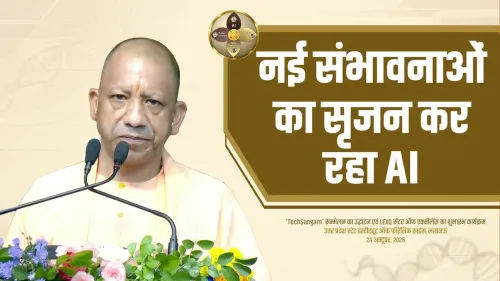
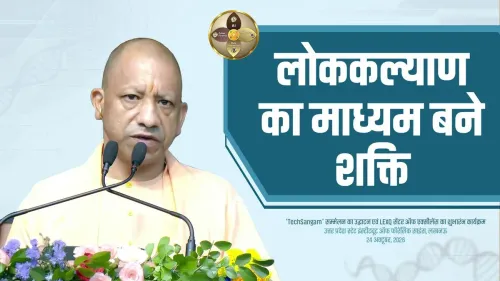
The Chief Minister's Office of Uttar Pradesh shared a statement by CM Yogi Adityanath on October 24, 2026 .
CM Yogi argued science and technology are useful for human welfare only when they embody the spirit of Vidya dadati vinayam — knowledge bestows humility.
He built a three-link chain: the purpose of education is humility; the true purpose of humility is fulfilled through vivek (discernment).
The phrase originates in the classical Sanskrit text Hitopadesh and is among the most cited maxims of Indian philosophical tradition.
The statement continues a recurring pattern of the UP government framing modern development — including technology — within Indian cultural and ethical traditions.
Students, researchers, and education-policy planners are the natural audience; any follow-up in state science-policy documents will signal whether this remains rhetoric or becomes architecture.
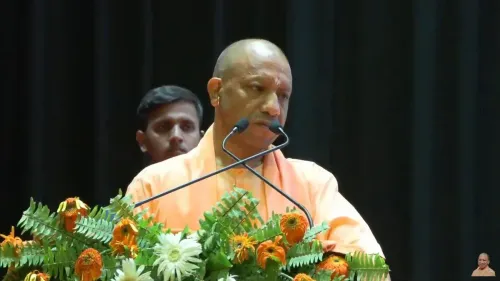
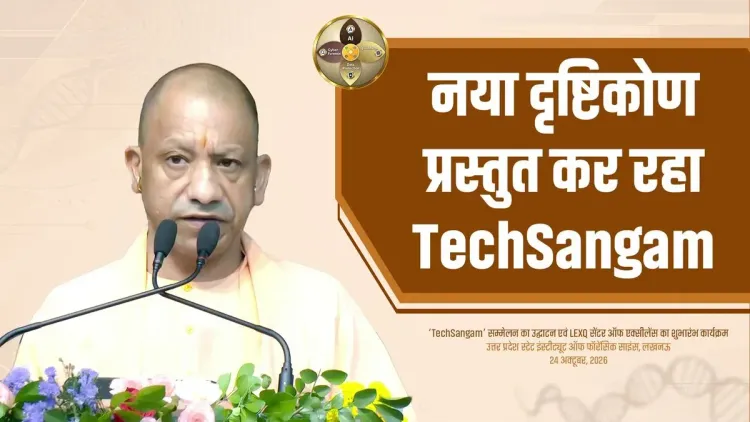
Science and technology can only truly serve humanity, Chief Minister Yogi Adityanath declared on Saturday, October 24, 2026, when they carry the spirit of the ancient Indian ideal 'Vidya dadati vinayam' — knowledge bestows humility. The statement, shared by the Chief Minister's Office of Uttar Pradesh, frames modern innovation not as a break from tradition but as its highest expression.
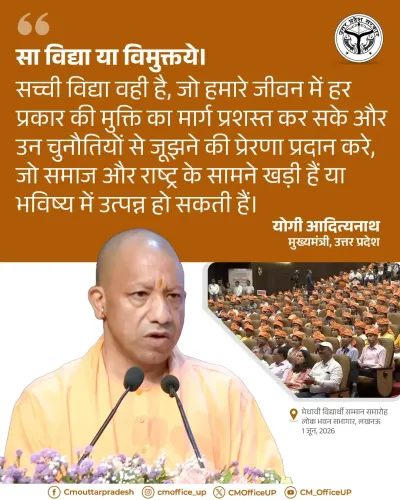
Quoting the Chief Minister directly: 'Science and Technology can be useful for human welfare only when it is seen representing the spirit of Indian wisdom — Vidya dadati vinayam. The purpose of education is humility, and the true purpose of humility is fulfilled only through vivek (discernment).' The formulation builds a deliberate chain: knowledge → humility → discernment → genuine human welfare.
'Vidya dadati vinayam' — what the ancient maxim actually means
The phrase is drawn from the Hitopadesh, a classical Sanskrit text of ethical fables. Its full verse traces a sequence: knowledge yields humility, humility earns worthiness, worthiness brings wealth, wealth enables righteous deeds, and those deeds produce lasting joy. CM Yogi Adityanath is invoking this chain to argue that a scientist or technologist stripped of humility and discernment is, by this framework, only partially educated — regardless of their technical skill.
The word vivek — discernment or conscience — is the pivot of his argument. It is the quality that prevents knowledge from becoming a tool of harm, and it is precisely what the Hitopadesh verse implies is the ultimate yield of true learning.
A recurring UP government thread: technology inside a cultural frame
Uttar Pradesh under Yogi Adityanath has periodically anchored its development messaging in this cultural grammar. Statements from the Chief Minister's office have consistently linked governance, education, and infrastructure investments to ideas drawn from India's classical philosophical traditions. The pattern is deliberate: positioning the state not as importing a Western model of progress, but as renewing a home-grown one.
The audience for such a statement is broad — students, researchers, educators, and policy planners — and the message is essentially a philosophical brief for how the state wishes its science ecosystem to think about itself. Whether that brief translates into formal education or research-policy language is the question worth watching.
In a world where rapid technological acceleration is generating global anxiety about ethics and misuse, a Chief Minister quoting a 2,000-year-old Sanskrit verse on humility as a corrective is, at minimum, a coherent position — and one that signals the cultural register in which UP's future science and education policy may be articulated.
Point of View
Purely instrumentalist Western model. Whether this philosophical framing shapes actual curriculum design, research-grant priorities, or institutional culture in Uttar Pradesh remains the real test. For now, it is a powerful signal of the cultural register in which the state's development agenda will continue to be pitched.
NationPress
24 Oct 2026
Frequently Asked Questions
What does 'Vidya dadati vinayam' mean?
'Vidya dadati vinayam' is a Sanskrit phrase from the classical text Hitopadesh meaning 'knowledge bestows humility.' It begins a verse that traces a chain from learning to humility, worthiness, wealth, righteous deeds, and ultimately lasting joy.
What did CM Yogi Adityanath say about science and technology?
CM Yogi Adityanath said that science and technology can be useful for human welfare only when they represent the spirit of the Indian ideal 'Vidya dadati vinayam' — that education's purpose is humility, and humility's true purpose is fulfilled through vivek, or discernment.
What is vivek in Indian philosophy?
Vivek in Indian philosophy means discernment or conscience — the capacity to distinguish right from wrong, real from unreal. CM Yogi used it as the ultimate goal that knowledge and humility together must produce.
Why does the UP government link technology to Indian philosophical traditions?
The Uttar Pradesh government under CM Yogi Adityanath has periodically framed modern development, including science and technology, within India's classical ethical traditions. This positions the state's progress as a renewal of an indigenous model rather than an import of a purely Western one.
Where does the phrase Vidya dadati vinayam come from?
The phrase is drawn from the Hitopadesh, a classical Sanskrit text of ethical fables and moral instruction, and is one of the most widely cited maxims of Indian philosophical and educational tradition.