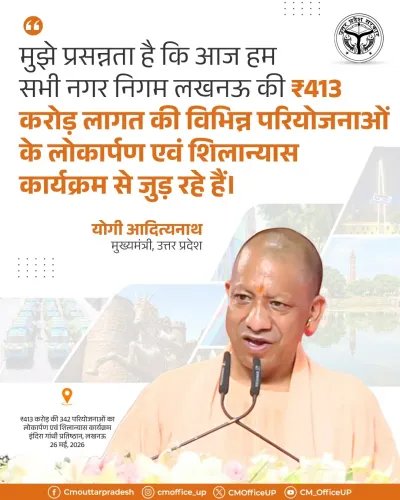
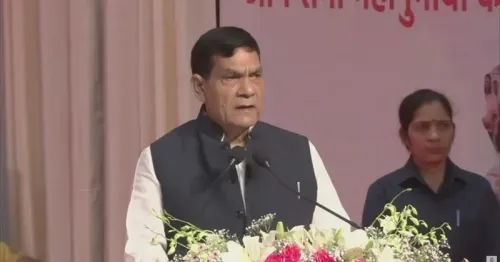
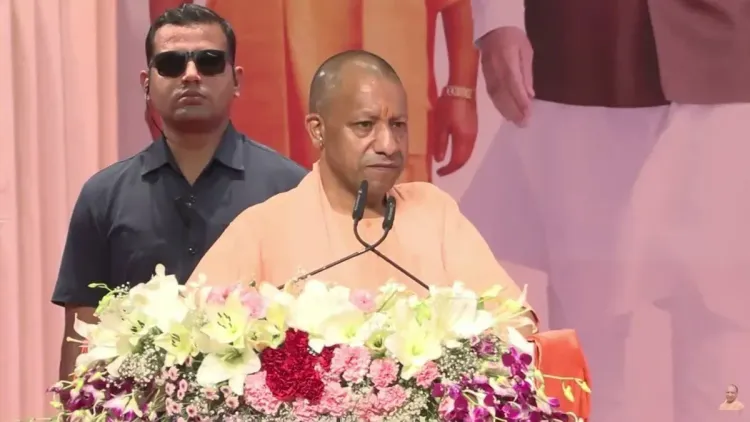
CM Yogi: Lucknow Municipal Bond Value Up 8x Since 2017
Synopsis
CM Yogi Adityanath says the Lucknow Municipal Corporation's bond value has surged from under ₹25 crore before 2017 to over ₹200 crore last year, citing the growth as evidence of improved urban financial discipline under his administration.
Key Takeaways
CM Yogi Adityanath posted on 26 May 2026 highlighting the bond issuance growth of the Lucknow Municipal Corporation .
Before 2017 , the corporation's bond value was reportedly less than ₹25 crore ; last year it exceeded ₹200 crore — an eight-fold increase.
Municipal bonds are market instruments that allow urban local bodies to raise infrastructure capital independent of government grants.
The central government's Smart Cities Mission and AMRUT (both 2015 ) provided the policy framework encouraging such bond market participation.
The figures cited by CM Yogi await official verification from SEBI or municipal financial records.
Future bond activity by other Uttar Pradesh cities such as Kanpur , Varanasi , and Agra will indicate whether the model is being scaled statewide.
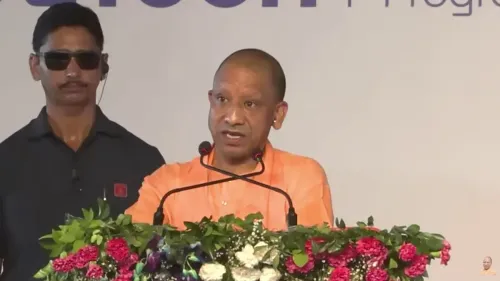
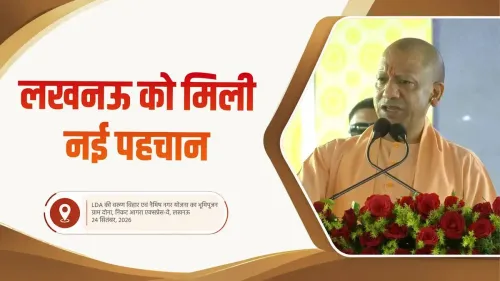
Uttar Pradesh Chief Minister Yogi Adityanath on Tuesday, 26 May 2026, highlighted a sharp rise in the bond issuance capacity of the Lucknow Municipal Corporation, contrasting the pre-2017 figure of under ₹25 crore with a bond issued last year worth more than ₹200 crore.
Context
Posting on X, CM Yogi stated in Hindi: 'वर्ष 2017 के पहले नगर निगम, लखनऊ के बॉन्ड की कीमत ₹25 करोड़ भी नहीं थी, गत वर्ष ₹200 करोड़ से अधिक का बॉन्ड जारी हुआ है' — ('Before 2017, the bond value of the Lucknow Municipal Corporation was not even ₹25 crore; last year a bond worth more than ₹200 crore was issued'). The post was accompanied by a video and is framed as a governance achievement under his administration, which took office in March 2017.
Municipal bonds are debt instruments issued by urban local bodies to raise long-term capital from the market for civic infrastructure projects. A higher bond valuation typically signals improved creditworthiness and financial discipline of the issuing body.
Policy Backdrop
The claim sits within a broader national policy shift. The central government's Smart Cities Mission and AMRUT scheme, both launched in 2015, explicitly encouraged select municipal corporations to improve their credit ratings and tap bond markets to reduce dependence on government grants. Lucknow, as the state capital, was among the urban bodies targeted for such financial reform.
Across India, several municipal corporations have recorded increased bond activity following central incentives for own-source revenue mobilisation and tighter financial reporting norms. The Lucknow Municipal Corporation's trajectory, as cited by CM Yogi, mirrors this nationwide pattern of urban local bodies moving toward market borrowing.
Stakeholders and Impact
The primary beneficiaries of a stronger municipal bond programme are urban residents of Lucknow, who stand to gain from infrastructure projects — roads, drainage, water supply — funded through market capital rather than delayed grant disbursements. Infrastructure investors and institutional buyers of municipal paper also gain a deeper, more creditworthy instrument.
For the Lucknow Municipal Corporation, a higher bond valuation reduces borrowing costs over time and opens access to larger pools of capital. The contrast drawn by CM Yogi — less than ₹25 crore before 2017 versus more than ₹200 crore last year — represents an eight-fold increase in bond issuance scale, though official verification from SEBI or municipal financial statements would be required to confirm the precise figures.
What's Next
Attention will now turn to whether other Uttar Pradesh municipal corporations follow Lucknow's lead in upgrading credit ratings and issuing bonds of comparable scale. The state government has signalled urban financial reform as a continuing priority, and further bond issuances or credit-rating upgrades by cities such as Kanpur, Varanasi, and Agra would be the clearest markers of whether the model is replicable across the state.
As urban infrastructure demands grow with Uttar Pradesh's expanding population and economic activity, the ability of municipal bodies to raise independent capital will be a key determinant of the quality and pace of civic development in the years ahead.
Point of View
If verified, would be a substantive indicator of improved municipal creditworthiness, not merely a political talking point. It also positions the BJP-led state government within the broader national story of reducing urban local body dependence on central transfers — a reform priority that predates 2017 but which the current administration is keen to claim credit for. The real test will be whether smaller UP cities replicate this trajectory, or whether Lucknow remains an outlier benefiting from its status as the state capital.
NationPress
10 Oct 2026
Frequently Asked Questions
What is the Lucknow Municipal Corporation bond that CM Yogi mentioned?
It is a debt instrument issued by the Lucknow Municipal Corporation (Nagar Nigam) to raise long-term capital from the bond market for urban infrastructure. CM Yogi stated that last year's issuance exceeded ₹200 crore, compared to under ₹25 crore before 2017.
Why does a higher municipal bond value matter for Lucknow residents?
A higher bond valuation signals improved creditworthiness, allowing the corporation to borrow more at potentially lower costs to fund civic projects like roads, drainage, and water supply without waiting for government grants.
What is AMRUT and how does it relate to municipal bonds in India?
AMRUT (Atal Mission for Rejuvenation and Urban Transformation), launched in 2015, is a central government scheme that, along with the Smart Cities Mission, encouraged municipal corporations to improve financial discipline and tap bond markets to fund urban infrastructure.
When did Yogi Adityanath become Chief Minister of Uttar Pradesh?
Yogi Adityanath became Chief Minister of Uttar Pradesh in March 2017, which is the baseline year he uses in his comparison of Lucknow Municipal Corporation bond values.
Are the bond figures cited by CM Yogi officially verified?
The figures — under ₹25 crore before 2017 and over ₹200 crore last year — have been stated by CM Yogi on X, but independent verification from official SEBI filings or municipal financial statements has not been confirmed at the time of this report.