CM Yogi Approves 10 Townships for Greater Agra at Rs 5,200 Cr
Synopsis
Uttar Pradesh Chief Minister Yogi Adityanath has approved 10 townships for Greater Agra at a cost exceeding ₹5,200 crore. The initiative is positioned as a model for planned urban expansion in the historic city, continuing the state's broader push for structured township development across major UP cities.
Key Takeaways
The Uttar Pradesh Government has approved construction of 10 townships under the Greater Agra expansion plan.
The total project cost exceeds ₹5,200 crore , making it one of the larger single-city township packages in the state.
CM Yogi Adityanath described the initiative as a 'model' for Greater Agra's urban development.
The announcement follows a pattern of state-led planned urbanisation extended to Lucknow , Kanpur , and the Yamuna Expressway corridor since 2017.
Key next steps include land acquisition, environmental clearances, and compliance with heritage-zone regulations around the Taj Mahal .
Beneficiaries include Agra residents, real estate developers, and tourism-linked businesses in the region.
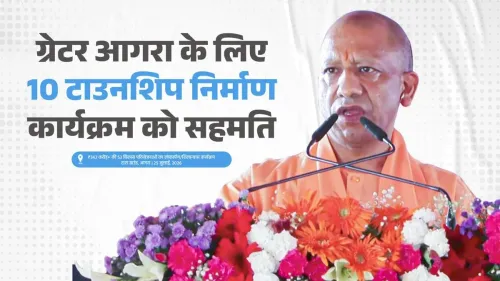
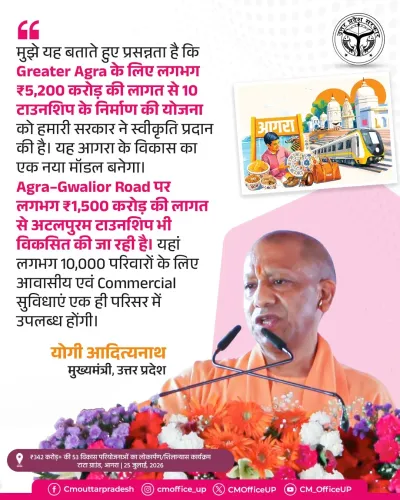
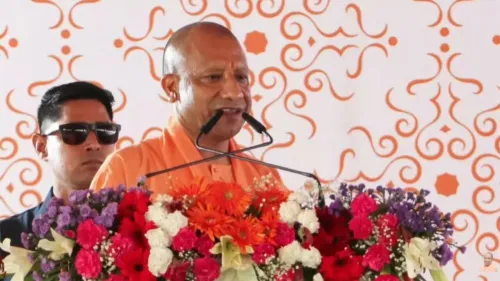
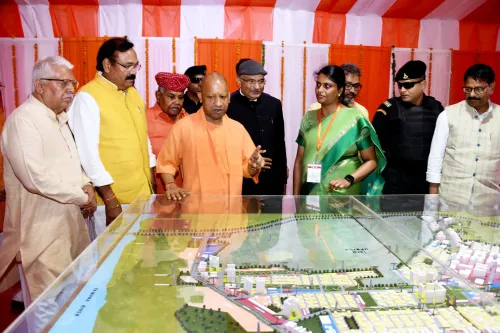
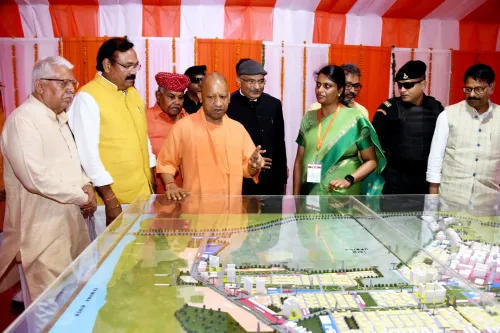
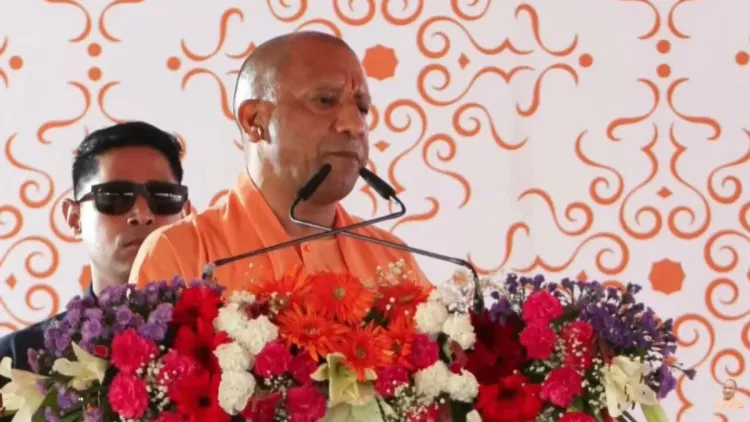
Uttar Pradesh Chief Minister Yogi Adityanath on Saturday, 25 July 2026, announced that the state government has approved the construction of 10 townships for Greater Agra at a total cost exceeding ₹5,200 crore, describing the initiative as a model for the city's planned urban expansion.
Posting on X, CM Yogi said: 'Greater Agra ke liye hum logon ne ₹5,200 crore se adhik lagat ki 10 township ke nirman ko sahmat di hai. Ye Greater Agra ka ek model banega...' — ('We have given consent to the construction of 10 townships at a cost of more than ₹5,200 crore for Greater Agra. This will become a model for Greater Agra...')
Context
Agra, home to the iconic Taj Mahal, is one of Uttar Pradesh's most significant cities by both tourism footfall and population. The city has long faced pressure from unplanned urban growth, inadequate housing stock, and infrastructure gaps that have strained its heritage character and resident quality of life. The Uttar Pradesh Government has periodically revisited Agra's master plan to accommodate expansion in a structured manner.
The concept of a 'Greater Agra' mirrors similar planned extensions undertaken for other major UP cities, positioning satellite townships as a relief valve for the core city while creating new economic zones.
Policy Backdrop
Since 2017, successive state budgets under Chief Minister Yogi Adityanath have earmarked funds for new townships and urban extensions across Uttar Pradesh's key cities. Comparable approvals have been extended to areas around Lucknow, Kanpur, and the Yamuna Expressway corridor, establishing a broader pattern of state-led planned urbanisation.
The ₹5,200 crore outlay for 10 townships in Greater Agra represents one of the larger single-city township packages announced under this framework. Such investments typically involve the Uttar Pradesh Government coordinating with the Agra Development Authority and the state housing board to identify land parcels, prepare layout plans, and invite developer participation.
Stakeholders and Impact
Agra's residents stand to benefit from expanded housing supply and better-planned residential zones if the townships are executed on schedule. Real estate developers operating in the Agra region are likely to see fresh project pipelines, particularly those already active along the Yamuna Expressway and the Agra–Lucknow Expressway belt.
Tourism-linked businesses could also gain if improved urban infrastructure reduces congestion around the Taj Mahal precinct and enhances visitor experience. However, the scale of land acquisition required for 10 townships means that farmers and landowners on the city's periphery will be closely watching compensation and rehabilitation terms.
What's Next
The announcement of approval is the first formal step; the project's trajectory will depend on the pace of land acquisition, environmental clearances, and integration with Agra's existing master plan. Alignment with heritage-zone regulations around the Taj Mahal and other protected monuments will be a critical regulatory consideration.
Observers will watch whether the Uttar Pradesh Government moves swiftly to notify the township zones and invite private developers, or whether the initiative follows a phased public-sector-led model as seen in earlier UP township projects. The framing of this as a 'model' by CM Yogi suggests the administration intends Greater Agra to serve as a template for similar expansions elsewhere in the state.
Point of View
State-sanctioned township packages. By framing the initiative as a 'model', the Chief Minister is signalling that Agra's expansion blueprint may be replicated across other historically significant UP cities, tying infrastructure investment to both tourism promotion and electoral optics ahead of future state cycles. The ₹5,200 crore scale also underscores the government's intent to attract private capital into planned zones rather than leave urban growth to informal sprawl. Whether execution matches announcement will hinge on the speed of land acquisition and the state's ability to navigate heritage-zone sensitivities unique to Agra.
NationPress
24 Oct 2026
Frequently Asked Questions
What is the Greater Agra township project announced by CM Yogi?
CM Yogi Adityanath has approved the construction of 10 townships for Greater Agra at a total cost of more than ₹5,200 crore, aimed at creating a model for planned urban expansion in the city.
How much money has been approved for Greater Agra townships?
The Uttar Pradesh Government has approved an outlay exceeding ₹5,200 crore for the 10 townships under the Greater Agra development plan.
How many townships are planned under Greater Agra?
Ten townships have been approved under the Greater Agra expansion initiative announced by Chief Minister Yogi Adityanath on 25 July 2026.
Will the Greater Agra project affect the Taj Mahal area?
The townships are part of a broader urban expansion around Agra; any development will need to comply with heritage-zone regulations protecting the Taj Mahal and other protected monuments in the region.
What are the next steps for the Greater Agra township project?
Key next steps include land acquisition, environmental clearances, and integration with Agra's existing master plan, along with alignment with heritage-zone norms around the Taj Mahal precinct.