CM Yogi on UP's e-POS push: fixing ration shop trust since 2017
Synopsis
CM Yogi Adityanath highlighted UP's 2017 e-POS machine rollout at fair-price shops, framing it as a trust-restoration measure. The biometric system digitised ration transactions across India's most populous state, targeting decades of leakage and dealer malpractice in the public distribution system.
Key Takeaways
CM Yogi Adityanath on August 17, 2026 reaffirmed that e-POS machines were installed from 2017 to improve public perception of fair-price dealers.
The machines use Aadhaar-linked biometric authentication to verify beneficiaries before releasing subsidised grain under the National Food Security Act .
The rollout began when the Yogi government took office in March 2017 , making PDS digitisation an early administrative priority.
Uttar Pradesh , India's most populous state, is home to tens of millions of NFSA beneficiaries, making the e-POS network one of the largest of its kind.
The reform also enabled integration with the One Nation One Ration Card scheme, benefiting migrant workers across state borders.
CM Yogi's framing emphasises public trust — not just operational efficiency — as the primary goal of the technology deployment.
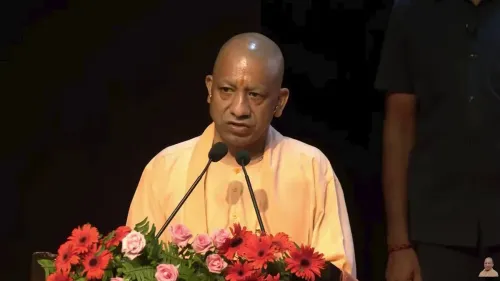
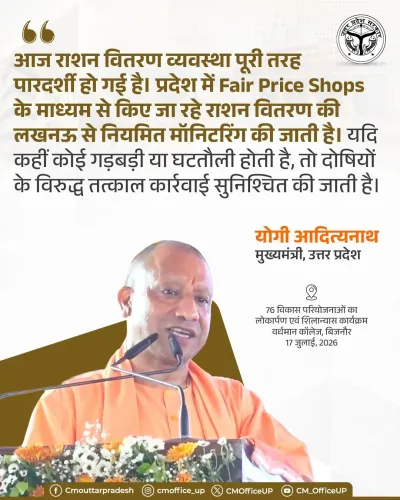
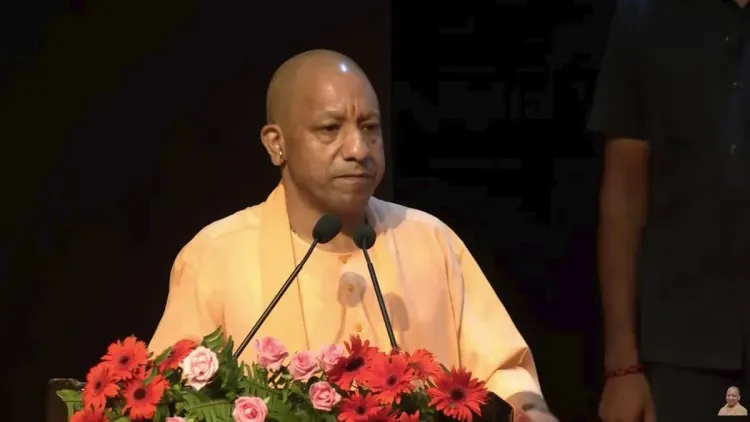
A quiet but consequential reform in Uttar Pradesh's public distribution system is back in the spotlight. Uttar Pradesh Chief Minister Yogi Adityanath on Monday, August 17, 2026, invoked the state's 2017 rollout of electronic point-of-sale machines at fair-price shops — a move he says was designed to rebuild public trust in a system long plagued by leakage and mistrust.
In his post, CM Yogi stated: 'उचित दर विक्रेताओं के बारे में लोगों की धारणा ठीक हो, इसीलिए वर्ष 2017 में हम लोगों ने ई-पॉस मशीनें लगानी प्रारंभ की थीं' — ('So that people's perception of fair-price dealers would improve, we began installing e-POS machines in the year 2017.') The statement frames the technology not merely as an administrative tool, but as a trust-restoration exercise.
What e-POS machines changed at UP's ration shops
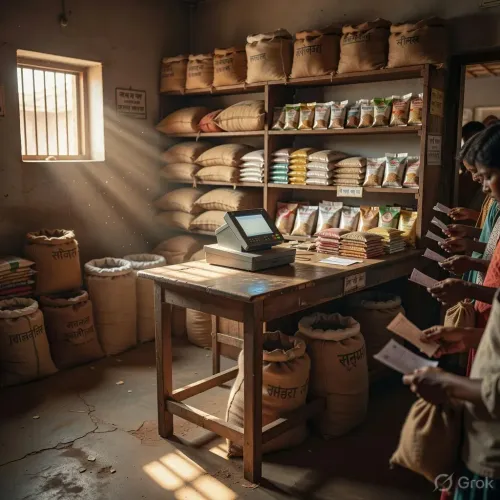
Electronic point-of-sale machines authenticate beneficiaries biometrically — typically via Aadhaar-linked fingerprint or iris scans — before releasing subsidised grain under the National Food Security Act. Before their introduction, fair-price shops in Uttar Pradesh, the country's most populous state, were widely associated with ghost beneficiaries, diverted stock, and dealer malpractice. The machines created a digital transaction trail that made it significantly harder to siphon off subsidised foodgrain.
Why 2017 was the turning point
The Yogi Adityanath government took office in March 2017 and moved early to digitise the public distribution system. The e-POS deployment was part of a broader push that included beneficiary list rationalisation and integration with the One Nation One Ration Card scheme, which eventually allowed migrant workers to draw their entitlements from any fair-price shop in the country. Uttar Pradesh — with tens of millions of NFSA beneficiaries — was among the largest and most complex states to implement this infrastructure.
The perception problem the machines were meant to solve
CM Yogi's framing is pointed: the goal was not just efficiency, but dharana — public perception. Fair-price dealers had for decades carried a reputation as the weak link in welfare delivery. By making every transaction machine-verified and logged, the government sought to shift accountability from the dealer's word to a digital record. Whether that reputational shift has fully materialised is a question UP's welfare administrators continue to grapple with — but the infrastructure to demand it is now in place.
Nine years on, the e-POS network in Uttar Pradesh stands as one of the largest state-level biometric ration-distribution systems in the world. The Chief Minister's reminder signals that the reform's political and administrative legacy remains very much a live talking point for the BJP government.
Point of View
Particularly ahead of cycles where rural beneficiary satisfaction matters. The emphasis on dharana (perception) is also a subtle acknowledgement that infrastructure alone does not change ground realities — sustained political messaging is needed to convert system reforms into durable voter confidence.
NationPress
17 Aug 2026
Frequently Asked Questions
What are e-POS machines at ration shops in Uttar Pradesh?
e-POS (electronic point-of-sale) machines are biometric devices installed at fair-price shops in Uttar Pradesh that authenticate beneficiaries — usually via Aadhaar-linked fingerprint or iris scans — before releasing subsidised foodgrain under the National Food Security Act .
When did UP start installing e-POS machines at fair-price shops?
The Yogi Adityanath government began installing e-POS machines at fair-price shops in Uttar Pradesh from 2017 , shortly after taking office in March of that year.
Why did CM Yogi introduce e-POS machines in UP ration shops?
According to CM Yogi Adityanath , the machines were introduced to improve public perception of fair-price dealers and reduce leakage, ghost beneficiaries, and malpractice in the public distribution system by creating a verifiable digital transaction trail.
How does the One Nation One Ration Card scheme connect to UP's e-POS system?
The e-POS infrastructure in Uttar Pradesh enabled integration with the One Nation One Ration Card scheme, allowing migrant workers from UP to draw their subsidised grain entitlements at any fair-price shop across India.
What was the problem with fair-price shops in UP before e-POS?
Before e-POS machines, fair-price shops in Uttar Pradesh were widely associated with ghost beneficiaries, diverted subsidised stock, and dealer malpractice — problems the biometric authentication system was designed to curb.