Great Sea Interconnector: US pushes Greece-Cyprus-Israel power link as IMEC priority
Synopsis
US lawmakers have formally urged Secretary of State Marco Rubio to back the Greece-Cyprus-Israel undersea power cable as a strategic IMEC priority — framing it not just as an electricity link but as infrastructure that could counter China's Belt and Road. With French group Meridiam now a majority shareholder, the project is closer to reality than ever.
Key Takeaways
The US is pushing the Great Sea Interconnector (GSI) — linking Greece , Cyprus , and Israel via undersea cable — as a top priority within the IMEC framework.
A bipartisan group of US lawmakers has written to Secretary of State Marco Rubio and DFC head Ben Black urging greater American engagement with the project.
French investment group Meridiam has become the majority shareholder in the GSI company following a recent deal in Athens , boosting implementation prospects.
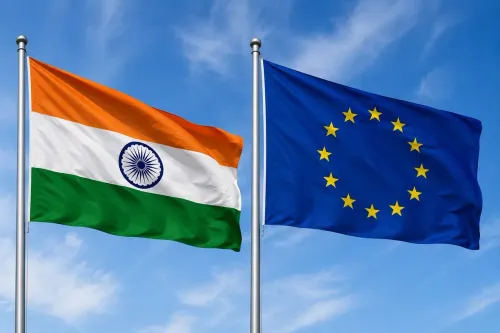
IMEC was first announced by India at the G20 summit in New Delhi in 2023 and is seen as a democratic alternative to China's Belt and Road Initiative.
For Cyprus , the GSI could end long-standing energy isolation; for Israel , it adds energy security; for Greece , it strengthens its role as an energy bridge.
US lawmakers have also requested a classified briefing from the Trump administration on geopolitical risks to the project's completion.
The United States is actively lobbying for the Great Sea Interconnector (GSI) — a planned undersea electricity cable linking Greece, Cyprus, and Israel — to be elevated as a top strategic priority within Greece's Eastern Mediterranean agenda, according to a report by Greek City Times. Washington reportedly views the interconnector as a critical pillar of energy security and regional connectivity, increasingly framing it within the broader architecture of the India-Middle East-Europe Economic Corridor (IMEC).
Why the US Is Backing the GSI
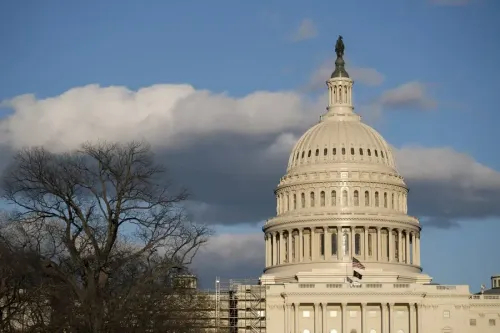
For Washington, the Great Sea Interconnector is more than an electricity project. A bipartisan group of US lawmakers has written to Secretary of State Marco Rubio and Ben Black, head of the US International Development Finance Corporation (DFC), urging greater American engagement with the project. The lawmakers describe the Eastern Mediterranean as a potential gateway to IMEC and characterise the GSI as strategically important infrastructure for the corridor's development.
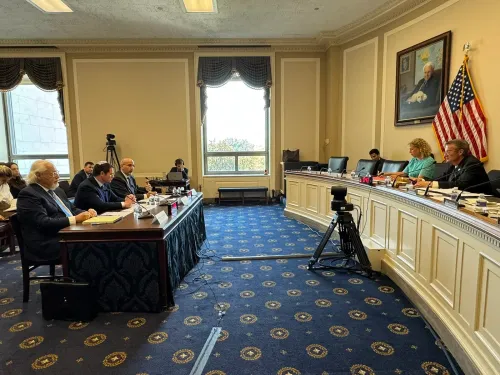
According to the report, the representatives argue that projects like the GSI could strengthen US partners, diversify energy supply routes, and deepen regional cooperation — while offering alternatives to infrastructure controlled or influenced by strategic rivals. They have also reportedly requested a classified briefing from the Trump administration on geopolitical risks that could affect the project's completion.
The Meridiam Deal and Project Momentum
A recent agreement in Athens allowing French investment group Meridiam to become the majority shareholder in the company behind the Great Sea Interconnector has raised expectations that the project will advance to its next implementation phase, the report notes. The development is seen as a significant commercial milestone that could unlock the financing and political momentum the project has long required.
What the GSI Means for Each Country
The proposed interconnector is designed to create two-way electricity flows between Europe and the Eastern Mediterranean. For Cyprus, the project carries particular significance — it could effectively end the island's long-standing energy isolation, connecting it to the broader European grid for the first time. For Israel, the link would add an additional layer of energy security. For Greece, it would cement the country's role as an energy bridge between Europe and the Eastern Mediterranean region.
The IMEC Connection
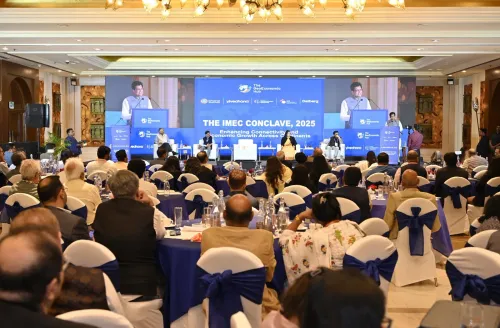
IMEC was first unveiled by India at the G20 summit in New Delhi in 2023 and is now widely regarded as the democratic world's strategic counterweight to China's Belt and Road Initiative. The US framing of the GSI as part of IMEC's energy and connectivity architecture signals a broader ambition: to knit together Europe, the Middle East, and India through infrastructure that bypasses rivals' spheres of influence. Notably, this is the first time a specific undersea power link has been publicly tied to IMEC's physical infrastructure by US lawmakers.
As geopolitical competition over global infrastructure intensifies, the GSI's next phase — and the pace of US diplomatic and financial backing — will be closely watched by all stakeholders along the IMEC corridor.
Point of View
And Meridiam's entry, while encouraging, does not resolve the financing gap or the geopolitical complexity of routing infrastructure through a region that includes a divided Cyprus and a post-October 7 Israel. The classified briefing request from lawmakers is telling: it implies that the threat environment around the project is serious enough to warrant non-public discussion. If Washington cannot translate this lobbying into DFC financing commitments, the IMEC-GSI linkage risks remaining a talking point rather than a cable in the seabed.
NationPress
17 Aug 2026
Frequently Asked Questions
What is the Great Sea Interconnector (GSI)?
The Great Sea Interconnector is a proposed undersea electricity cable designed to link the power grids of Greece, Cyprus, and Israel, enabling two-way electricity flows between Europe and the Eastern Mediterranean. For Cyprus, it would end decades of energy isolation by connecting the island to the European grid.
Why is the US pushing for the Great Sea Interconnector?
The US views the GSI as strategically important infrastructure that supports IMEC — the India-Middle East-Europe Economic Corridor — while diversifying energy routes and reducing dependence on infrastructure influenced by strategic rivals. A bipartisan group of lawmakers has formally urged Secretary of State Marco Rubio and DFC head Ben Black to prioritise the project.
What is IMEC and why does it matter?
IMEC, the India-Middle East-Europe Economic Corridor, was first announced by India at the G20 summit in New Delhi in 2023. It is widely regarded as the democratic world's answer to China's Belt and Road Initiative, aiming to connect India, the Middle East, and Europe through trade, energy, and digital infrastructure.
What is Meridiam's role in the Great Sea Interconnector?
French investment group Meridiam has recently agreed to become the majority shareholder in the company behind the Great Sea Interconnector, following a deal concluded in Athens. This development has raised expectations that the project will move into its next implementation phase.
What have US lawmakers asked the Trump administration to do?
US lawmakers have written to Secretary of State Marco Rubio and DFC chief Ben Black calling for greater American attention to the GSI. They have also requested a classified briefing from the Trump administration on the geopolitical challenges that could affect the project's completion.