IMEC top priority, says EU commissioner after Jaishankar Cyprus talks
Synopsis
At the EU's informal Gymnich summit in Cyprus, EAM Jaishankar secured a high-profile reaffirmation of IMEC from the EU's Mediterranean commissioner — a pointed signal that the corridor remains alive despite Middle East instability. The meeting also produced rare trilateral optics: India at the table with EU, Saudi Arabia, and Ukraine simultaneously.
Key Takeaways
EU Commissioner Dubravka Suica called IMEC a 'shared top priority' after meeting EAM S.
Jaishankar in Nicosia, Cyprus on 28 May .
Jaishankar attended the Gymnich informal EU Foreign Ministers' meeting as a special invitee — a rare distinction for a non-EU country.
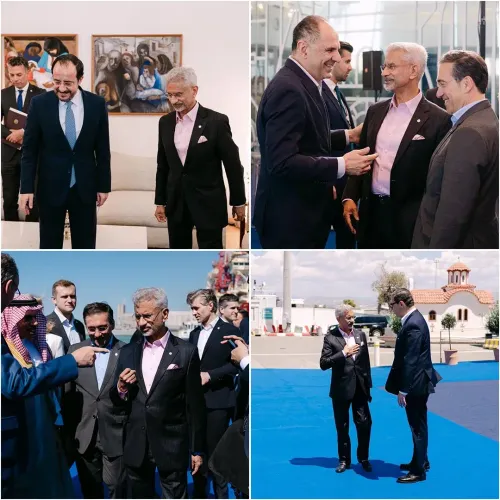
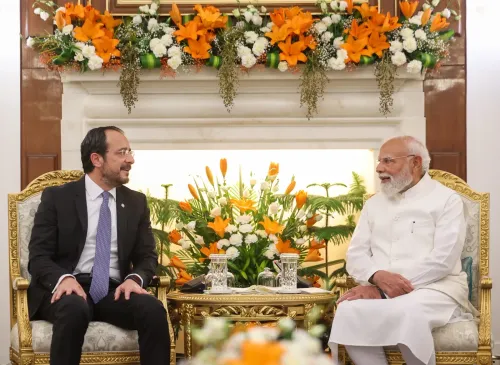
Bilateral meetings were held with foreign ministers of EU , Cyprus , Saudi Arabia , Ukraine , and Spain on the sidelines.
Discussions covered West Asia geopolitics, the Ukraine conflict , and India-EU cooperation .
Both sides reaffirmed commitment to secure maritime routes, including through the Strait of Hormuz .
The MEA said the visit 'further strengthened the India-EU Strategic Partnership .'
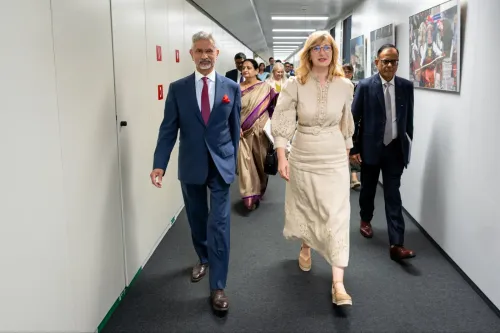
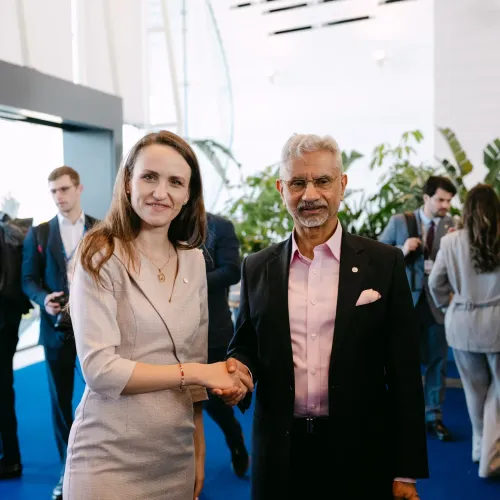
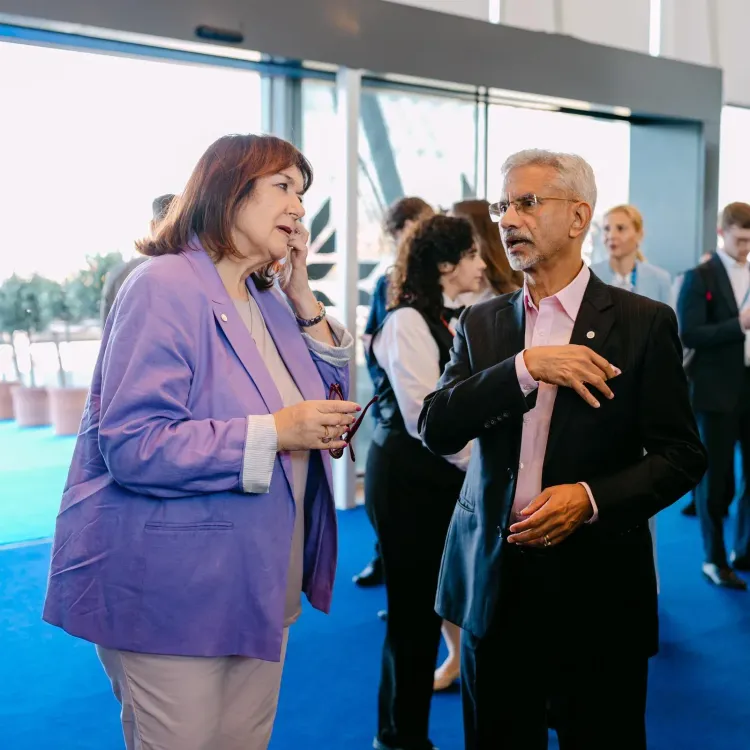
European Commissioner for the Mediterranean Dubravka Suica on 28 May reaffirmed that the India-Middle East-Europe Economic Corridor (IMEC) remains a shared top priority for the European Union and India, following her meeting with External Affairs Minister S. Jaishankar in Nicosia, Cyprus. The meeting took place on the sidelines of the informal EU Foreign Affairs Ministers' meeting, known as the Gymnich, where Jaishankar participated as a special invitee.
What Suica Said
'The India-Middle East-Europe Economic Corridor #IMEC remains a shared top priority in view of deepening trade, improving energy and digital connections, and becoming an important driver of peace and prosperity across the region,' Suica said in a post on X after the meeting.
She further noted that the India-EU partnership was 'moving ahead strongly,' helping drive growth, strengthen stability, and create opportunities across Europe, the Middle East, the Gulf, and India. Suica also underlined the two sides' shared commitment to ensuring secure maritime routes, including through the Strait of Hormuz, at a time of growing regional tensions.
Jaishankar's Cyprus Visit
EAM Jaishankar visited Cyprus from 27 to 28 May at the invitation of EU High Representative and Vice President Kaja Kallas and Cyprus Foreign Minister Constantinos Kombos. According to the Ministry of External Affairs (MEA), he attended the working session of the Gymnich on 28 May, where discussions centred on geopolitical implications of developments in West Asia and the wider region.
Key Bilateral Meetings
On the sidelines of the Gymnich, Jaishankar held structured bilateral meetings with Kaja Kallas; Constantinos Kombos; Prince Faisal bin Farhan bin Abdullah, Foreign Minister of Saudi Arabia; Andrii Sybiha, Foreign Minister of Ukraine; and Jose Manuel Albares Bueno, Spain's Minister for Foreign Affairs, European Union and Cooperation.
'These meetings and his interactions with other EU Ministers provided an opportunity to exchange perspectives on West Asia, the Ukraine conflict, India-EU cooperation, bilateral relations and wider regional developments,' the MEA said.
Strategic Significance
The MEA described the visit as reinforcing India's deepening engagement with Cyprus, the European Union, and key regional partners, and said it 'further strengthened the India-EU Strategic Partnership.' Notably, this is among the first high-level India-EU engagements of 2025 to explicitly reaffirm IMEC's centrality amid ongoing instability in the Middle East, which has complicated the corridor's originally envisaged routing. The corridor, first announced at the G20 New Delhi Summit in 2023, connects India to Europe via the Gulf and is seen as a strategic counterweight to China's Belt and Road Initiative.
With the Gaza conflict and broader West Asian tensions continuing to cloud regional logistics, the EU and India's public reaffirmation of IMEC signals that both sides remain invested in the project's long-term viability, even as near-term implementation timelines remain uncertain.
Point of View
Not merely a trade interlocutor. The IMEC reaffirmation is diplomatically significant but operationally thin: the corridor's Gulf routing remains hostage to a conflict neither side can resolve. What matters is whether this high-level political signal translates into concrete infrastructure commitments in the next EU-India summit. The simultaneous meetings with Saudi Arabia and Ukraine on the same sidelines suggest Jaishankar is actively positioning India as a potential bridge actor — a role that serves Indian interests but carries real credibility risk if the conflicts deepen.
NationPress
11 Oct 2026
Frequently Asked Questions
What is IMEC and why does it matter?
IMEC, the India-Middle East-Europe Economic Corridor, is a multi-modal connectivity project announced at the G20 New Delhi Summit in 2023, designed to link India to Europe via the Gulf through rail, shipping, and digital infrastructure. It is widely seen as a strategic alternative to China's Belt and Road Initiative and a potential driver of regional trade and energy connectivity.
Why was EAM Jaishankar at the EU Gymnich meeting in Cyprus?
Jaishankar attended the informal EU Foreign Affairs Ministers' meeting (Gymnich) in Nicosia on 28 May as a special invitee, at the invitation of EU High Representative Kaja Kallas and Cyprus Foreign Minister Constantinos Kombos. His presence underscores India's growing engagement with EU-level diplomatic forums.
What did EU Commissioner Dubravka Suica say about IMEC?
Suica said IMEC 'remains a shared top priority' for deepening trade, improving energy and digital connections, and serving as 'an important driver of peace and prosperity across the region.' She made the remarks in a post on X following her bilateral meeting with Jaishankar.
Which foreign ministers did Jaishankar meet on the sidelines?
On the sidelines of the Gymnich, Jaishankar held structured bilateral meetings with EU High Representative Kaja Kallas, Cyprus FM Constantinos Kombos, Saudi Arabia FM Prince Faisal bin Farhan bin Abdullah, Ukraine FM Andrii Sybiha, and Spain's FM Jose Manuel Albares Bueno.
What is the current status of IMEC amid Middle East tensions?
IMEC's implementation timeline remains uncertain due to ongoing conflict in West Asia, which has complicated the corridor's originally planned Gulf routing. However, both the EU and India have publicly reaffirmed their commitment to the project's long-term viability, signalling continued political investment despite near-term obstacles.