CM Yogi on Van Tangia villages: 'Now part of the mainstream'
Synopsis
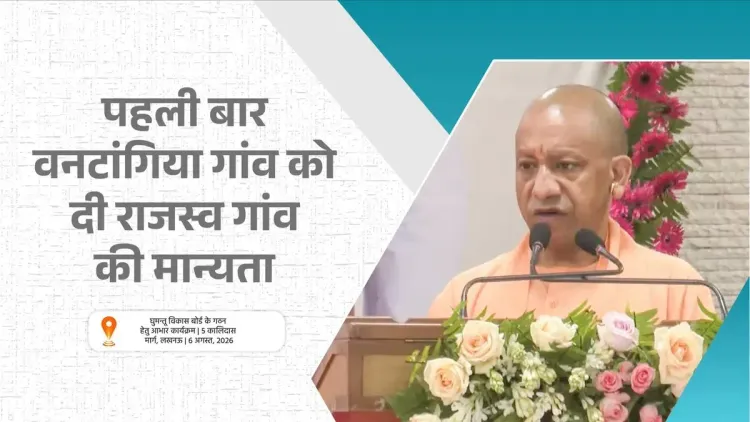
Chief Minister Yogi Adityanath has reaffirmed that Van Tangia forest settlements in Uttar Pradesh have been recognised as revenue villages for the first time, granting residents formal administrative identity and access to state welfare schemes, pulling a historically invisible community into the governance mainstream.
Key Takeaways
Van Tangia villages in Uttar Pradesh have been recognised as revenue villages for the first time , granting them formal administrative status.
Revenue village recognition unlocks access to land records, infrastructure funding, housing schemes, rations, and pensions for residents.
CM Yogi Adityanath stated that multiple castes have been connected to 'various public welfare schemes' under the current government.
The Van Tangia community has historical roots in colonial-era forest plantation labour and had long lived outside the formal revenue system.
The move is part of a broader state effort to integrate marginalised and forest-dwelling groups into mainstream governance structures.
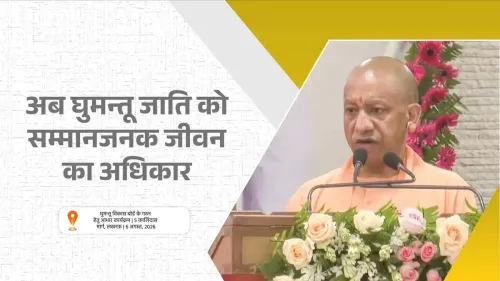
For decades, the Van Tangia communities of Uttar Pradesh lived in forest settlements invisible to the state — no land records, no infrastructure funding, no formal place on the map of governance. That changed under Chief Minister Yogi Adityanath, who on Thursday, August 6, 2026, reaffirmed that Van Tangia villages have been granted revenue village status for the first time, connecting their residents to the welfare architecture of the state.
What revenue village status actually means
Being recognised as a revenue village is not a ceremonial distinction — it is the administrative key that unlocks everything else. Formal land records, eligibility for state infrastructure schemes, access to ration cards, pensions, and housing programmes: all of these hinge on a settlement appearing in official revenue registers. For Van Tangia families, who had lived in forest areas without this recognition, the designation marks a structural shift from invisibility to entitlement.
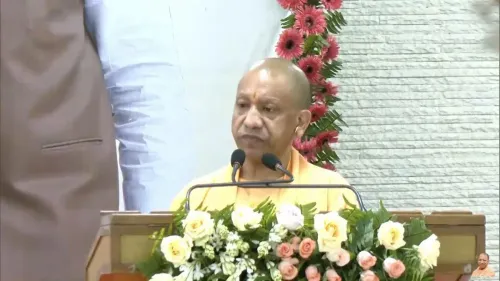
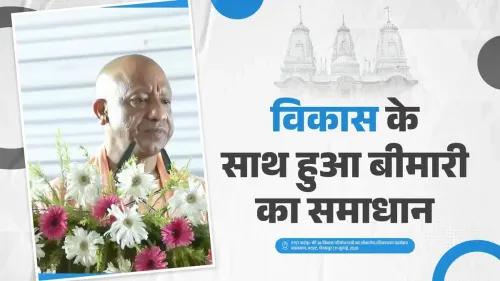
CM Yogi Adityanath, quoted by the Chief Minister's Office of Uttar Pradesh, said: 'Humne anek jaatiyon ko vibhinn jankalyankari yojanaon se joda hai. Vantangiya gaanvon ko pehli baar rajasv gaanv ke roop mein manyata di gayi.' ('We have connected many castes to various public welfare schemes. Van Tangia villages have been given recognition as revenue villages for the first time. Today, the people there have joined the mainstream of society.')
The Van Tangia community and their long wait
The Van Tangia — also written as Vantangiya — are a community historically settled inside forest reserves, their origins tied to the colonial-era practice of using labour to plant and tend teak plantations. After independence, they remained in legal limbo: residing on forest land, but outside the revenue system that governs most rural India. Without formal village status, generations of Van Tangia residents could not access land rights or government welfare programmes on equal terms with other rural communities.
The recognition of their settlements as revenue villages is part of a broader pattern in Uttar Pradesh of extending administrative identity to groups that had previously fallen through the cracks of the state's welfare delivery system.
Welfare integration across multiple communities
CM Yogi framed the Van Tangia recognition within a wider push to enrol marginalised castes into public welfare schemes — from housing and sanitation to food security and livelihood support. The state has periodically extended such coverage to backward and forest-dwelling groups, with the administrative recognition of settlements serving as the enabling step that makes scheme enrollment possible in the first place.
Whether additional villages are in line for similar recognition — and which specific schemes have seen the sharpest uptake among newly enrolled communities — will be clearer in upcoming fiscal and administrative updates from the state government.
For the Van Tangia, the ledger of the state has finally recorded their existence — and with it, the promise that the welfare net will now reach them too.
Point of View
It fits a deliberate political arc: demonstrating that the BJP's social welfare reach extends beyond its traditional base to communities previously ignored by successive state governments. The framing of 'mainstream integration' is significant — it positions the state not as a distributor of charity but as a corrector of historical wrongs. Whether the on-ground delivery of schemes matches the administrative recognition will be the real test of this policy's depth.
NationPress
6 Aug 2026
Frequently Asked Questions
What is a Van Tangia village in Uttar Pradesh?
Van Tangia villages are forest settlements in Uttar Pradesh inhabited by the Van Tangia community, whose origins lie in colonial-era forest plantation labour. These settlements historically lacked formal revenue village status, leaving residents outside the state's administrative and welfare systems.
What does revenue village status mean for Van Tangia residents?
Revenue village status means the settlement is formally recorded in state land registers, enabling residents to obtain land records, access government welfare schemes such as housing and rations, and receive infrastructure funding — rights that were previously unavailable to them.
When did Yogi Adityanath recognise Van Tangia villages as revenue villages?
The Chief Minister's Office of Uttar Pradesh reaffirmed this recognition on August 6, 2026 , with CM Yogi Adityanath stating that Van Tangia villages had been granted revenue village status for the first time under his government.
Which welfare schemes have Van Tangia communities been connected to?
CM Yogi Adityanath stated that many castes, including Van Tangia communities, have been enrolled in 'various public welfare schemes,' though the specific schemes were not individually named in the post. Scheme access typically includes housing, food security, pensions, and livelihood programmes.
Why were Van Tangia villages not recognised as revenue villages before?
Van Tangia settlements were located inside forest reserves and were therefore outside the standard revenue administration system. Without formal land records or village registration, residents could not legally claim state benefits or infrastructure, a situation that persisted for decades after independence.