CM Yogi Orders Disability Rehab Centres in Every UP Commissionery
Synopsis
CM Yogi Adityanath has ordered District Disability Rehabilitation Centres in every Uttar Pradesh commissionery, decentralising access to assessment, therapy, and assistive services for persons with disabilities under the Rights of Persons with Disabilities Act, 2016.
Key Takeaways
CM Yogi Adityanath has ordered District Disability Rehabilitation Centres (DDRCs) to be operationalised in every one of Uttar Pradesh's 18 commissioneries .
The move decentralises disability rehabilitation, bringing services closer to rural and semi-urban populations across the state.
DDRCs provide assessment, therapy, assistive devices, and vocational support to persons with disabilities.
The order aligns with the Rights of Persons with Disabilities Act, 2016 , which mandates accessible rehabilitation services.
UP's approach follows a consistent pattern of routing welfare delivery through commissionery and district-level administrative machinery.
Implementation details — funding, staffing, and timelines — remain the critical variables to watch in state budget and departmental reports.
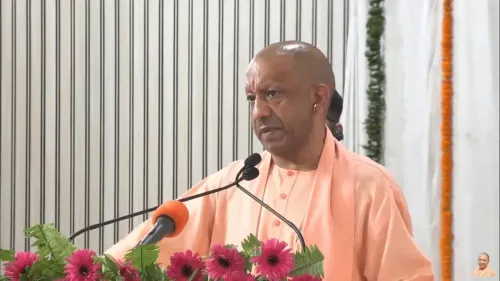
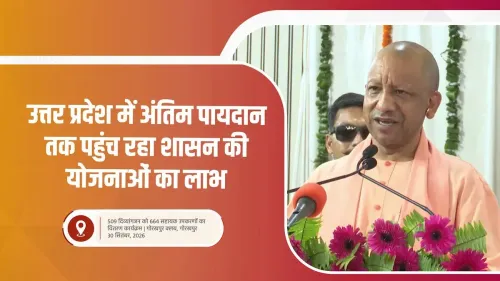
Uttar Pradesh is pushing disability welfare to the district level — and this time, the orders are out. Uttar Pradesh Chief Minister Yogi Adityanath on Wednesday, 30 September 2026, announced that directions have been issued to operationalise District Disability Rehabilitation Centres (DDRCs) in every commissionery across the state, a move that could reshape how persons with disabilities access support services in India's most populous state.
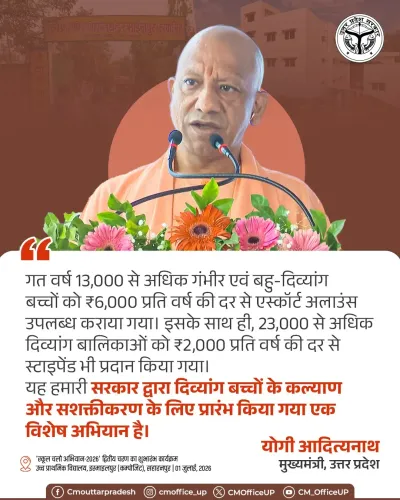
Posting on X, CM Yogi stated — 'Har commissionery mein Jila Divyang Punarvas Kendra sanchaalit karne ke aadesh diye gaye hain' — ('Orders have been given to operationalise District Disability Rehabilitation Centres in every commissionery'). The announcement signals a deliberate push to decentralise rehabilitation infrastructure, bringing services closer to beneficiaries rather than concentrating them in state or divisional headquarters.
What DDRCs Do — and Why Proximity Matters
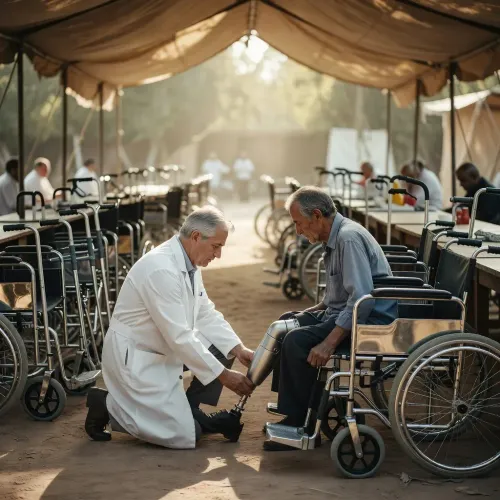
District Disability Rehabilitation Centres are nodal facilities that provide assessment, therapy, assistive devices, and vocational guidance to persons with disabilities. Under the Rights of Persons with Disabilities Act, 2016, the state is mandated to ensure rehabilitation and support services are accessible — but the gap between legislation and on-the-ground delivery has long been the sticking point across Indian states.
Uttar Pradesh has 18 commissioneries, each covering multiple districts. Anchoring a DDRC at every commissionery level means the rehabilitation infrastructure is no longer a distant, capital-city affair. For a person with a locomotor disability in a rural pocket of Bundelkhand or Purvanchal, the difference between a centre two hours away and one five hours away is often the difference between accessing care and not accessing it at all.
UP's Decentralisation Push in Social Welfare
This directive fits a recognisable pattern in the Yogi Adityanath government's administrative approach — routing social welfare delivery through the commissionery and district machinery rather than relying solely on centralised state-level bodies. From ration distribution to pension disbursement, UP has repeatedly used its administrative divisions as the primary unit of welfare delivery.
The disability sector, however, has historically lagged. Rehabilitation centres, where they existed, were often understaffed or concentrated in urban centres. Issuing commissionery-level orders is a structural intervention — though the real test, as policy watchers will note, lies in rollout timelines, budget allocations, and whether the centres are staffed with trained physiotherapists, audiologists, and special educators.
The Numbers Behind the Need
Uttar Pradesh is home to an estimated over 15 lakh registered persons with disabilities, though actual numbers — accounting for under-reporting in rural areas — are believed to be significantly higher. For this population, access to structured rehabilitation is not a supplementary benefit; it is a statutory right under national law. The commissionery-level order, if implemented with adequate resources, could meaningfully close that access gap.
The specifics — funding envelopes, staffing norms, and operational deadlines — will be the proof points to watch in upcoming state budget documents and departmental reports. The order is issued. Now comes the harder part: execution.
Point of View
Pension, and now disability rehabilitation. It signals the Yogi government's intent to operationalise the Rights of Persons with Disabilities Act, 2016 more visibly ahead of electoral cycles, where welfare delivery to marginalised groups carries significant political weight. The credibility of the announcement, however, will hinge entirely on budget allocations and staffing — two areas where disability welfare has historically been underfunded in state budgets. Analysts will watch whether this becomes a model for other large states grappling with the same access-gap problem.
NationPress
30 Sept 2026
Frequently Asked Questions
What is a District Disability Rehabilitation Centre (DDRC)?
A District Disability Rehabilitation Centre (DDRC) is a government facility that provides assessment, physiotherapy, assistive devices, and vocational guidance to persons with disabilities. CM Yogi has ordered one to be set up in every commissionery in Uttar Pradesh.
How many commissioneries does Uttar Pradesh have?
Uttar Pradesh has 18 commissioneries, each covering multiple districts. The new order means a DDRC will be operational at each of these 18 administrative divisions.
What law governs disability rehabilitation in India?
The Rights of Persons with Disabilities Act, 2016 is the central legislation that mandates rehabilitation and support services for persons with disabilities across all Indian states.
Who benefits from the UP commissionery DDRC order?
Persons with disabilities across Uttar Pradesh — particularly those in rural and semi-urban areas — stand to benefit from shorter distances to rehabilitation services, including therapy, disability certificates, and assistive devices.
When did CM Yogi announce the DDRC order?
CM Yogi Adityanath announced the order on 30 September 2026 via a post on X, stating that directions had been issued to operationalise District Disability Rehabilitation Centres in every commissionery.