CM Yogi: UP First State With Two Divyangjan Universities
Synopsis
Uttar Pradesh Chief Minister Yogi Adityanath claimed on 30 September 2026 that UP is India's first state with two universities dedicated to divyangjan welfare, anchored by the Dr. Shakuntala Misra National Rehabilitation University in Lucknow, setting a benchmark under the 2016 RPWD Act framework.
Key Takeaways
Yogi Adityanath declared Uttar Pradesh the first Indian state to have two universities focused on divyangjan welfare.
Shakuntala Misra National Rehabilitation University , Lucknow , is the established anchor institution for disability-focused higher education in UP.
The Rights of Persons with Disabilities Act, 2016 provided the national legislative framework that spurred state-level investment in such institutions.
The identity and operational status of the second university had not entered verified public record at the time of this report.
UP's population of approximately 240 million makes the scale of disability-inclusive higher education access a significant policy challenge.
The announcement follows a pattern of the Adityanath administration using institutional milestones to mark governance benchmarks since 2017 .
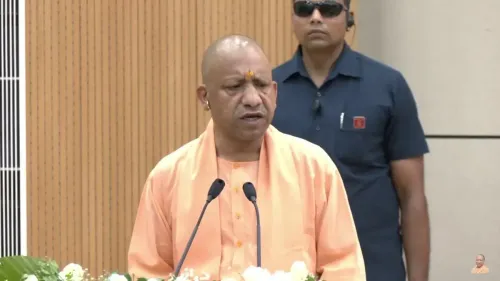
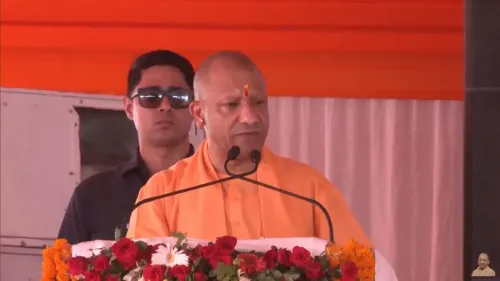
A quiet but pointed milestone in disability welfare policy — Uttar Pradesh Chief Minister Yogi Adityanath declared on Wednesday, 30 September 2026 that his state now stands as the only one in India to house not one but two universities dedicated entirely to the welfare and rehabilitation of persons with disabilities, known as divyangjan.
Posting on X, the Chief Minister stated: 'Uttar Pradesh desh ka pehla rajya hai, jiske paas divyangjan kalyan se sambandhit do-do vishwavidyalaya hain' — 'Uttar Pradesh is the first state in the country to have not one but two universities related to the welfare of persons with disabilities.' The claim positions UP not merely as a welfare-active state, but as a benchmark the rest of the country has yet to match.
The Lucknow Campus That Started It All
The anchor institution in this story is Dr. Shakuntala Misra National Rehabilitation University, based in Lucknow. Established to provide inclusive higher education and rehabilitation-focused training, it has served as the flagship model for disability-centric university education in the state. Its existence gave UP a head start that most other states have not closed.
The Rights of Persons with Disabilities (RPWD) Act, 2016 was the national legislative trigger that pushed states toward building specialised infrastructure for inclusive education. Several states responded with rehabilitation programmes and skill-development centres — but dedicated university-level institutions remained rare. UP's claim of a second such university, if borne out, would mark a significant gap between its commitment and the national average.
Why Two Universities Signal a Policy Shift, Not Just a Number
One university is a gesture. Two is a system. The distinction matters because a single institution, however well-resourced, creates a bottleneck — geography, capacity, and specialisation all limit who it can actually serve. A second university implies geographic spread, potentially covering a different region of India's most populous state, and the possibility of distinct academic or vocational focus areas.
Uttar Pradesh has a population of roughly 240 million, and disability prevalence data consistently shows that access to higher education for persons with disabilities in large, semi-urban and rural states remains critically low. Two dedicated universities do not solve that gap alone — but they anchor a pipeline that mainstream institutions rarely provide.
The Adityanath administration has, since 2017, framed divyangjan welfare as a flagship social commitment, running parallel to broader infrastructure and law-and-order messaging. This announcement fits a pattern of using institutional milestones — universities, hospitals, expressways — to mark governance benchmarks ahead of electoral cycles.
What the Claim Still Needs to Answer
The specific identity of the second university and its operational status had not entered verified public record as of the time of this report. The announcement raises immediate follow-up questions: Where is the second institution located? What disciplines does it offer? Is it fully operational, or at a foundation or approval stage? These details will determine whether the milestone is a functioning reality or a policy in progress.
For India's divyangjan community — and the families, educators, and rehabilitation professionals who serve them — the answers to those questions matter far more than the headline number.
If the claim holds, every other state now has a concrete benchmark to answer.
Point of View
Divyangjan welfare has served as a soft-power complement to its harder law-and-order and infrastructure messaging, and a second dedicated university would materially strengthen that claim. The broader arc here is competitive federalism: the 2016 RPWD Act set a national floor, and states that build above it gain both moral and political capital. The unanswered question of the second university's identity and readiness is the detail that separates a genuine milestone from an aspirational headline.
NationPress
30 Sept 2026
Frequently Asked Questions
Which state has two universities for persons with disabilities in India?
Uttar Pradesh Chief Minister Yogi Adityanath claimed on 30 September 2026 that UP is the first and only Indian state to have two universities dedicated to divyangjan welfare.
What is Dr. Shakuntala Misra National Rehabilitation University?
Dr. Shakuntala Misra National Rehabilitation University is a Lucknow-based institution established to provide higher education and rehabilitation-focused training specifically for persons with disabilities.
What is the Rights of Persons with Disabilities Act 2016?
The Rights of Persons with Disabilities Act, enacted in 2016, is India's primary legislation promoting inclusive education, employment, and welfare for persons with disabilities, and it spurred states to build specialised institutions.
What is the second divyangjan university in Uttar Pradesh?
The specific name and location of the second university referenced by CM Yogi Adityanath had not entered verified public record at the time of this report; further official announcements are expected to clarify its details.
What does divyangjan mean?
'Divyangjan' is a Hindi term meaning persons with disabilities, widely adopted in Indian government policy and discourse as a respectful reference to this community.