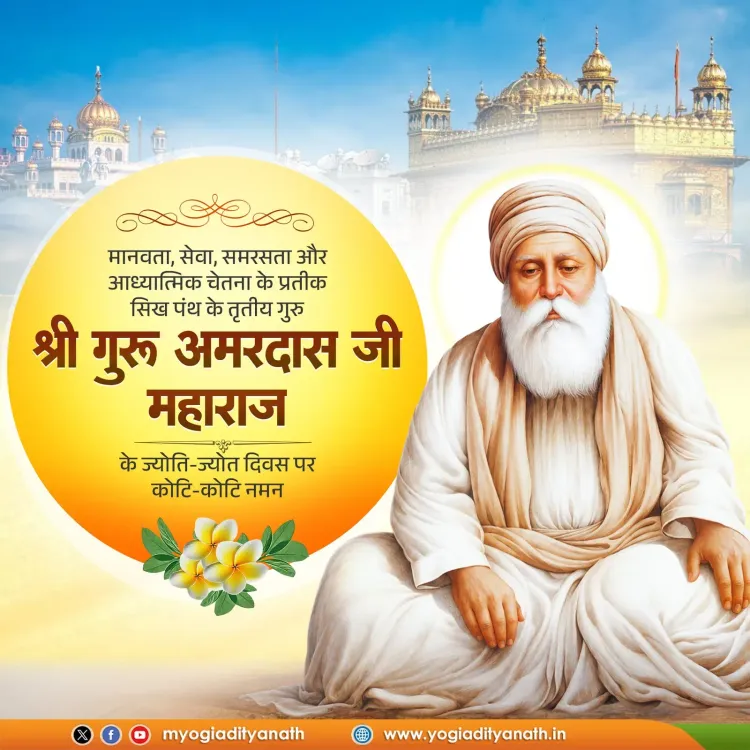
CM Yogi pays tribute to Guru Amar Das on Jyoti-Jot Diwas
Synopsis
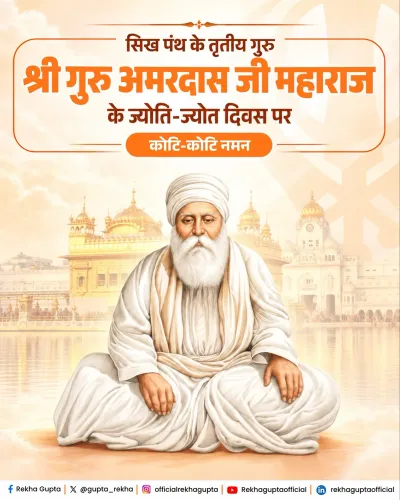
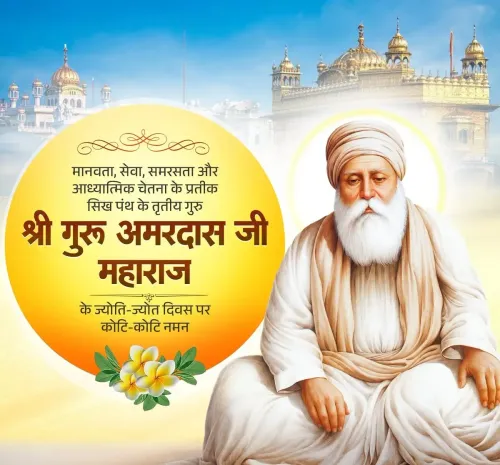
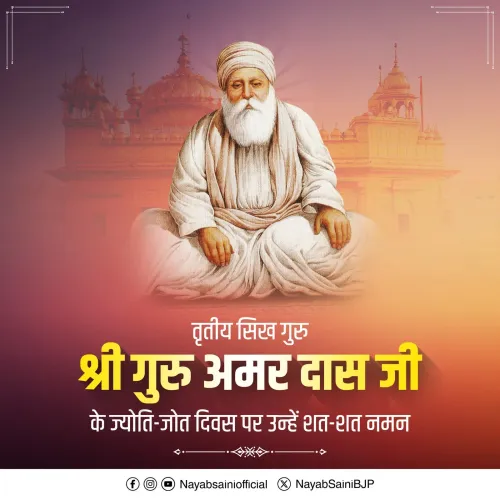
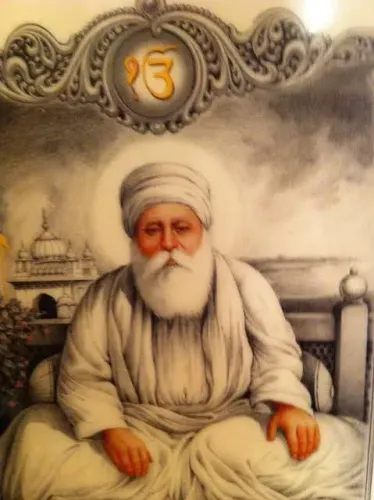
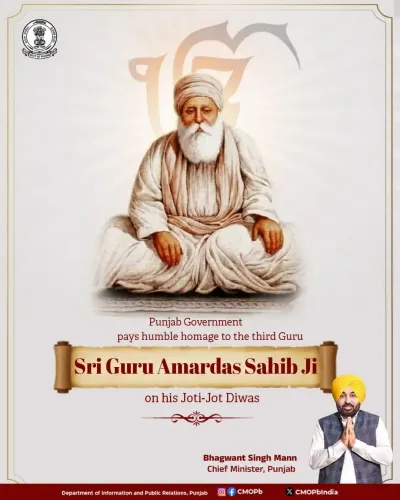
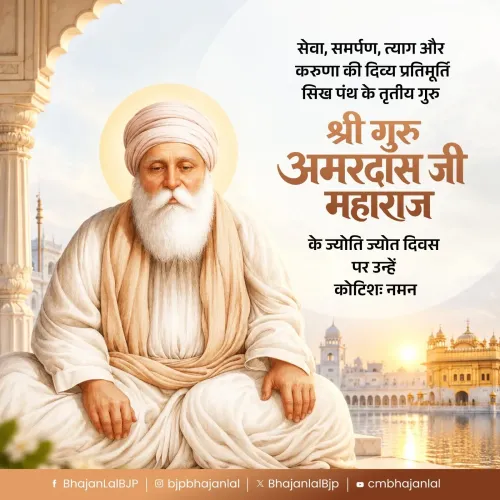
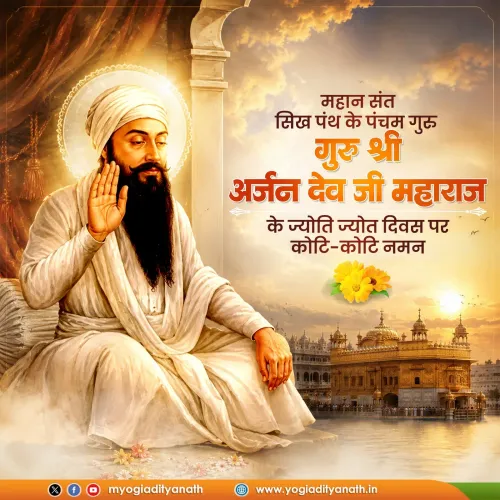
Uttar Pradesh Chief Minister Yogi Adityanath paid homage to Guru Amar Das Ji on his Jyoti-Jot Diwas, honouring the Third Sikh Guru's enduring legacy of fighting social evils, championing equality, and institutionalising selfless service.
Key Takeaways
CM Yogi Adityanath posted a formal tribute on 26 September 2026 marking the Jyoti-Jot Diwas of the Third Sikh Guru, Guru Amar Das Ji .
Guru Amar Das Ji served as Sikh Guru from 1552 to 1574 and is revered for institutionalising the langar and opposing sati and purdah.
CM Yogi described the Guru's message against social evils as a 'beacon of inspiration for all of humanity even today.' The tribute is part of a consistent pattern of CM Yogi publicly acknowledging Sikh Guru commemorations.
Uttar Pradesh has a significant Sikh population, giving such outreach both cultural and political weight.
On the Jyoti-Jot Diwas — the commemoration of the passing of the Third Sikh Guru, Guru Amar Das Ji — Uttar Pradesh Chief Minister Yogi Adityanath offered his reverence on Saturday, 26 September 2026, honouring a towering figure of spiritual and social reform whose legacy spans over four centuries.
Posting in Hindi, CM Yogi described Guru Amar Das Ji as an 'amar samvahak' — an immortal bearer — of humanity, service, social harmony, and spiritual awakening. He wrote that the Guru's divine message of eradicating social evils 'aaj bhi sampurna manavta ke liye preranapunj hai' — 'remains a beacon of inspiration for all of humanity even today.'
Who was Guru Amar Das Ji — and why his message endures
Guru Amar Das Ji served as the Third Guru of the Sikh faith from 1552 to 1574, ascending to the Guruship at the age of seventy-three. He is credited with institutionalising the langar (community kitchen) as a cornerstone of Sikh practice — a radical act of equality that required all visitors, regardless of caste or status, to sit and eat together before seeking an audience with the Guru.
He campaigned actively against sati — the practice of a widow immolating herself on her husband's funeral pyre — and purdah, the veiling and seclusion of women, at a time when such stands were deeply countercultural. His institutional reforms, including appointing women as preachers and organising the Sikh community into regional manjis (districts), gave the young faith a durable social architecture. These are precisely the 'divine messages against social evils' CM Yogi's tribute references.
Yogi Adityanath's outreach to Sikh commemorations
The tribute is part of a consistent pattern: CM Yogi Adityanath regularly marks the commemoration days of Sikh Gurus with formal public messages, weaving themes of social reform and inter-community harmony into Uttar Pradesh's political calendar. The state is home to a significant Sikh community, particularly in districts along the western and northern belt, and such gestures of religious acknowledgement carry both cultural and political resonance.
By foregrounding Guru Amar Das Ji's reformist legacy — the fight against caste discrimination, the elevation of women, the ethic of selfless service — the Chief Minister frames the tribute not merely as a religious courtesy but as an alignment with values the ruling establishment presents as central to governance.
Four centuries on, the Guru who made kings sit on the ground before breaking bread remains a living argument for human dignity. That argument, CM Yogi suggests, is still very much in progress.
Point of View
The Chief Minister implicitly aligns those reformist credentials with his own administration's stated values. In a politically diverse state like Uttar Pradesh, such gestures of inter-faith acknowledgement serve both symbolic and electoral functions. The choice of emphasis — social equality and eradication of evil customs — also reflects a recurring ideological motif in BJP messaging that links classical Indian religious thought with contemporary governance priorities.
NationPress
26 Sept 2026
Frequently Asked Questions
Who was Guru Amar Das Ji?
Guru Amar Das Ji was the Third Guru of the Sikh faith, who served from 1552 to 1574. He is celebrated for institutionalising the langar (community kitchen), opposing the practices of sati and purdah, and championing social equality and the role of women in the Sikh community.
What is Jyoti-Jot Diwas?
Jyoti-Jot Diwas marks the day a Sikh Guru passed away and the divine light (jyot) passed to the next Guru. It is observed as a day of remembrance and reverence within the Sikh tradition.
Why did CM Yogi Adityanath pay tribute to Guru Amar Das Ji?
CM Yogi Adityanath regularly issues public tributes to Sikh Gurus on their commemorative days as part of his government's outreach to Uttar Pradesh's Sikh community and to underscore themes of social harmony and reform.
What social reforms is Guru Amar Das known for?
Guru Amar Das Ji institutionalised the langar as a practice of caste-free communal eating, actively condemned sati and purdah, appointed women as preachers, and organised the Sikh community into regional administrative units called manjis.
Does Uttar Pradesh have a significant Sikh population?
Yes, Uttar Pradesh is home to a notable Sikh community, particularly in districts along the western and northern regions of the state, making religious outreach to the community a meaningful part of political engagement.