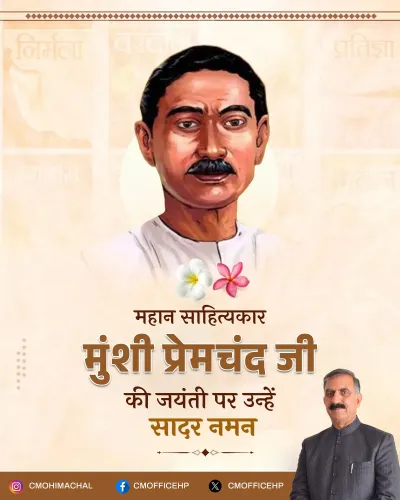
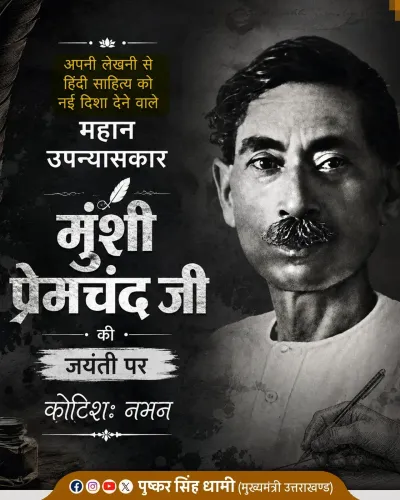
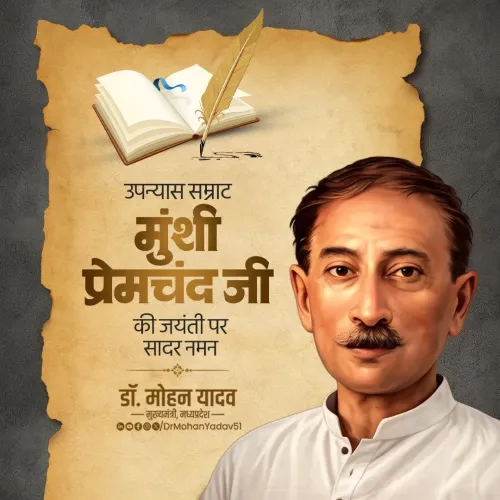
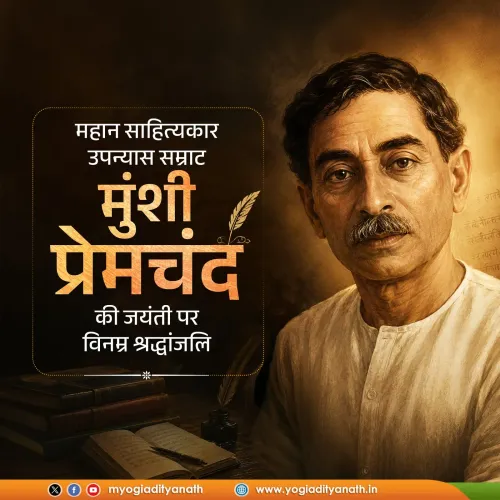
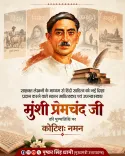
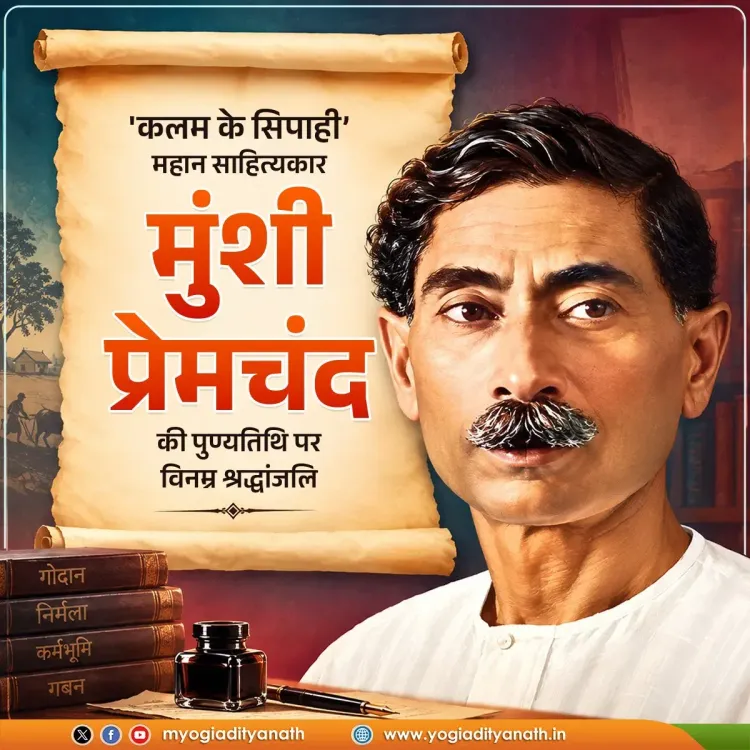
CM Yogi pays tribute to Munshi Premchand on death anniversary
Synopsis
Uttar Pradesh Chief Minister Yogi Adityanath honoured Munshi Premchand on his death anniversary, calling the legendary author a 'soldier of the pen' whose vivid portrayals of farmers, labourers, and rural life remain an enduring source of inspiration for Indian society.
Key Takeaways
CM Yogi Adityanath paid tribute to Munshi Premchand on his death anniversary on 8 October 2026 .
He described Premchand as 'kalam ke sipahi' — 'a soldier of the pen.' The tribute highlighted Premchand's literary focus on farmers, labourers, and the struggles of common people.
Premchand (1880–1936) was born in Lamhi village, Varanasi , Uttar Pradesh — the same state CM Yogi governs.
CM Yogi called Premchand's works 'soaked in human values' and an eternal inspiration for society and literature lovers.
On the death anniversary of one of Hindi literature's most towering figures, Uttar Pradesh Chief Minister Yogi Adityanath paused to honour the man who gave voice to India's forgotten millions — farmers, labourers, and the rural poor — through the sheer power of a pen.
Paying his tribute on 8 October 2026, CM Yogi referred to Munshi Premchand as 'kalam ke sipahi' — 'a soldier of the pen' — a phrase that distils both the man's method and his mission. In his post, the Chief Minister wrote that Premchand's writing 'gave voice to the life-struggles of farmers, workers, and common people, and expressed the true picture of village and society with extraordinary vividness.'
The pen that painted rural India
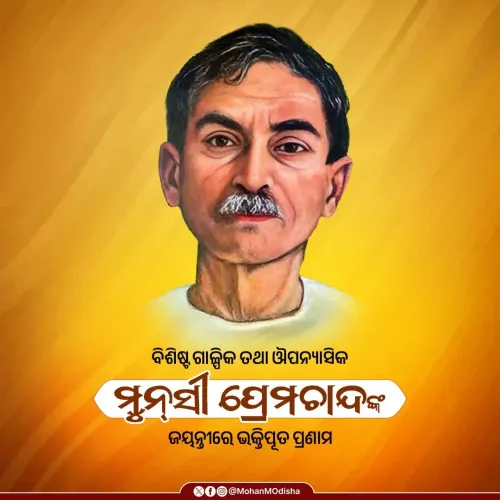
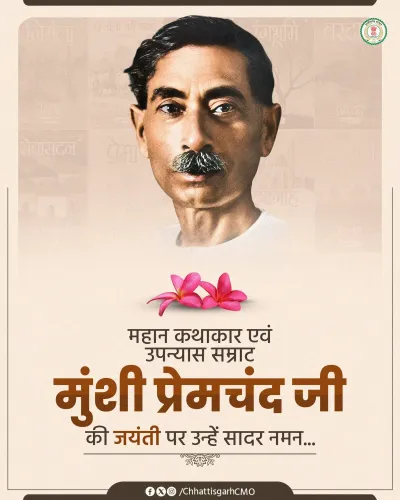
Munshi Premchand (1880–1936), born Dhanpat Rai Shrivastava in Lamhi village, Varanasi, Uttar Pradesh, is widely regarded as the father of modern Hindi and Urdu fiction. Over a career spanning three decades, he produced more than 300 short stories and a dozen novels, including landmarks such as Godaan, Gaban, and Nirmala. His stories — populated by indebted farmers, exploited zamindars' tenants, and women trapped by social custom — were not romantic fictions but social documents dressed in literary art.
What set Premchand apart was his insistence on writing about people the literary establishment preferred to ignore. His Varanasi and Allahabad roots kept him anchored in the lived reality of the Gangetic plain, and that geography bleeds through every page. He wrote with equal facility in Hindi and Urdu, making him a rare bridge across the subcontinent's linguistic and communal divides.
Why a BJP chief minister's tribute carries particular resonance
CM Yogi's tribute is more than a ceremonial gesture. Uttar Pradesh is Premchand's home soil — the writer was born, worked, and died in the state. For a government that has consistently invoked the idea of an aspirational, self-reliant rural UP, aligning with Premchand's legacy connects contemporary policy rhetoric to a literary tradition that placed the kisan and the mazdoor at the centre of the national story — long before it was politically fashionable.
CM Yogi noted that Premchand's works, 'soaked in human values,' would remain 'an eternal source of inspiration for literature lovers and society alike.' That framing — literature as social inspiration rather than mere aesthetic pleasure — echoes Premchand's own famous declaration that literature's purpose is to elevate human consciousness.
Nearly 90 years after his death, Premchand's stories remain on school syllabi across India, his characters a shared cultural vocabulary for a nation still navigating the tensions he wrote about. The soldier of the pen, it turns out, never really stood down.
Point of View
While his iconic status as the voice of India's rural poor gives the ruling BJP a culturally broad touchstone beyond its typical political vocabulary. Paying homage to a writer whose entire oeuvre critiqued feudal exploitation and caste hierarchy is a reminder that cultural nationalism in India has always been contested terrain. For a chief minister who frequently invokes UP's civilisational legacy, anchoring that legacy in Premchand — universally admired across the political spectrum — is as much soft power as it is sincere tribute.
NationPress
8 Oct 2026
Frequently Asked Questions
Who was Munshi Premchand?
Munshi Premchand (1880–1936), born Dhanpat Rai Shrivastava in Lamhi village near Varanasi, Uttar Pradesh, is regarded as the father of modern Hindi and Urdu fiction. He wrote over 300 short stories and a dozen novels, including 'Godaan' and 'Gaban,' focusing on the lives of farmers, labourers, and rural communities.
When is Munshi Premchand's death anniversary?
Munshi Premchand passed away on 8 October 1936. His death anniversary is observed on 8 October each year, and in 2026 CM Yogi Adityanath paid public tribute to him on this date.
What does 'kalam ke sipahi' mean?
'Kalam ke sipahi' is a Hindi phrase meaning 'soldier of the pen.' CM Yogi used it to describe Munshi Premchand, honouring his lifelong literary battle for the rights and dignity of India's rural and working-class people.
Why did CM Yogi tribute Munshi Premchand?
CM Yogi Adityanath paid tribute to Munshi Premchand on the writer's death anniversary, recognising his contribution to Hindi and Urdu literature and his enduring portrayal of the struggles of farmers, labourers, and common people in rural India.
What are Munshi Premchand's most famous works?
Premchand's most celebrated novels include 'Godaan,' 'Gaban,' and 'Nirmala.' Among his short stories, 'Idgah,' 'Kafan,' and 'Poos ki Raat' are widely read and remain part of school syllabi across India.